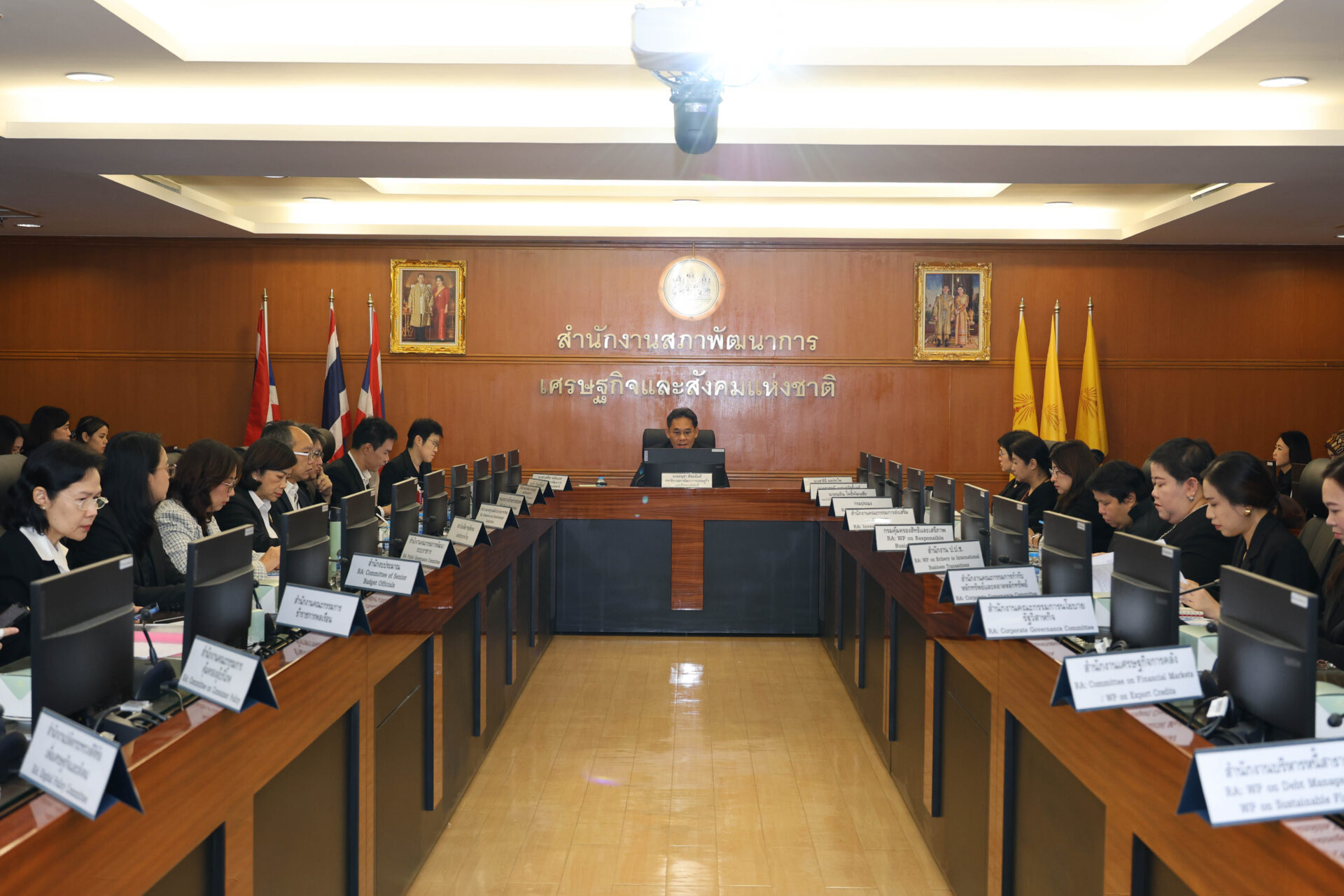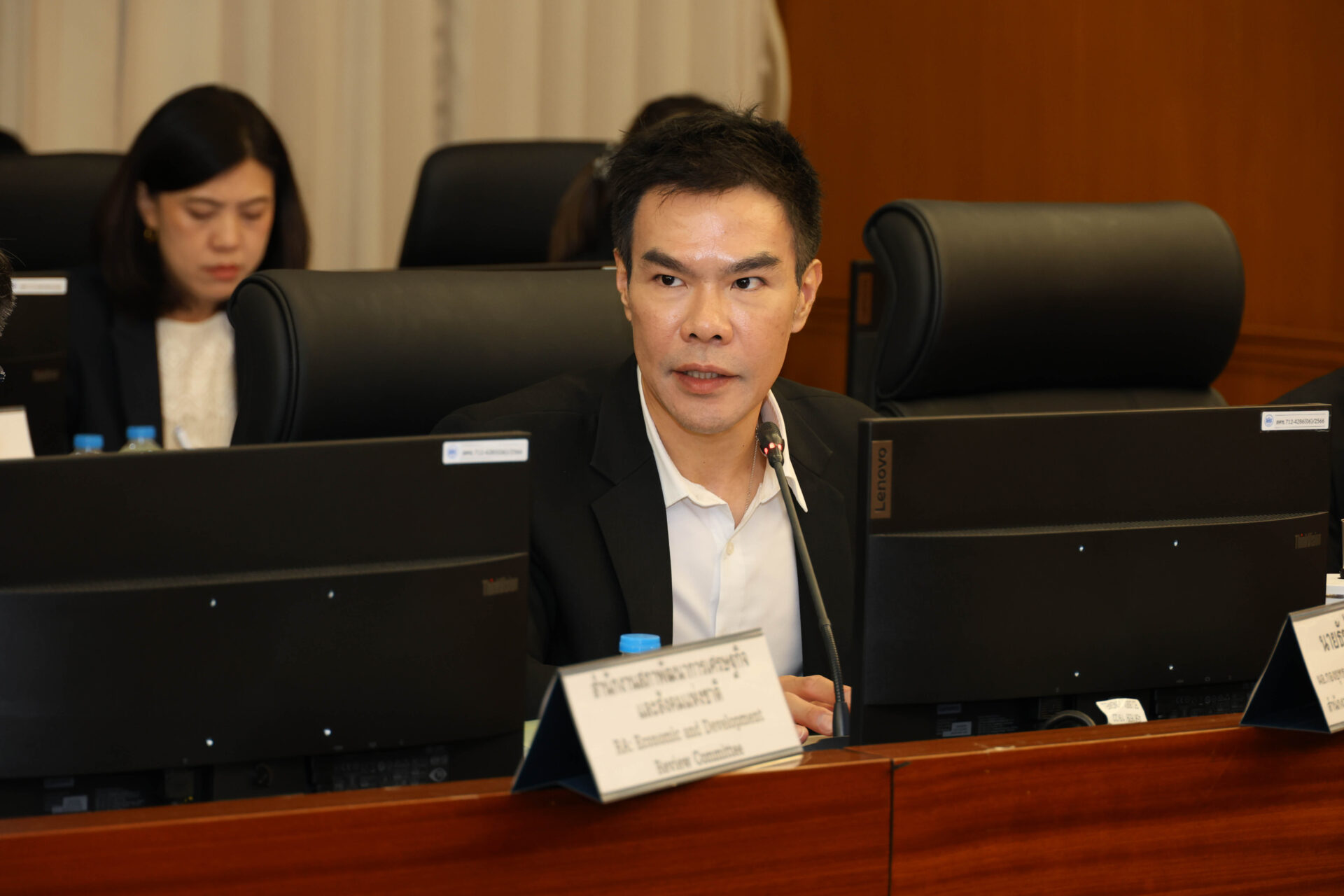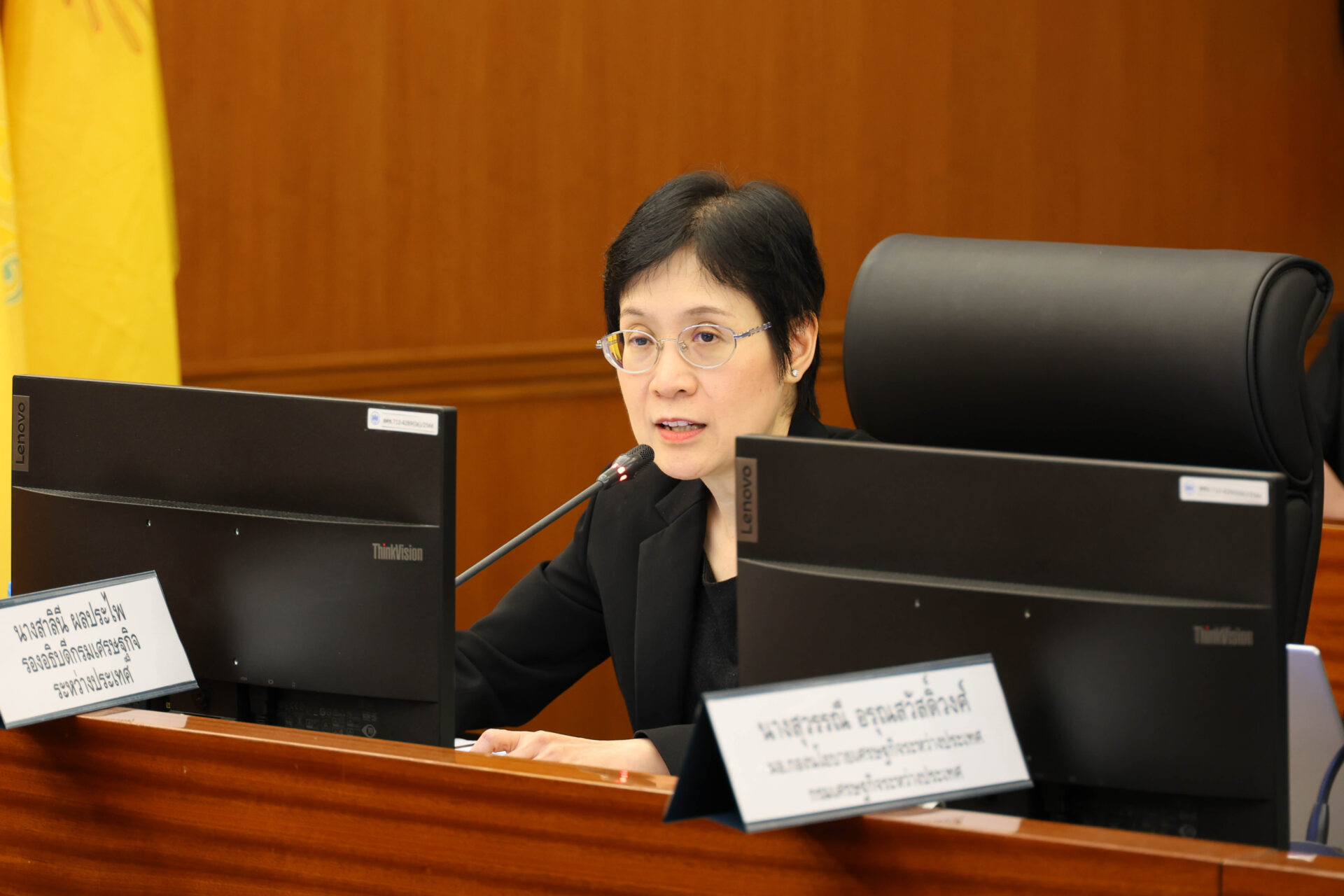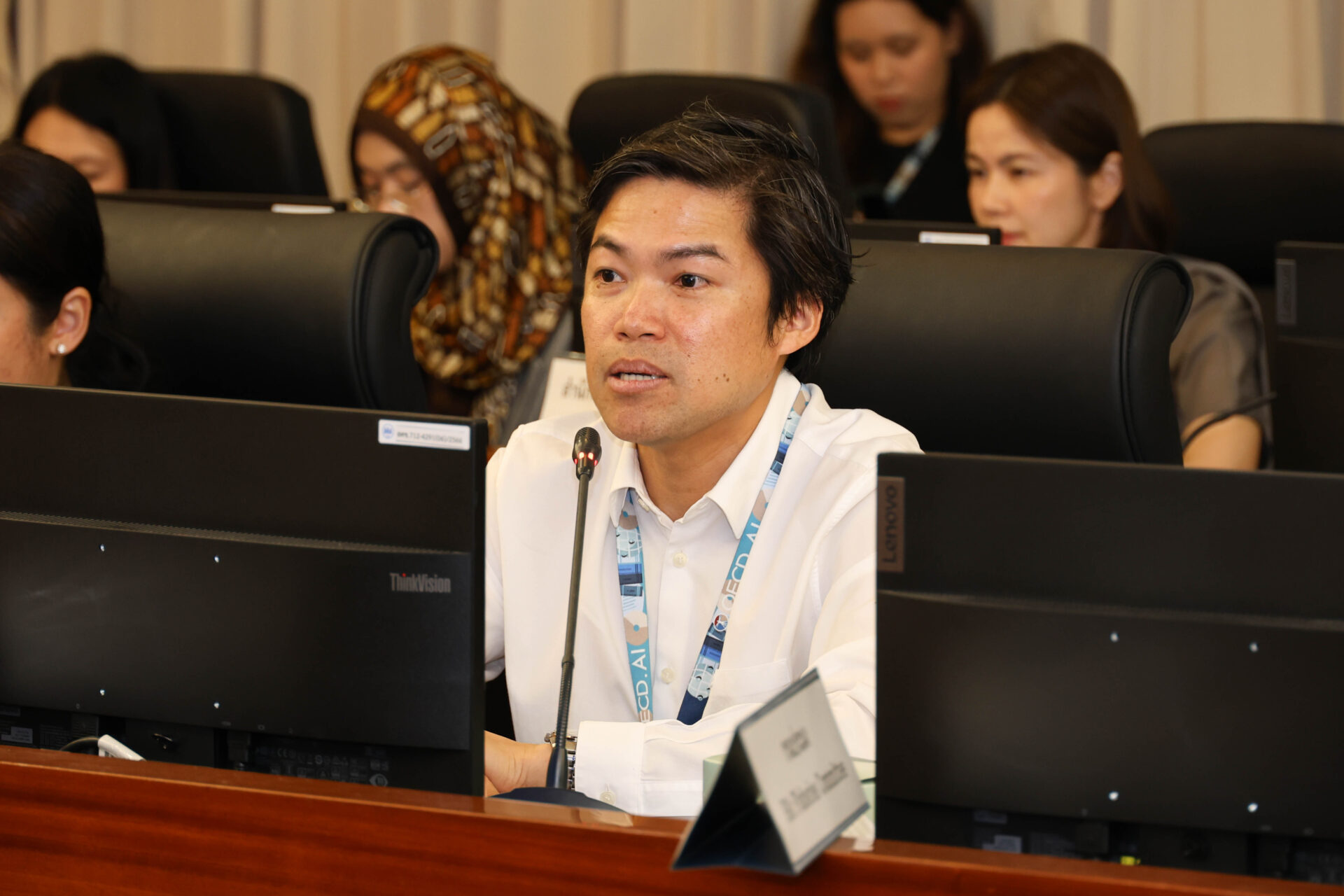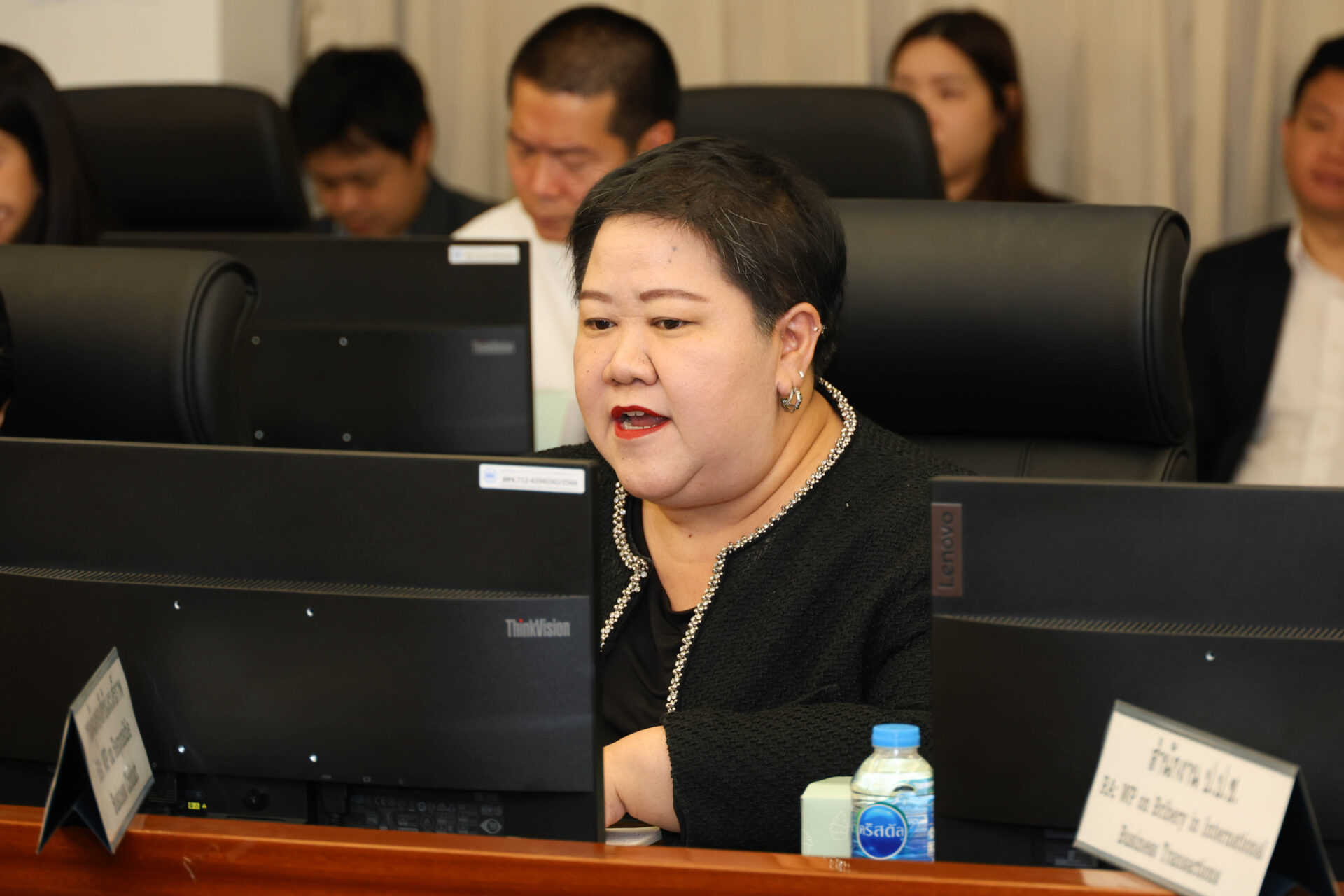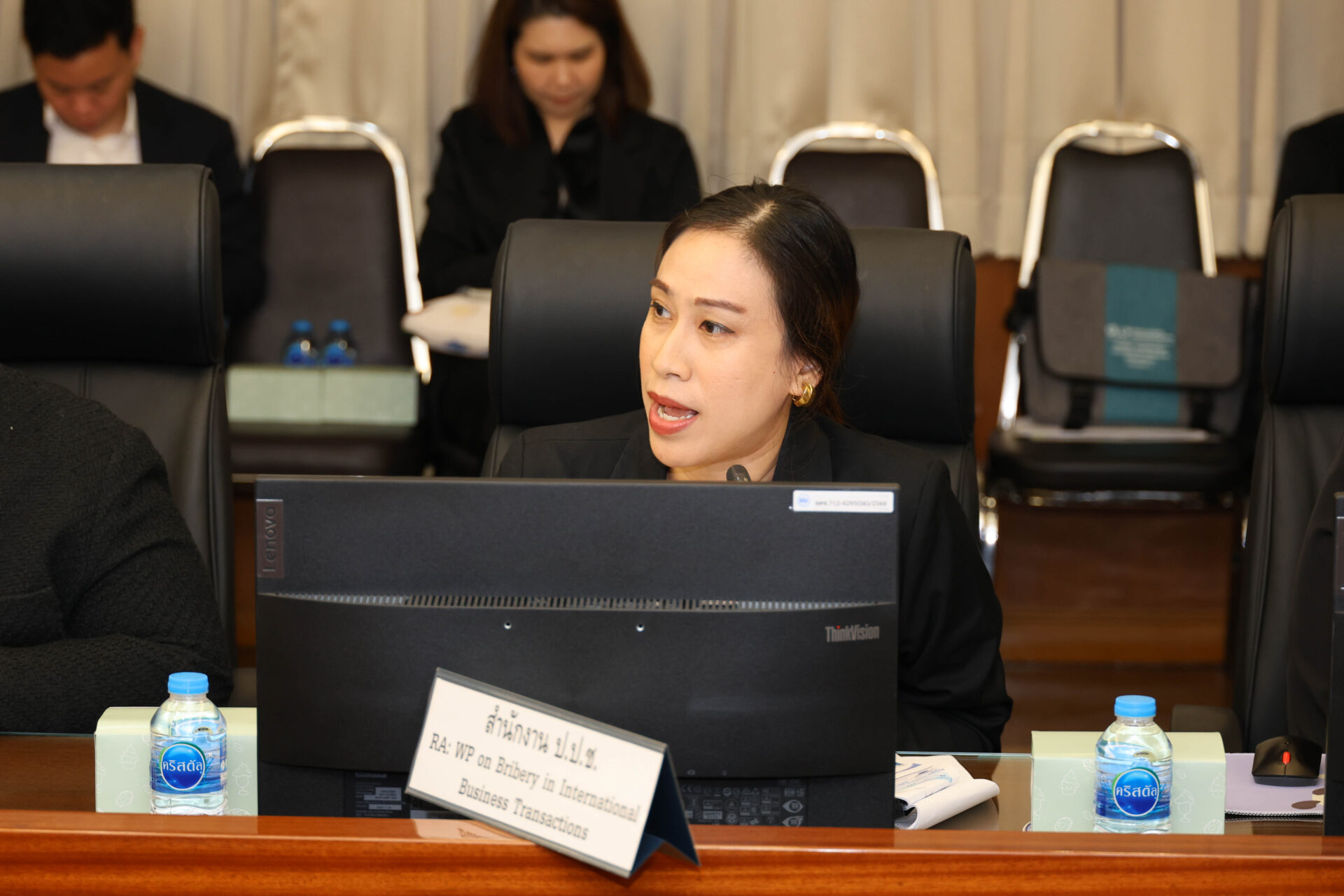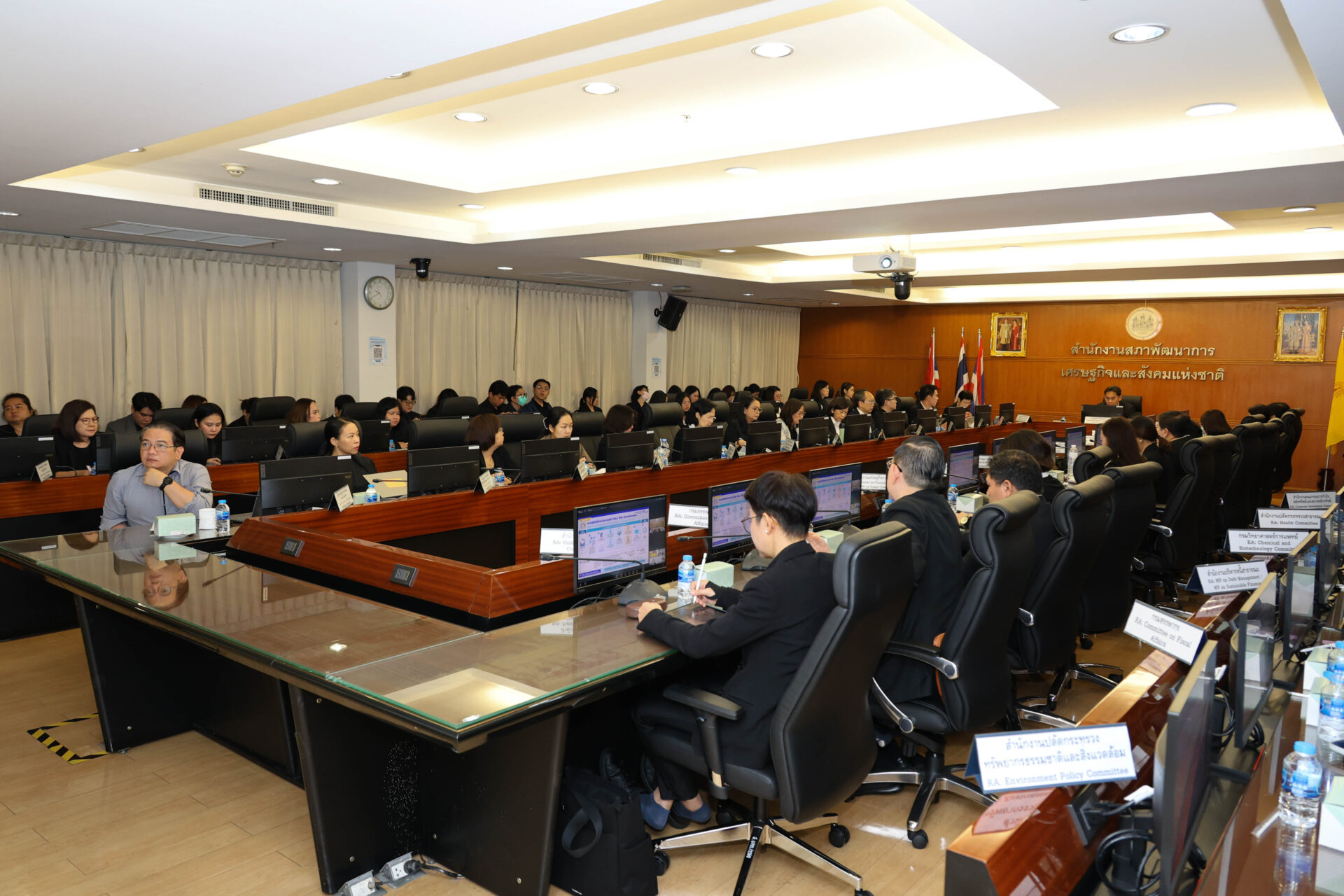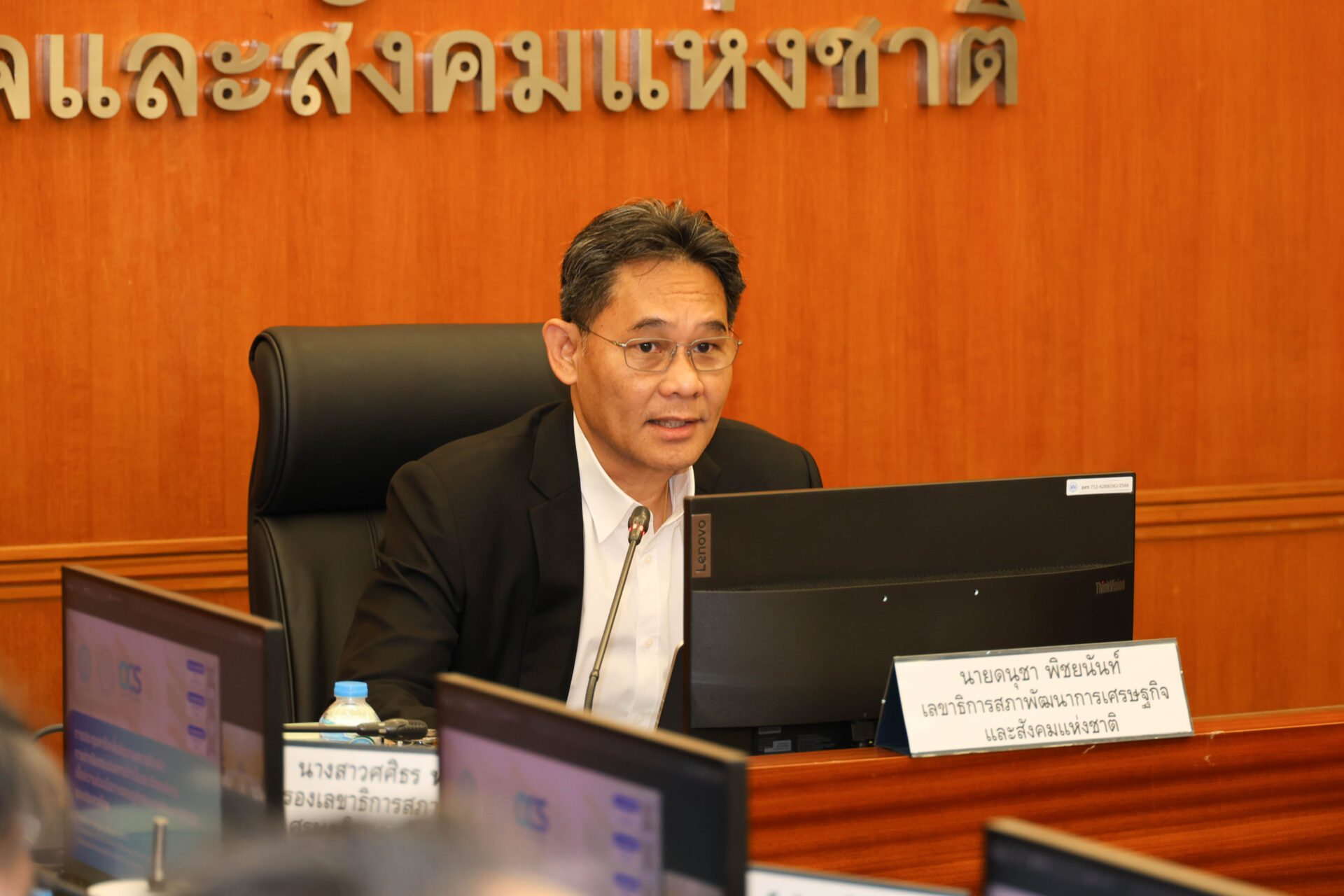
On Friday, July 31, 2026, the Office of the National Economic and Social Development Council (NESDC) organized a consultative meeting to monitor the progress of Thailand’s accession process to the Organisation for Economic Co-operation and Development (OECD), chaired by Mr. Danucha Pichayanan, Secretary-General of the NESDC, along withMs. Sasithorn Pualattadej, Deputy Secretary-General of the NESDC; Ms. Salinee Phonprapai, Deputy Director-General of the Department of International Economic Affairs; and representatives from the Office of the Council of State. As the three main coordinating agencies for OECD accession, they provided progress updates. Representatives from over 43 government agencies also attended the meeting at the NESDC and via an online conferencing system.
The meeting aimed to monitor the progress of the agencies responsible for 25 OECD committees and 27 working groups under those committees, totaling 52 bodies, during the Technical Review stage. This is the sixth step in Thailand’s OECD accession process. Currently, agencies are responding to questionnaires and providing information through in-depth interviews with the OECD Secretariat visiting Thailand. This data collection will be presented to the OECD committees, leading to recommendations for improving Thailand’s laws, policies, and practices to align with OECD standards.
On this occasion, the Secretary-General of the NESDC emphasized the importance of collaboration between government agencies and relevant sectors to ensure efficient data collection and precise responses to OECD questionnaires. Furthermore, for in-depth interviews and participation in OECD committee or working group meetings, agencies should consider sending executives who can take a proactive role in providing opinions to the meetings. This will help build strong interactions and a robust role for Thailand on the OECD stage. He also stressed the need for regular communication with the OECD Secretariat to ensure smooth operations for both parties.
Ms. Salinee Phonprapai, Deputy Director-General of the Department of International Economic Affairs, added that the OECD utilizes a “Buddy System,” where interested OECD member countries act as mentors for Thailand during committee or working group meetings. These buddies provide guidance, assistance, and introduce Thai representatives to other countries during the sessions, helping Thailand become more familiar with the OECD’s working systems. Additionally, OECD member countries such as Australia, Japan, the United Kingdom, Canada, and Poland have expressed interest in supporting Thailand’s domestic capacity building. Thai agencies can propose areas requiring support to the Ministry of Foreign Affairs (MFA) for further coordination with the OECD and member countries.
Mr. Naran Phorpattanachai, Director of the Law Analysis and Evaluation Division, Office of the Council of State (OCS), further explained the acceleration of the OECD accession process, particularly regarding OECD committees or working groups where Thailand needs to amend laws or regulations. As this can be time-consuming, responsible agencies should consult with the OECD Secretariat from the early stages and maintain regular communication. He also recommended that agencies translate newly amended draft laws or regulations into English for OECD feedback. Agencies may then consider adjusting based on such feedback or maintaining their position, depending on necessity, appropriateness, and the country’s best interests. Consulting with the OECD throughout the process will ensure they are continuously informed of progress and have no objections before the draft laws or regulations are submitted to the Cabinet for consideration.
At the end of the meeting, representatives were given the opportunity to exchange experiences regarding questionnaire responses and in-depth interviews. This helped agencies that had not yet begun the process to understand the steps, procedures, and operations of each OECD committee or working group, which may have similar or differing processes. The meeting also addressed concerns from agencies, including limited budgets that might affect the drive for OECD accession and the timeline for achieving membership by 2028, which remains a challenge that requires cooperation from all sectors to move forward together.
The Secretary-General of the NESDC therefore emphasized five key issues that government agencies must expedite to accelerate the process and ensure Thailand achieves its goal of OECD membership within the timeframe: (1) amending three Thai laws to enable accession to the OECD Anti-Bribery Convention, which Thailand must join before starting the technical review process; (2) establishing a National Contact Point for Responsible Business Conduct (NCP), an OECD requirement that Thailand must complete before membership; (3) developing agency-specific Action Plans to effectively monitor progress; (4) organizing consultative meetings with sectors involved in OECD accession to gather feedback; and (5) managing budgets appropriately for the tasks arising throughout Thailand’s OECD accession process.