
Thailand and OECD
Important News and Updates
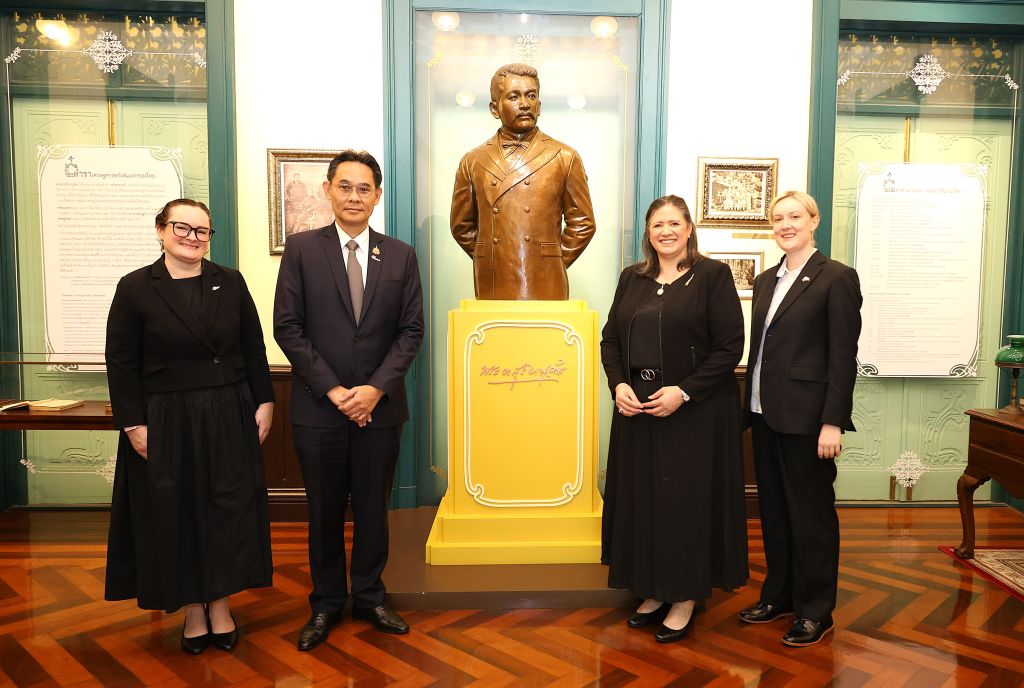
NESDC Secretary-General Discusses Economic Cooperation with New Zealand Ambassador and Thailand’s OECD Accession
On October 9, 2026, Mr. Danucha Pichayanan, Secretary-General of the NESDC, welcomed H.E. Ms. Raylene Siale Tagaloa Liufalani, Ambassador of New Zealand to Thailand, and her delegation. The meeting aimed to support the goals of both Prime Ministers in expanding comprehensive economic cooperation. Key topics included Thai economic trends, high-potential target industries, sustainable trade and […]
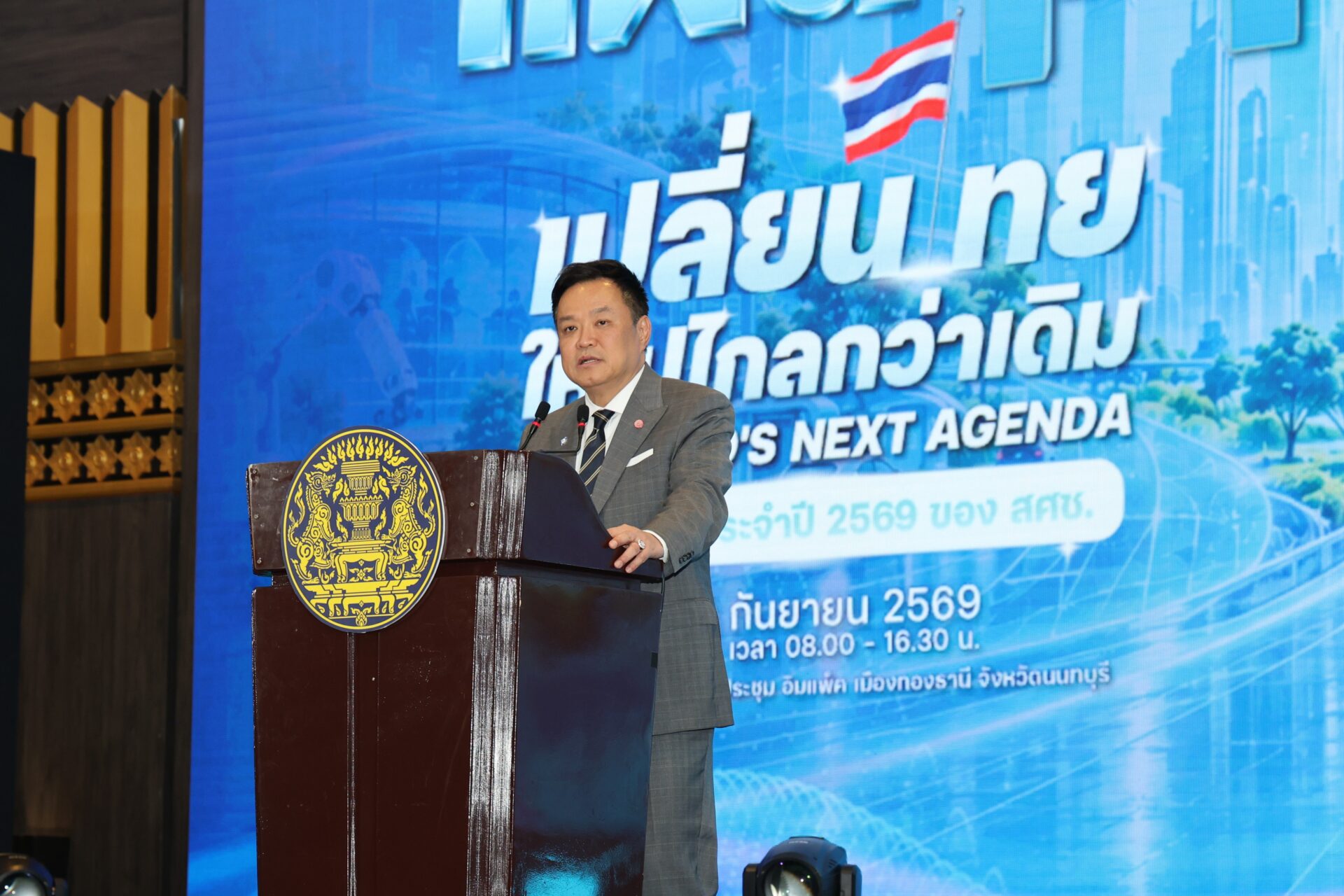
Pinning Thailand’s Future! NESDC Hosts 2026 Annual Meeting, Promoting the “14th Plan” as a National Agenda to Drive “Repair-Reinforce-Relinquish-Reinvent” Strategy Across 5 Pillars to Transform Thailand Beyond Limits
Today (September 30, 2026), Mr. Anutin Charnvirakul, Prime Minister and Minister of Interior, presided over the opening ceremony and delivered a keynote address at the 2026 Annual Meeting of the Office of the National Economic and Social Development Council (NESDC), held under the theme “The 14th Plan: Thailand’s Next Agenda,” at the Grand Diamond Ballroom, […]
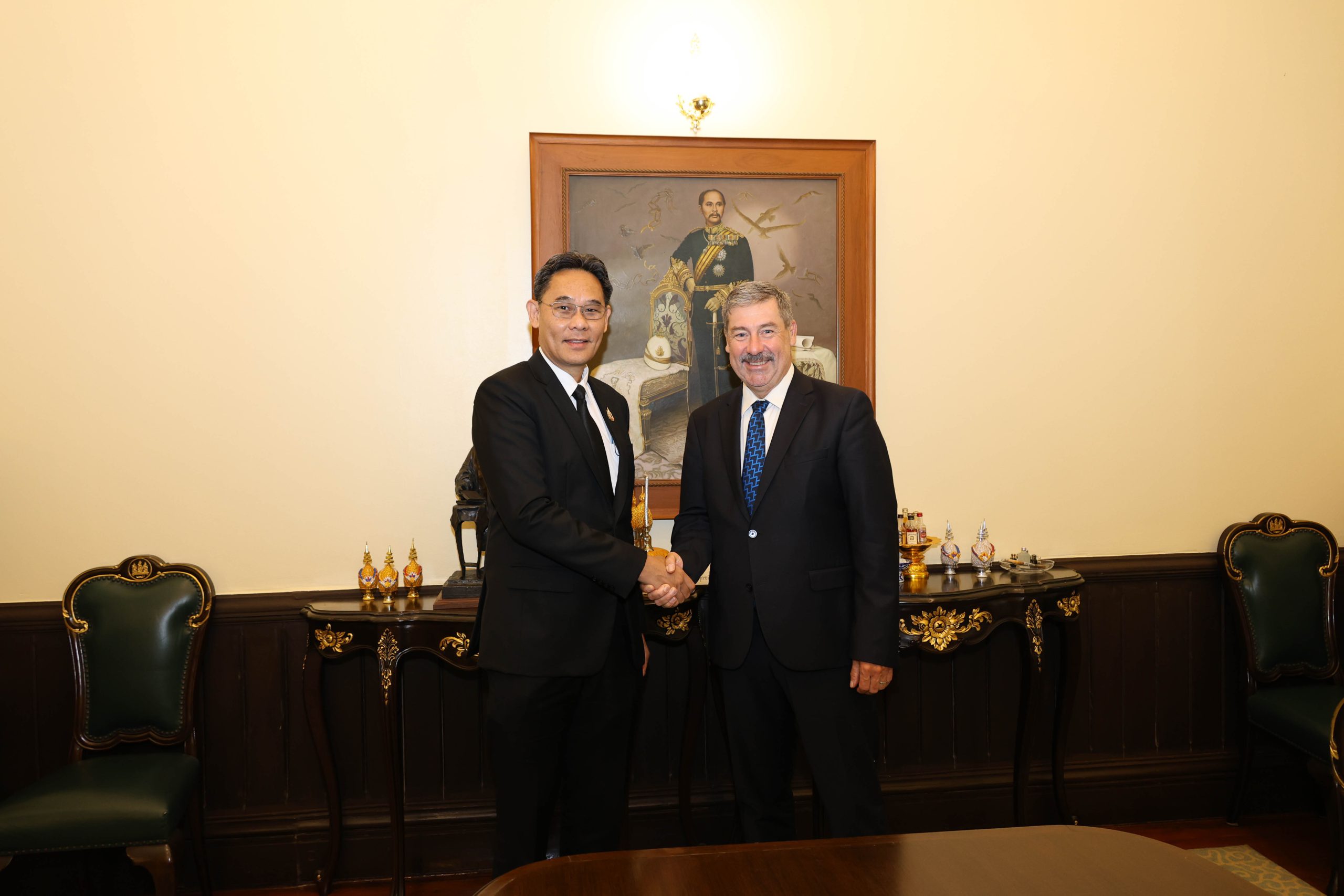
NESDC Secretary-General meets with OECD Deputy Secretary-General, reaffirming Thailand’s commitment to OECD accession.
On Thursday, August 27, 2026, Mr. Danucha Pichayanan, Secretary-General of the NESDC, along with NESDC officials, welcomed Mr. Frantisek Ruzicka (Mr. Frantisek Ruzicka), Deputy Secretary-General of the Organisation for Economic Co-operation and Development (OECD), and his delegation. They discussed progress on Thailand’s OECD accession during his visit to Thailand for the 29th ASEAN Labour Ministers […]
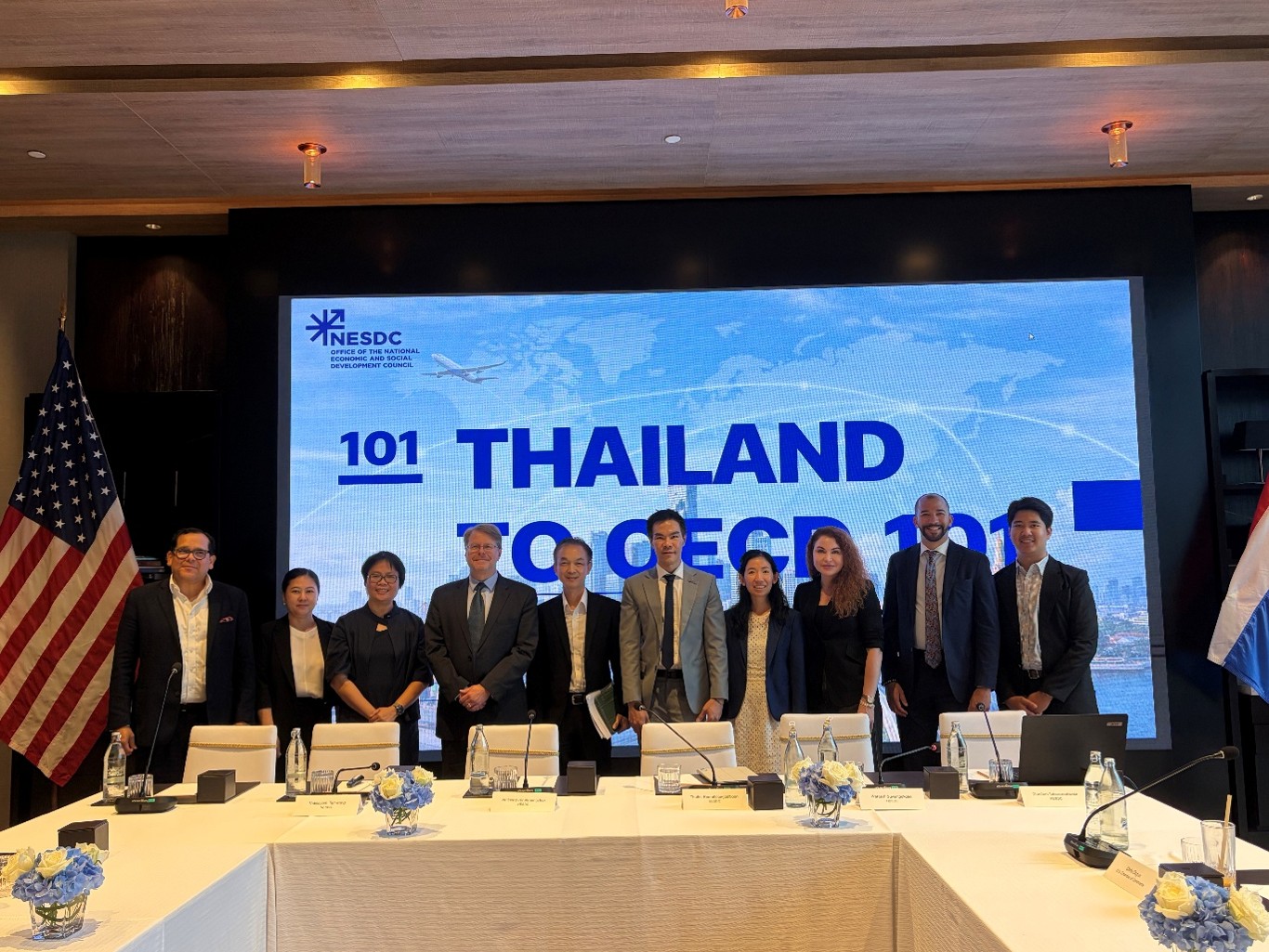
NESDC Discusses AI Cooperation with U.S. Chamber of Commerce, Supporting Thailand’s OECD Accession
On August 19, 2026, Mr. Thatchai Keeratiphongphaiboon, Director of the International Strategy and Coordination Division, and Mr. Athipong Hirunraengchok, Director of the Competitiveness Development Strategy and Coordination Division, met with a delegation from the U.S. Chamber of Commerce (USCC) to discuss Thailand’s OECD accession and AI development direction. The USCC delegation was led by Mr. […]
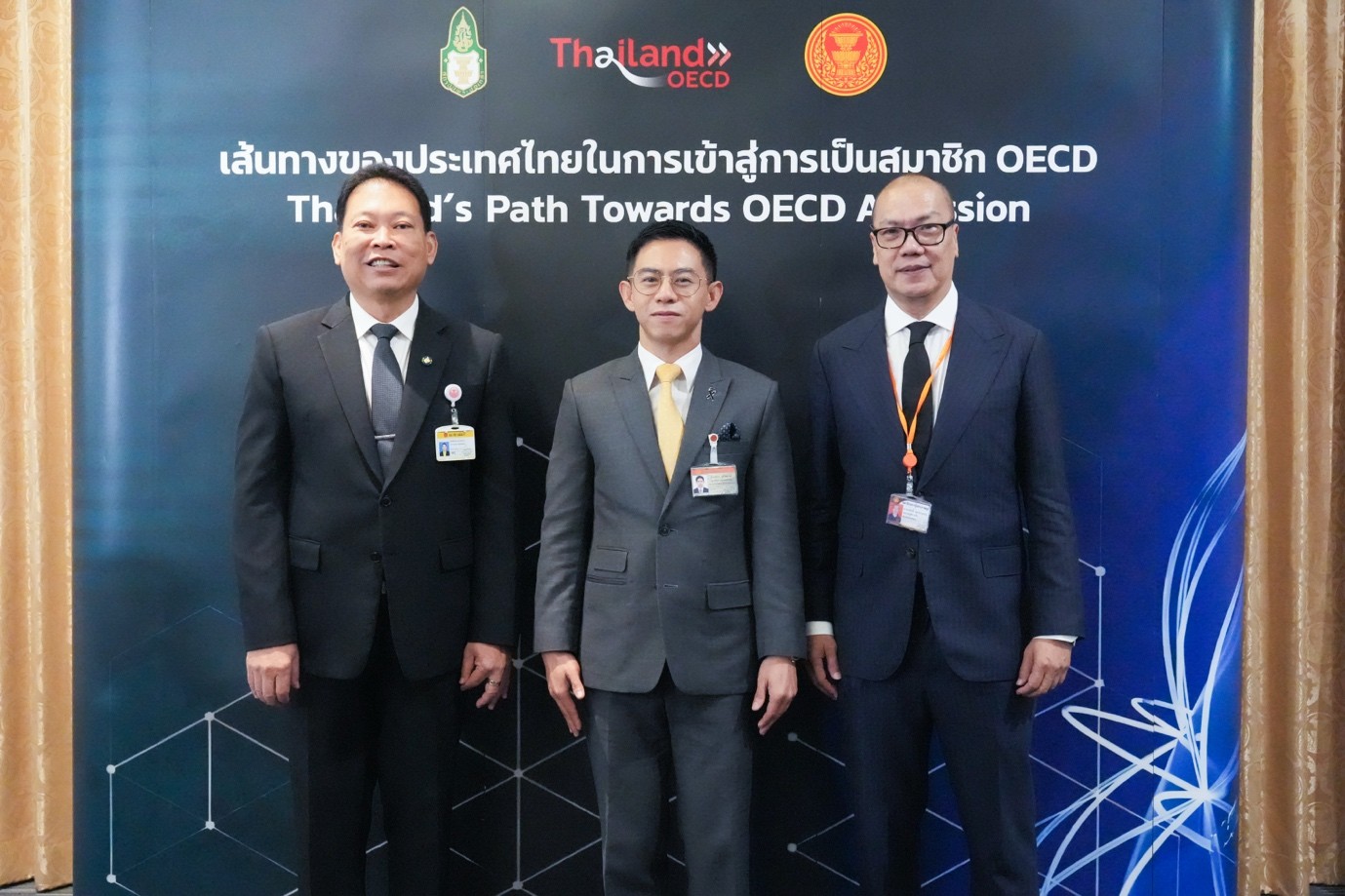
OECD 101: Thailand’s Path to OECD Membership
On August 19, 2026, King Prajadhipok’s Institute, in collaboration with the Secretariat of the House of Representatives, organized a seminar titled “OECD 101: Thailand’s Path to OECD Membership.” The event was attended by Ms. Steejit Taipiboonsuk, Deputy Secretary-General of the House of Representatives; Assoc. Prof. Dr. Woothisarn Tanchai, Secretary-General of King Prajadhipok’s Institute; Mr. Andrew […]
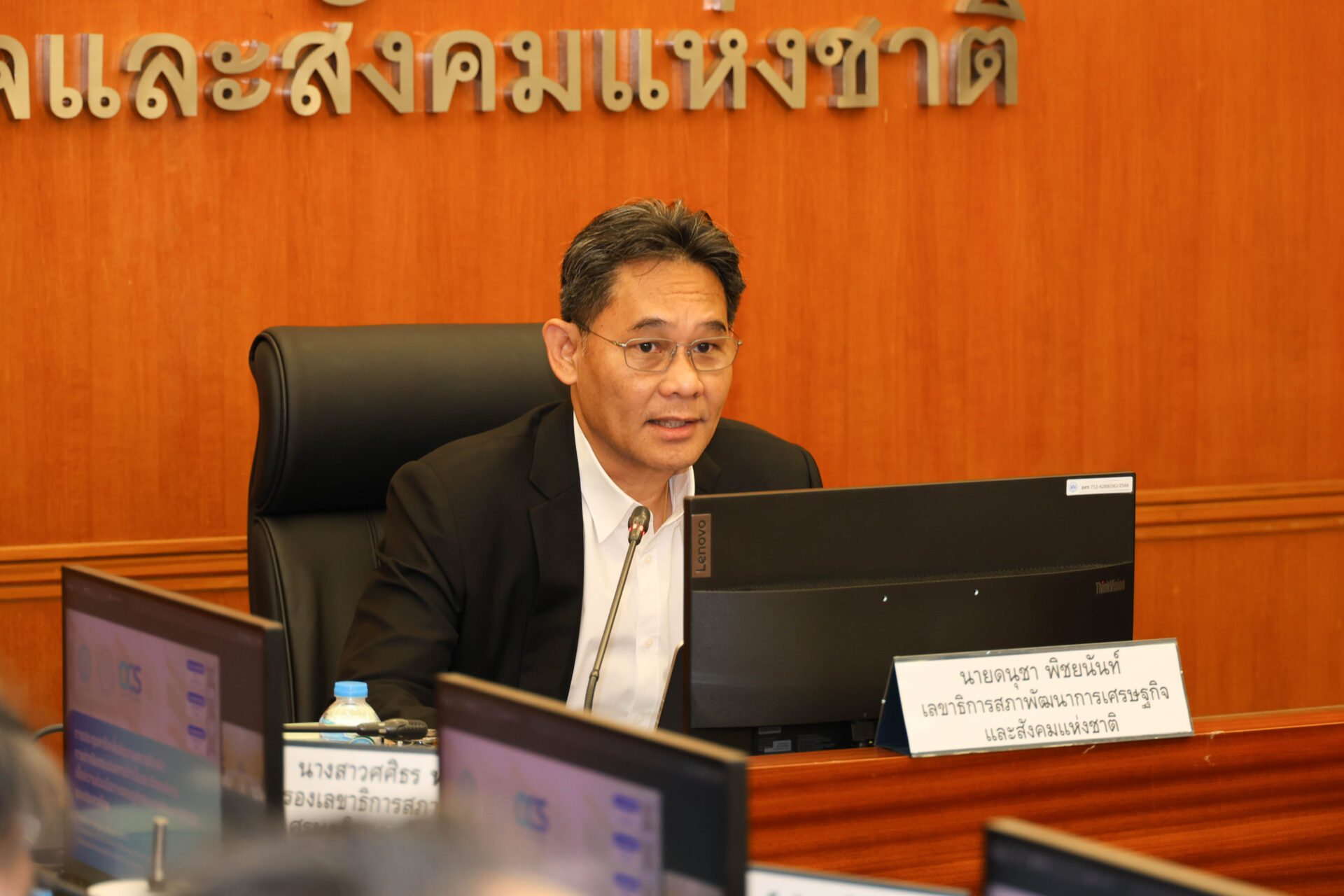
NESDC moves forward with consultations with Thai government agencies to accelerate the roadmap for OECD accession during the technical review stage.
On Friday, July 31, 2026, the Office of the National Economic and Social Development Council (NESDC) organized a consultative meeting to monitor the progress of Thailand’s accession process to the Organisation for Economic Co-operation and Development (OECD), chaired by Mr. Danucha Pichayanan, Secretary-General of the NESDC, along withMs. Sasithorn Pualattadej, Deputy Secretary-General of the NESDC; […]
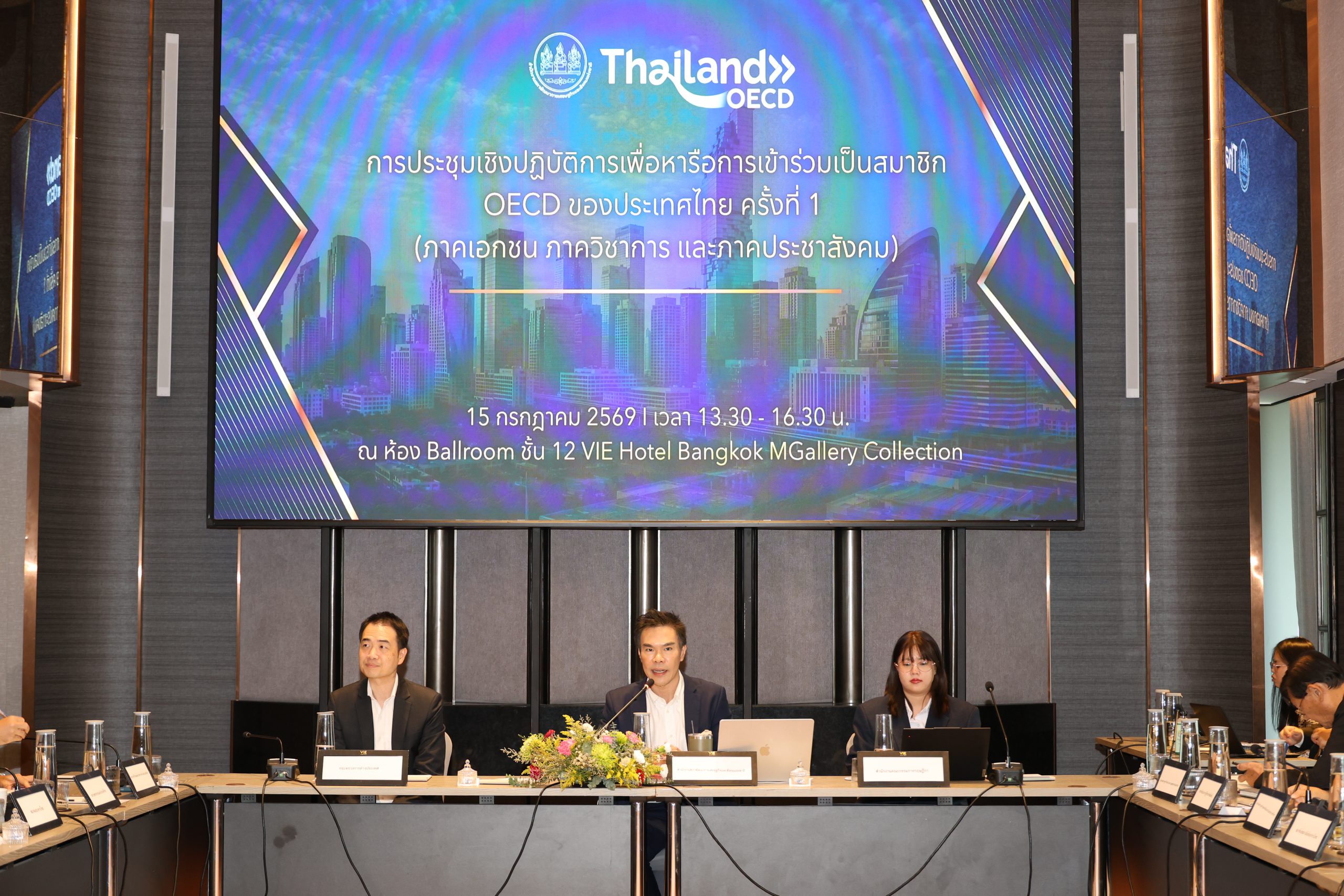
NESDC, OCS, and MFA Host Discussion with Private Sector and Civil Society to Prepare Thailand for OECD Accession
On July 15, 2026, the Office of the National Economic and Social Development Council (NESDC) organized the 1st Workshop to Discuss Thailand’s OECD Accession (Private Sector, Academic Sector, and Civil Society) at the Vie Hotel Bangkok, MGallery Hotel Collection. The event featuredrepresentatives from the NESDC, the Ministry of Foreign Affairs (MFA), and the Office of […]
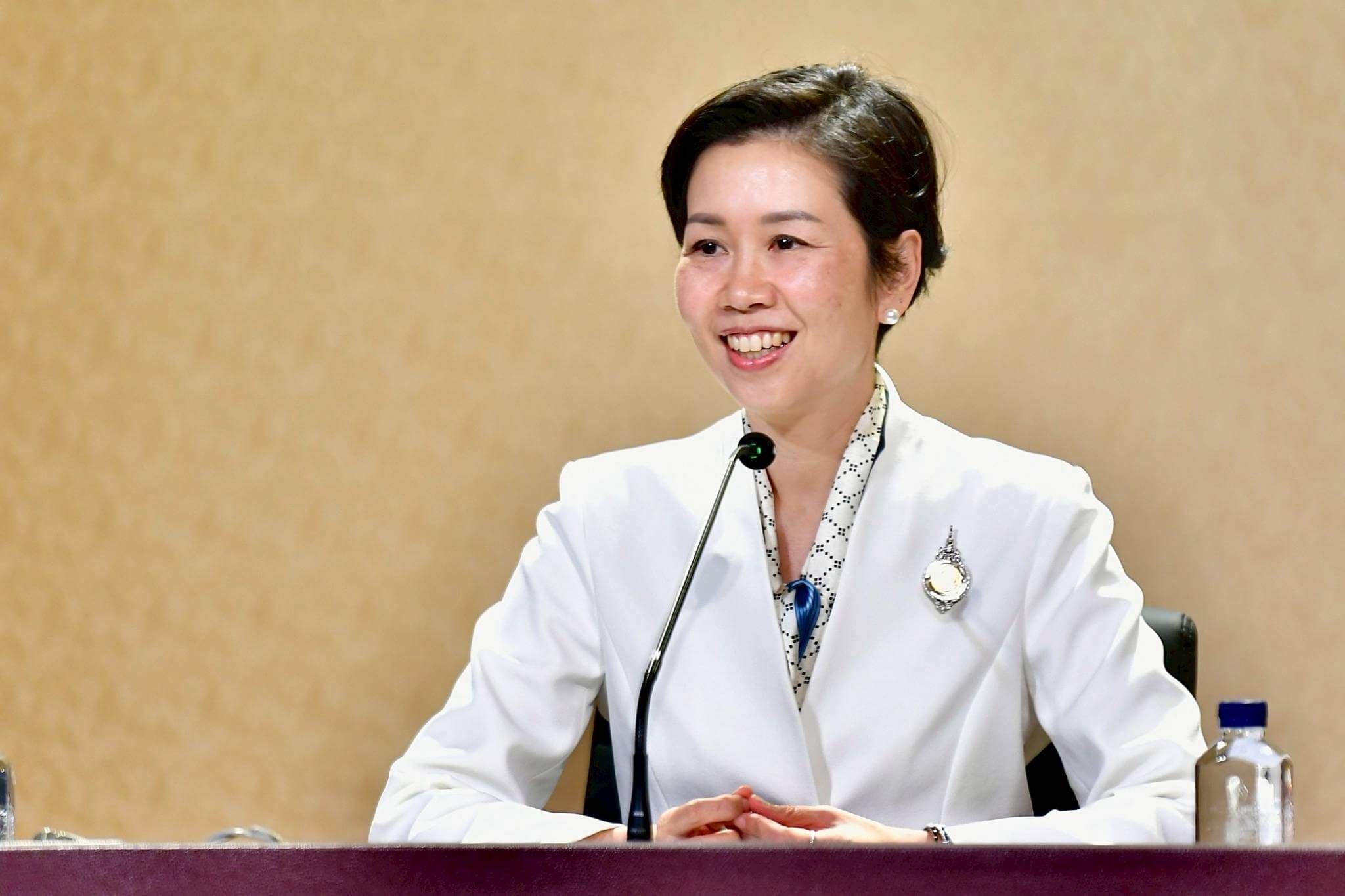
Cabinet approves draft MOU between NESDC and OECD, establishing a steering committee to lead Thailand toward OECD membership by 2028
On July 7, 2026, Ms. Ratchada Thanadirek, Deputy Spokesperson for the Prime Minister’s Office, revealed that Prime Minister Anutin Charnvirakul prioritizes the reform of government regulations to ensure swift public administration, as stated in the policy address to Parliament in April 2026. The objective is for various agencies to accelerate Thailand’s accession to OECD membership […]
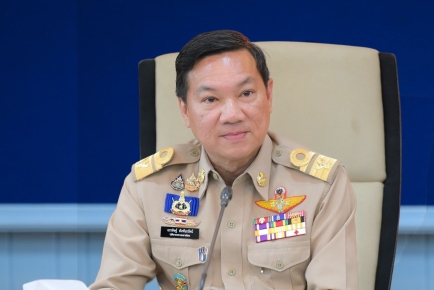
“PM Anutin” establishes Interior Ministry team to drive Thailand toward OECD membership, enhancing economic mechanisms, sustainable development, improving public quality of life, and elevating bureaucratic standards to international levels.
On July 5, 2026, Mr. Arsit Sampantharat, Permanent Secretary for Interior, revealed that Mr. Anutin Charnvirakul, Prime Minister and Minister of Interior, signed an order appointing the “Steering Committee and Subcommittee for Driving Thailand’s Accession to the Organisation for Economic Co-operation and Development (OECD) of the Ministry of Interior,” chaired by the Permanent Secretary for […]
What is OECD?
Background
OECD STRUCTURE
The Council consists of representatives from member countries and the European Union, with the OECD Secretary-General as the chairperson. The Council oversees and sets the direction of the organization, using a consensus-based decision-making mechanism.
Committees comprise over 300 sub-committees covering all sectors. They discuss, create, and review policies, as well as assess the impact of policy implementation. They also disseminate knowledge and policy experiences through collaboration with experts, working groups, and directorates.
The Secretariat consists of directorates with over 3,300 staff members. It collects data and presents analytical results along with policy recommendations to support committee discussions as directed by the Council.

Member Countries: Currently, OECD has 38 member countries from Europe, North America, Latin America, and Asia-Pacific regions, including:
Europe


North America


Latin America


Asia Pacific


8 countries in the Accession Process or Accession Candidate Countries include:
Accession Candidate Countries


Learn more about OECD
Podcast: Let’s Get Global – Stories and Knowledge
Related Cabinet Resolutions
| Cabinet Resolution | Subject | Link | |
| 6 | 18 February 2025 | Approval of the fiscal year 2025 budget, central budget, reserve for emergency or necessary expenses to implement the project for the OECD membership process |  |
| 7 | 8 July 2025 | Approval and acknowledgment of the results of the Steering Committee meeting on Thailand’s OECD membership process, and assignment of relevant agencies to continue driving Thailand’s OECD membership concretely | |
| 8 | 19 May 2026 | Progress of the Accession Process to the Organisation for Economic Co-operation and Development (OECD) and the Operational Mechanism to Drive Thailand towards OECD Membership | |
| 9 | 7 July 2026 | Draft Regulation of the Office of the Prime Minister on the Steering Committee for Thailand’s Accession to the Organisation for Economic Co-operation and Development (OECD), B.E. …. | |
