
Asia-Pacific Economic Cooperation
APEC
Important News and Updates
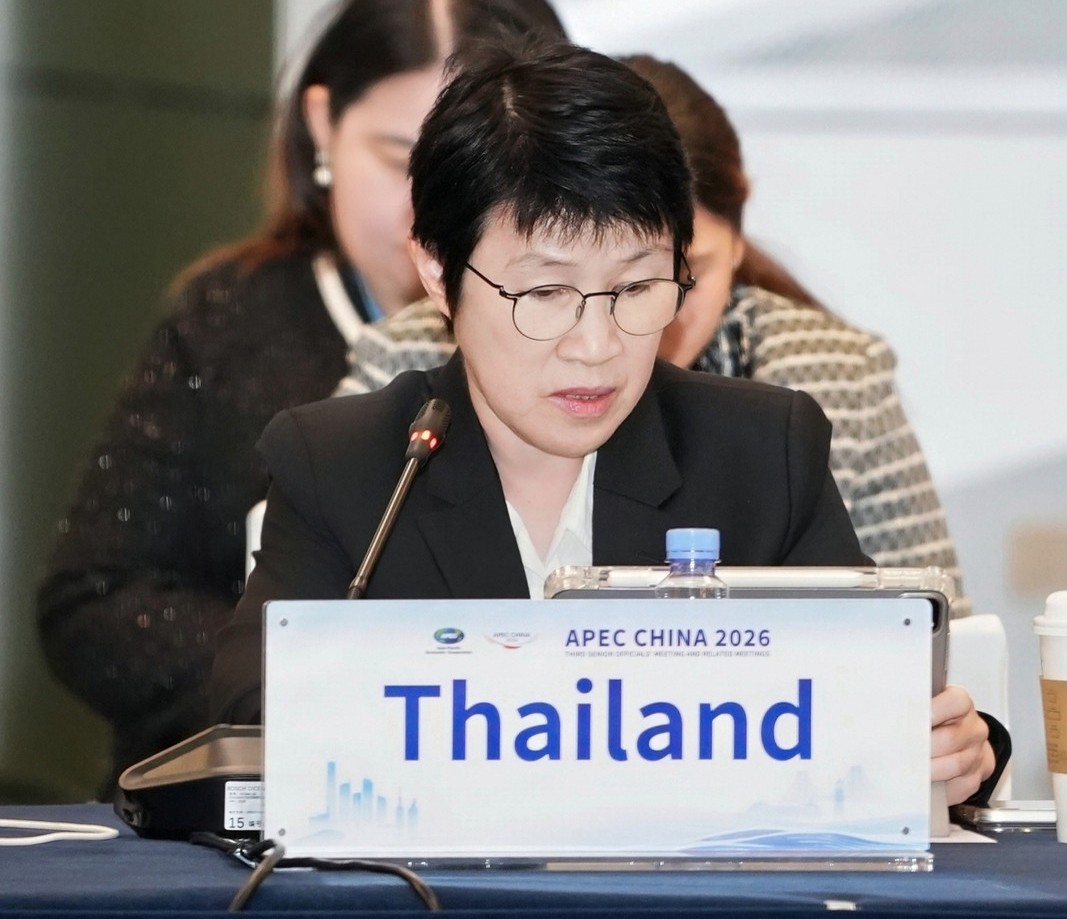
The 2nd APEC Economic Committee (EC) Meeting of 2026 in Dalian, People’s Republic of China
The People’s Republic of China, as the APEC 2026 host, organized the 2nd APEC Economic Committee (EC) Meeting of 2026 from August 24 – 25, 2026. The meeting took place during the Third APEC Senior Officials’ Meeting and Related Meetings (SOM3) in Dalian, People’s Republic of China. Ms. Sasithorn Palattadej, Deputy Secretary-General of the National […]
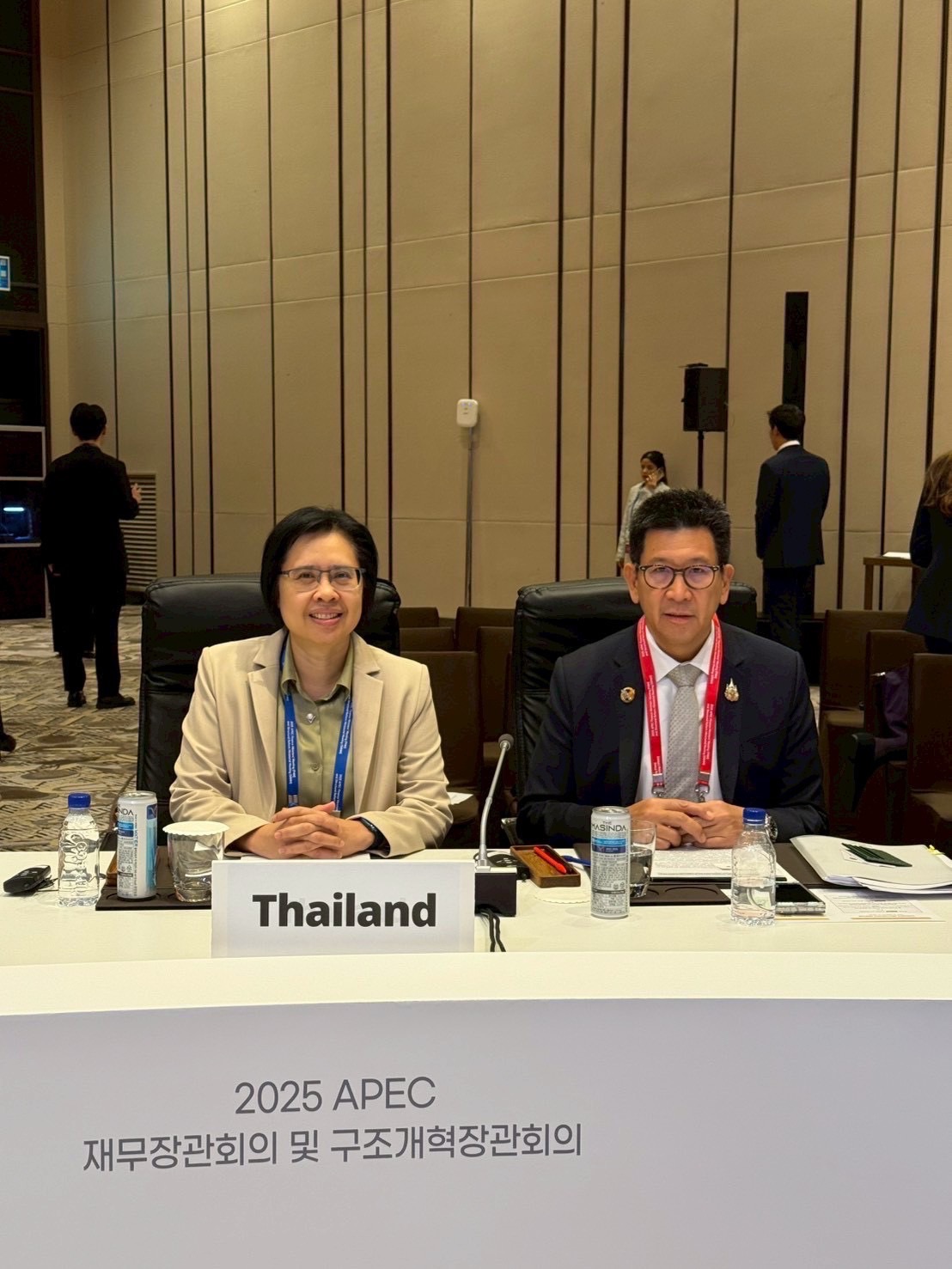
Joint Meeting of APEC Finance Ministers and APEC Structural Reform Ministers (FMM & SRMM) in Incheon, Republic of Korea
The Republic of Korea, as the host of APEC 2025, organized the Joint Meeting of APEC Finance Ministers and APEC Structural Reform Ministers on October 22, 2025, in Incheon, Republic of Korea. Mr. Ekniti Nitithanprapas, Deputy Prime Minister and Minister of Finance, led the Thai delegation to the meeting, accompanied by Ms. Onfah Vejjajiva, Secretary-General […]
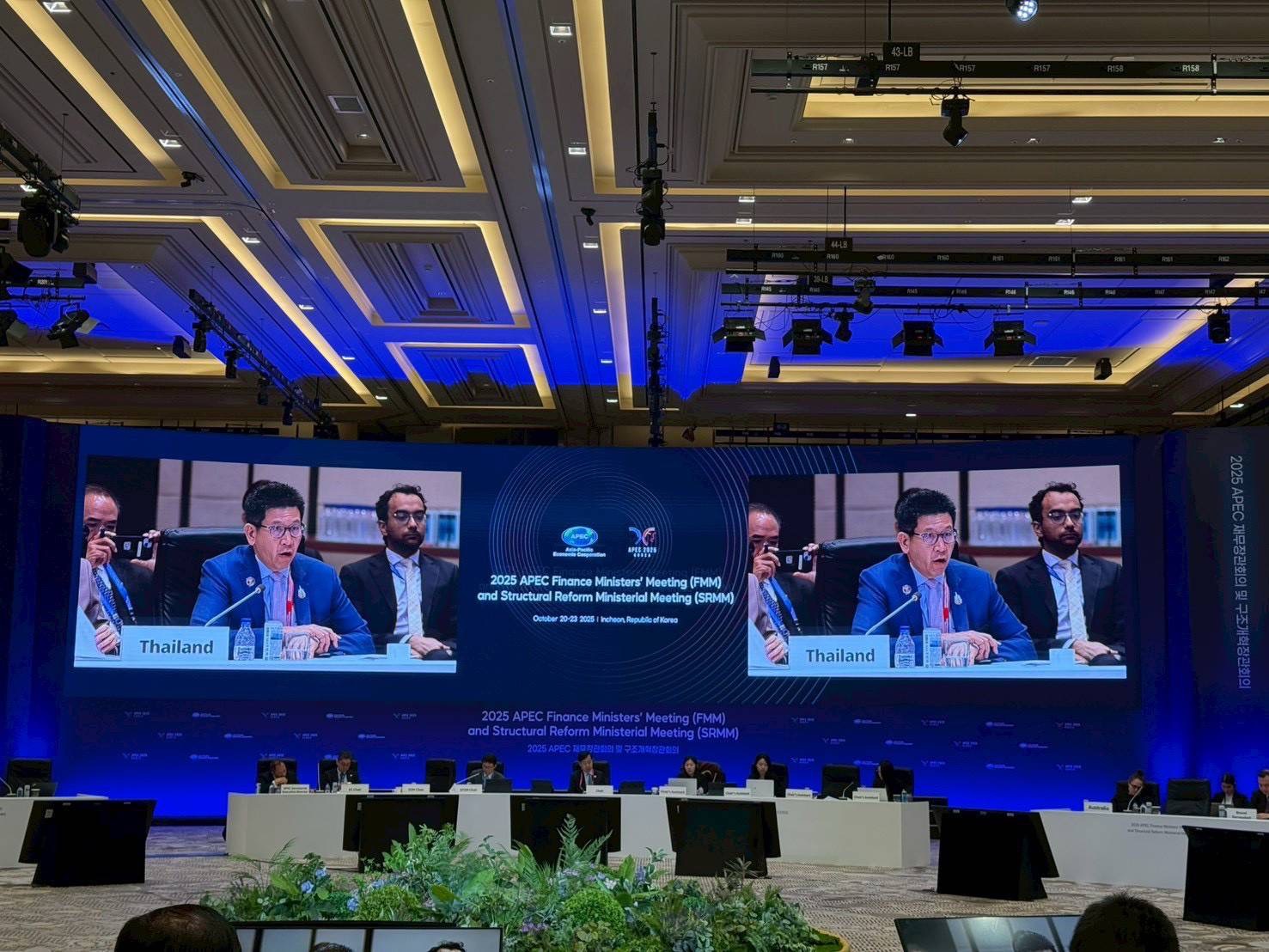
The 4th APEC Structural Reform Ministerial Meeting in Incheon, Republic of Korea
On October 22-23, 2025, the Republic of Korea, as the APEC host for 2025, hosted the 4th APEC Structural Reform Ministerial Meeting (SRMM) in Incheon. Mr. Ekniti Nitithanprapas, Deputy Prime Minister and Minister of Finance, led the Thai delegation, accompanied by Ms. Onfah Vejjajiva, Secretary-General of the National Economic and Social Development Council, in her […]
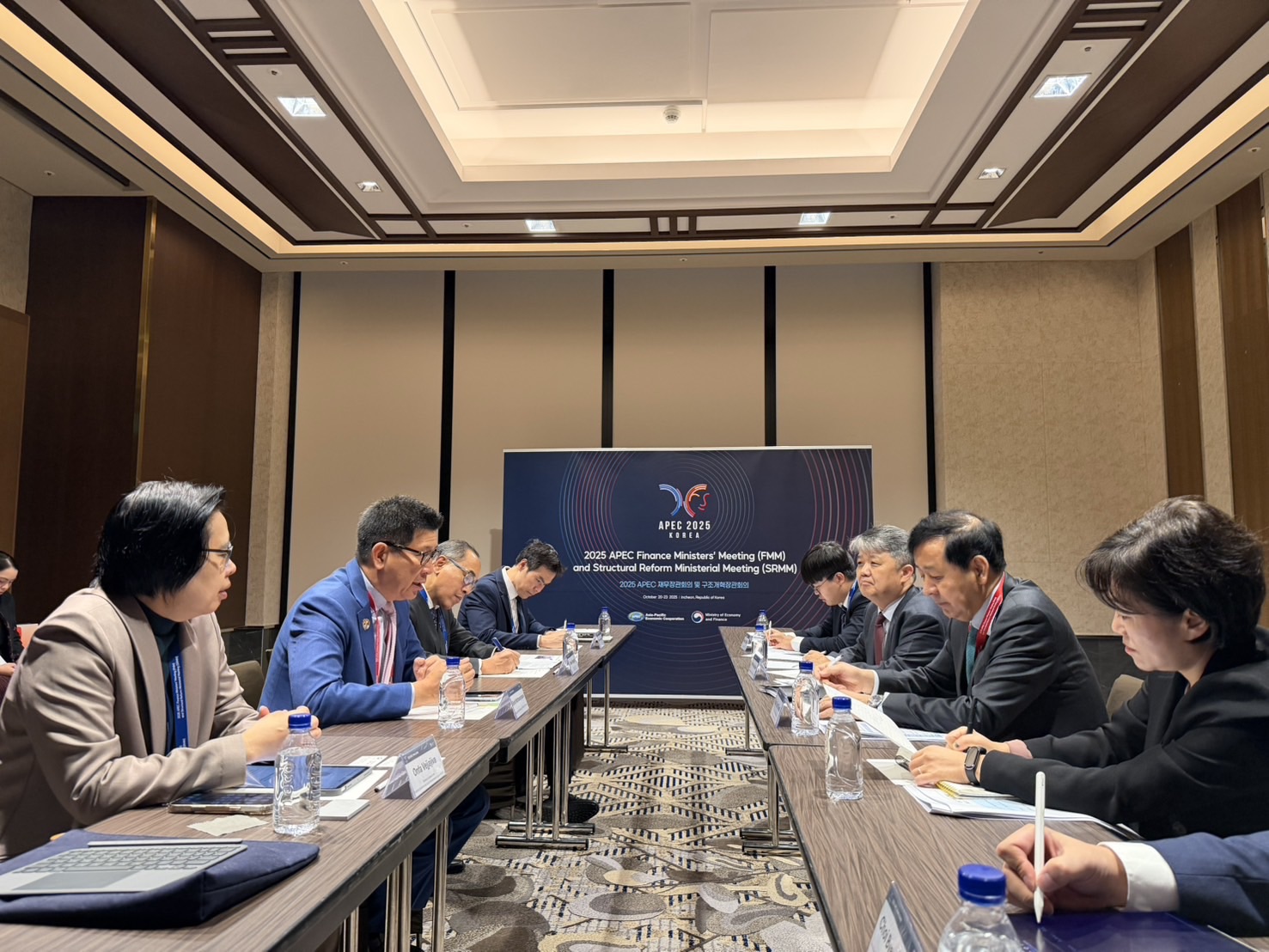
Bilateral Discussion between Deputy Prime Ministers and Ministers of Finance of Thailand and South Korea
On October 23, 2025, Dr. Ekniti Nitithanprapas, Deputy Prime Minister and Minister of Finance, held bilateral talks with Mr. Koo Yun-cheol, Deputy Prime Minister and Minister of Finance of the Republic of Korea in Incheon, Republic of Korea. The meeting was attended by Ms. Onfah Vejjajiva, Secretary-General of the National Economic and Social Development Council, […]
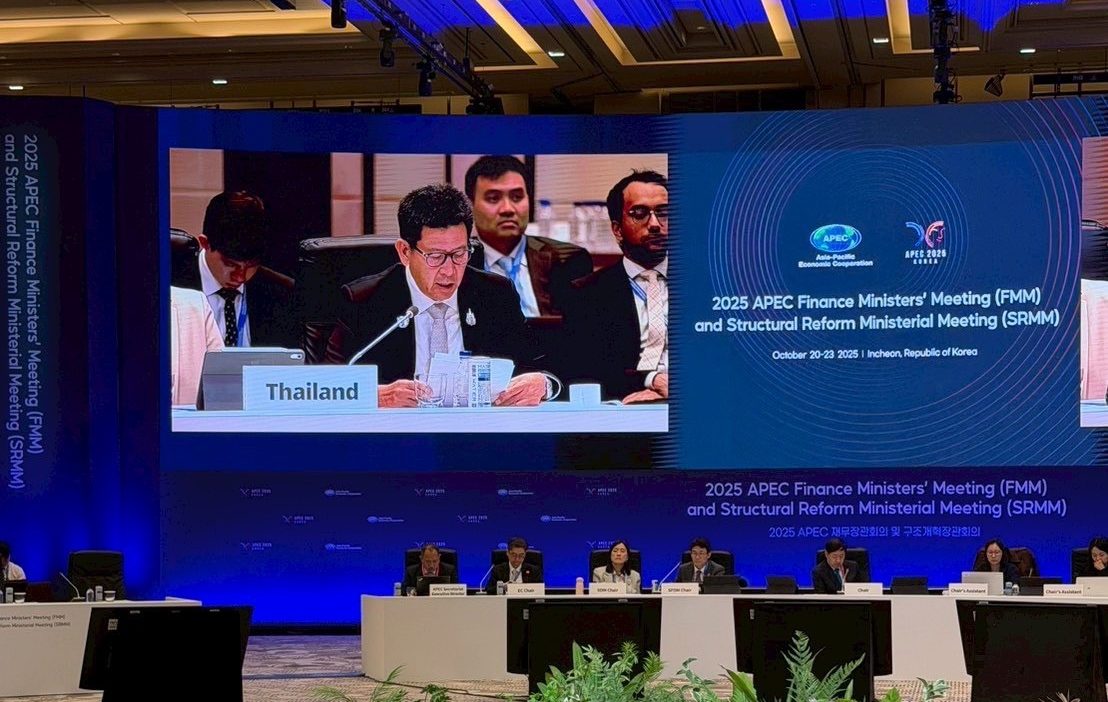
Joint Meeting of APEC Finance Ministers and APEC Structural Reform Ministers (FMM & SRMM) in Incheon, Republic of Korea
The Republic of Korea, as the APEC host for 2025, organized the Joint Meeting of APEC Finance Ministers and APEC Structural Reform Ministers on October 22, 2025, in Incheon, Republic of Korea. Mr. Ekniti Nitithanprapas, Deputy Prime Minister and Minister of Finance, led the Thai delegation, accompanied by Ms. Onfah Vejjajiva, Secretary-General of the National […]
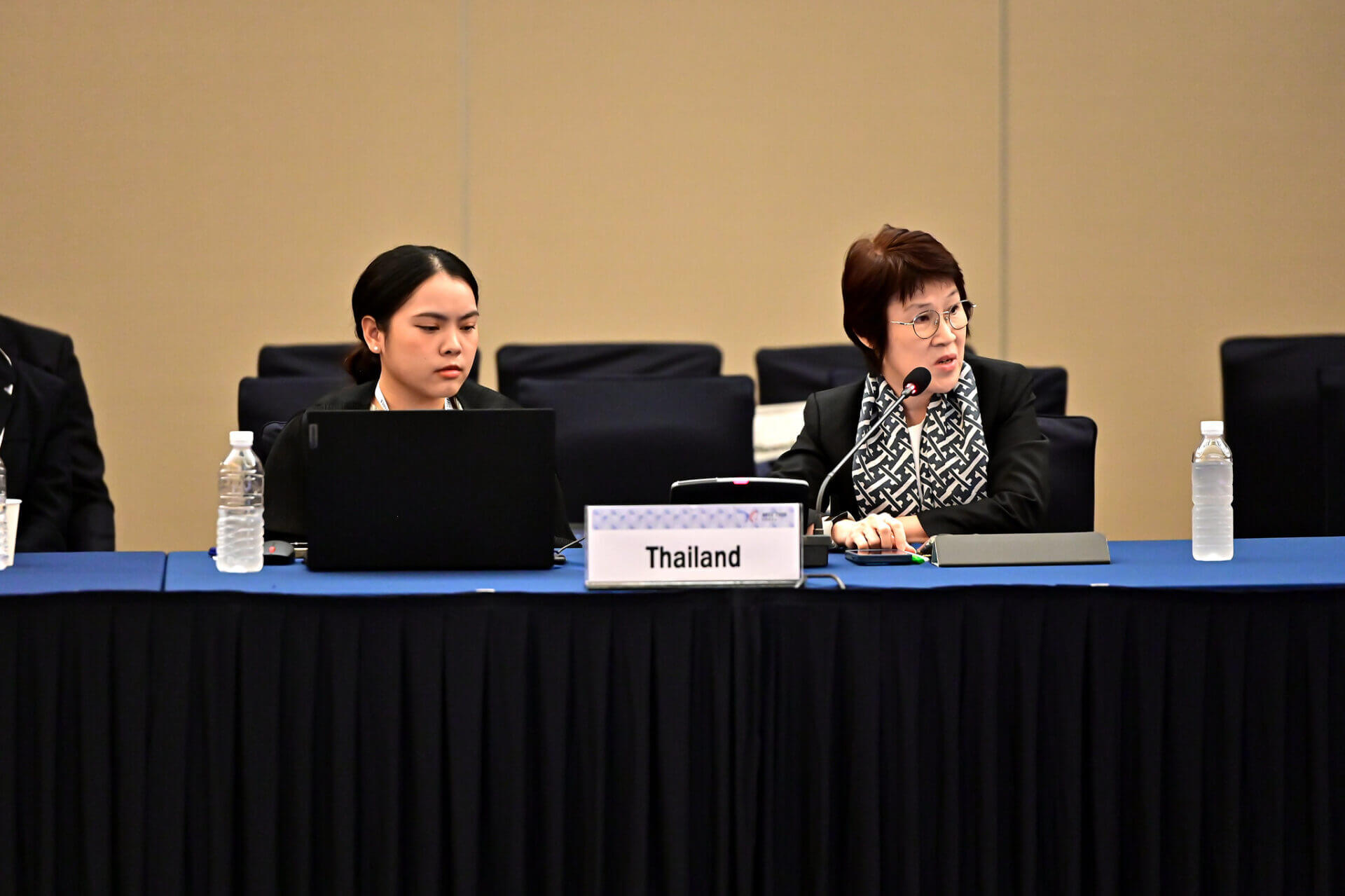
NESDC Participates in the 2nd APEC Economic Committee Meeting of 2025 to discuss the agenda for a strengthened APEC structural reform and issues of enhancing participation in the formal economy
On August 12-13, 2025, the Republic of Korea, as the APEC 2025 host, organized the 2nd APEC Economic Committee (EC) Meeting of 2025 during the Third Senior Officials’ Meeting and Related Meetings (SOM3) in Incheon, Republic of Korea. Ms. Sasithorn Palatthadech, Deputy Secretary-General of the National Economic and Social Development Council, led the Thai delegation […]
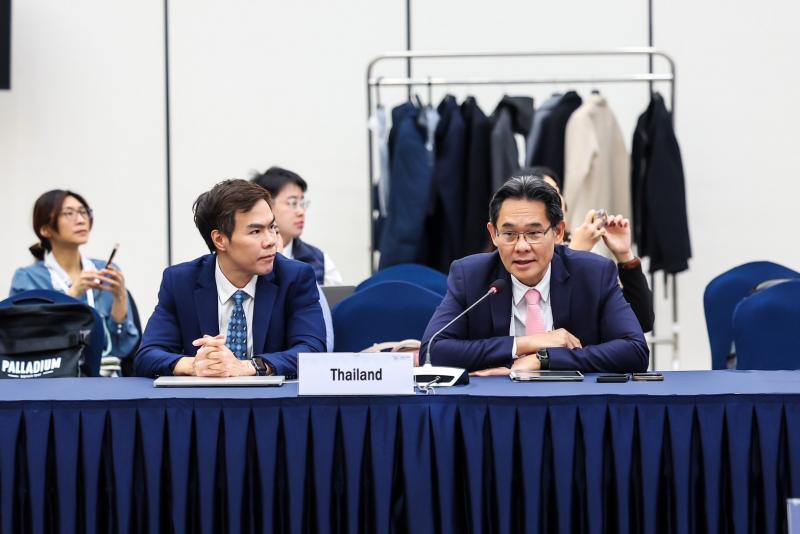
The 1st APEC Economic Committee Meeting of 2025 in Gyeongju, Republic of Korea
On March 3-4, 2025, the Republic of Korea, as the APEC 2025 host, organized the 1st APEC Economic Committee (EC) Meeting of 2025 during the First Senior Officials’ Meeting (SOM1) in Gyeongju, Republic of Korea. Mr. Danucha Pichayanan, Secretary-General of the National Economic and Social Development Council, led the Thai delegation in attending the Economic […]

APEC Economic Report 2024: Structural Reform and Financial Inclusion
The APEC Economic Policy Report 2024 (AEPR 2024) on Structural Reform and Financial Inclusion aims to promote structural reforms that support financial inclusion, which is a crucial component of sustainable, resilient, and inclusive economic growth. The report presents both demand-side and supply-side issues in financial access, focusing on implementing structural reforms to facilitate equitable access […]

The 2nd APEC Economic Committee Meeting of 2024 in Lima, Republic of Peru
On August 21-22, 2024, the Republic of Peru, as the host of APEC 2024, organized the 2nd APEC Economic Committee (EC) Meeting of 2024, which was part of the Third Senior Officials’ Meeting (SOM3) held from August 12-25, 2024, in Lima, Republic of Peru. Mr. Thatchai Keerapong Paiboon, Director of the International Strategy and Cooperation […]


General Information about APEC Program
The Asia-Pacific Economic Cooperation (APEC) consists of 21 member economies: Australia, Canada, Japan, South Korea, China, Hong Kong, New Zealand, United States, Brunei, Indonesia, Malaysia, Singapore, Philippines, Thailand, Chinese Taipei, Chile, Mexico, Papua New Guinea, Peru, Russia, and Vietnam. Its objectives are to promote the multilateral trading system, support economic growth in the region and globally by reducing barriers and facilitating trade, services, and investment between economies. The Cabinet has assigned the Office of the National Economic and Social Development Council (NESDC) as the main responsible agency for participating in the APEC Economic Committee (EC) meetings and driving the APEC Structural Reform agenda.
Objectives
- To support knowledge regarding economic trends and challenges for APEC Ministers and other APEC meeting frameworks by providing comprehensive perspectives and in-depth analysis of economic trends and challenges affecting the region.
- To support APEC’s operations in promoting structural reforms to drive the achievement of the Putrajaya Vision 2040, by coordinating and supporting APEC’s work in conjunction with other APEC working groups and the APEC Finance Ministers’ Meeting framework.
- To serve as a forum for member economies to engage in policy discussions and analyze regional economic issues.
The APEC Economic Committee (EC) was established following the APEC Ministerial Meeting statement in Jakarta, Republic of Indonesia, in 1994. Its purpose is to enhance the capacity of APEC members to analyze long-term macroeconomic trends and study macroeconomic issues through initial work plans, such as the 1995 Economic Outlook report, the dissemination of key economic data, and the analysis of economic development trends. The EC serves as an operational mechanism that works alongside other bodies to drive APEC’s core goals of promoting trade and investment liberalization, as well as cooperation in social dimensions and other development areas.
Mission of the APEC Economic Committee
The APEC Economic Committee (EC) meets twice a year in the host economy. It is currently chaired by Dr. James Ding (Hong Kong, China).
Currently, the EC operates under the Strengthened and Enhanced APEC Agenda for Structural Reform (SEAASR) and utilizes sub-groups and Friends of the Chair (FotC) mechanisms to drive structural reform through workshops, policy dialogues, academic papers, and capacity-building activities. It currently consists of six groups:
- Competition Policy and Law Group (CPLG)
- Corporate Law and Governance (CLG)
- Ease of Doing Business (EoDB)
- Public Sector Governance (PSG)
- Regulatory Reform (RR)
- Strengthening Economic Legal Infrastructure (SELI)
The EC is also responsible for producing the annual APEC Economic Policy Report (AEPR), which provides economic policy recommendations. By tradition, the APEC host economy for each year determines the theme of the report.
2026 APEC Economic Policy Report on Structural Reform and AI-Driven Digital Transformation
- Proposed by the Republic of Korea as the APEC 2025 host, this report aims to promote structural reforms that enable and accelerate AI-driven digital transformation in the Asia-Pacific region. This aligns with the Putrajaya Vision 2040, the Aotearoa Plan of Action, and the Lima Roadmap, which prioritize digital transformation to expand economic participation. Furthermore, the report supports the Strengthened and Enhanced APEC Agenda for Structural Reform (SEAASR) 2026-2030 and the APEC 2025 theme, “Building a Sustainable Tomorrow: Connect, Create, and Prosper,” which emphasizes the role of innovation and structural reform as key drivers of the region’s long-term sustainable growth.
- The goal is to support member economies in adapting to rapid technological changes, particularly the development of AI and digital technologies, which have the potential to boost productivity, open new markets, and drive innovation. However, significant challenges remain, such as the digital divide, transparency, data protection, and intellectual property rights. This report will examine the role of structural reform in supporting a comprehensive digital transformation, covering digital infrastructure development, legal and policy frameworks to promote innovation, reducing digital inequality, human resource skill development, and promoting sustainability.
- The report aims to analyze the role of structural reform in accelerating AI-driven digital transformation to enhance productivity, economic growth, and innovation in the Asia-Pacific region. It covers the digital transformation landscape, digital readiness and gaps, the role of policies, institutions, infrastructure, data, and human capital development. It also provides policy recommendations to develop a safe, reliable, and accessible AI and digital ecosystem, including approaches to reduce inequality and strengthen the capacity of all sectors.
- The report is prepared by the APEC Policy Support Unit (PSU) under the supervision of the Republic of Korea and China as co-leads of the core drafting group. The EC is scheduled to endorse the full report in October 2026. Currently, member economies are in the process of preparing their Individual Economy Reports (IERs).
2025 APEC Economic Policy Report on Structural Reform to Increase Participation in the Formal Economy
- This report focuses on the role of structural reform in promoting participation in the formal economy. It analyzes how the public sector can implement policies to support the transition from the informal to the formal economy, which will help increase economic productivity, enhance competitiveness, and promote inclusive, resilient, and sustainable economic growth. The report emphasizes developing institutional and regulatory policy frameworks conducive to business, human resource and labor skill development, and promoting access to markets and financial services for micro, small, and medium enterprises (MSMEs). It also covers the use of digital technology and innovation to support the integration of labor and businesses into the formal economy, as well as reducing structural barriers that limit opportunities for vulnerable populations in the Asia-Pacific labor market.
2024 APEC Economic Policy Report on Structural Reform and Financial Inclusion
- This report examines the role of structural reform in promoting financial inclusion as a key factor for sustainable, resilient, and inclusive economic growth. It focuses on enhancing access to financial services for citizens and the business sector, particularly underserved groups, through the design of financial products that meet specific needs, the strengthening of financial literacy, and the support of entrepreneurial opportunities.
2023 APEC Economic Policy Report on Structural Reform and an Enabling Environment for Sustainable Business for Inclusive, Resilient and Sustainable Business
- This report explores structural reform approaches to create an environment conducive to sustainable, socially responsible, and environmentally friendly business operations in the Asia-Pacific region. It emphasizes the exchange of best practices and the formulation of policy recommendations to support inclusive, resilient, and sustainable economic growth.
- Thailand, through the Office of the National Economic and Social Development Council (NESDC), collaborated with the United States as co-leads of the core drafting group for this report. It was endorsed by APEC member economies and presented to the APEC Senior Officials’ Meeting and the APEC Ministerial Meeting in San Francisco, California, USA, in November 2023.
The 5-year APEC Structural Reform Agenda (2026-2030) is currently in the process of developing a structural reform implementation plan to drive future work.
The document builds upon previous structural reform frameworks, specifically incorporating progress and lessons learned, but aims for a more integrated and robust approach to elevate implementation. It emphasizes the importance of internal structural reform efforts, as well as strengthening and improving the business and regulatory environment for inclusive, innovative, and sustainable economic growth. It also presents a significant opportunity to strengthen international regulatory cooperation, support sustainable economic growth, promote market connectivity, competitiveness, and prosperity, and create a business environment conducive to all sectors. Furthermore, it aims to address or eliminate structural barriers that limit the full and meaningful participation of all sectors in the economy, stimulate innovation, and strengthen the capacity to respond to economic challenges, demographic shifts, and emerging global challenges.
The document aligns with the APEC Putrajaya Vision 2040 and the Aotearoa Plan of Action by encouraging economies to implement strong, inclusive, and coordinated structural reforms to stimulate economic growth for all and address current and future challenges. These include promoting innovation and digital transformation, enhancing skill development, removing structural barriers and unnecessary burdens on investors and businesses, and empowering all groups in society to participate broadly in the economy to achieve their full economic potential. These reforms are crucial for increasing potential, boosting productivity, and accelerating growth, ensuring the Asia-Pacific remains the world’s most dynamic and highly connected region.
SEAASR consists of four pillars of structural reform:

Enabling Fair, Market-Oriented Competition

Enabling Environment for Doing Business

Promoting Innovation and Digitalisation

Empowering All to Achieve Their Economic Potential for Sustainable Economic Growth
Member economies must develop Individual Action Plans (IAPs) by mid-2026 to identify the structural reform pathways they will undertake through 2030. These plans should include reform proposals for both services and non-services sectors across all areas, along with quantitative and qualitative indicators for monitoring and evaluation.
Additionally, the EC will develop a SEAASR Implementation Plan with a timeline, specifying appropriate actions and indicators to support the implementation of member economies. Recommended activities include:
- Integrating findings and recommendations from reports on EAASR into the SEAASR Implementation Plan, including strengthening monitoring and evaluation, and effectively applying AEPR recommendations within the plan.
- Supporting capacity-building projects for the preparation of IAPs under SEAASR and the design and implementation of structural reform policies or projects.
- Promoting APEC-funded and self-funded projects that support SEAASR activities and goals, including through relevant sub-funds.
- Increasing engagement with the private sector and stakeholders, including consultations with the APEC Business Advisory Council (ABAC), to ensure SEAASR implementation is aligned, responsive to needs, and practical.
- Promoting cooperation with other APEC mechanisms.
- A mid-term review of SEAASR in 2028, including a high-level meeting on structural reform to exchange experiences and best practices, and to recommend future directions.
- A final evaluation of SEAASR in 2030 and a Ministerial Meeting on Structural Reform.
The APEC Economic Committee (EC) has the primary mission of providing knowledge on economic trends and challenges to APEC Ministers and other APEC forums. This is achieved through comprehensive perspectives, in-depth analysis of economic trends, and challenges affecting the region, as well as promoting structural reforms to drive the achievement of the APEC Putrajaya Vision 2040. The EC operates through sub-forums and Friend of the Chair (FotC) groups, which include:
1.
Competition Policy and Law Group
(CPLG Sub-forum)
Implementation
The lead coordinator is Vietnam.
Thailand’s Implementation: The Trade Competition Commission (OTCC), in collaboration with the Ministry of Foreign Affairs (MFA), plays a role in driving cooperation under the APEC Competition Policy and Law Group (CPLG) to promote understanding of competition laws and policies among APEC member economies, exchange experiences and best practices in competition law enforcement, and develop the capacity of competition regulatory agencies in the region. It also supports the work of the Economic Committee (EC) under the Strengthened and Enhanced APEC Agenda for Structural Reform (SEAASR) framework through policy dialogues, workshops, information and knowledge exchange, as well as technical cooperation and capacity-building activities with relevant agencies, the private sector, and international organizations to promote fair trade competition and support the region’s economic development.
2.
Strengthening Economic Legal Infrastructure
(SELI)
Implementation
The lead coordinator is Japan.
Thailand’s Implementation: Thailand has made continuous progress in Online Dispute Resolution (ODR) through:
(1) The Office of the Judiciary has implemented the Court Integral Online Service (CIOS) to support mediation both pre-litigation and during trial. It has been developed to allow for filing petitions, negotiating via video call, and electronic signatures in a comprehensive manner. Additionally, an Online Consumer Case Division has been established in the Civil Court, operating entirely through e-Filing and online systems, allowing consumers damaged by online purchases to file electronic lawsuits 24 hours a day.
(2) The Thailand Arbitration Institute (TAI) provides services through an E-Arbitration system and Smart Meeting Rooms, where parties and the arbitral tribunal can conduct online proceedings from dispute submission to case conclusion. The Thai Arbitration Institute Mediation Center (TAI-MC) has also been established.
(3) The Legal Execution Department, under the Ministry of Justice, has opened online mediation requests nationwide to meet public needs comprehensively, conveniently, quickly, and fairly.
3.
Ease of Doing Business
(EoDB)
Implementation
The lead coordinator is the United States.
Thailand’s Implementation: Thailand has accelerated the systematic improvement of the ease of doing business through:
(1) The Committee on Regulatory Reform for Ease of Doing Business is responsible for recommending improvements to laws and regulations that hinder daily life and business operations, aiming to foster a more streamlined business environment.
(2) The Office of the Public Sector Development Commission (OPDC) drives preparations for the B-Ready assessment through key measures such as legal amendments based on B-READY 2025 criteria, integrating government data through a single platform, developing easily accessible service systems, and closely monitoring results in each area. Additionally, it organizes public and private sector consultation meetings and conducts site visits to discuss with relevant agencies, such as the Ministry of Labour, the Revenue Department, and the Legal Execution Department, to resolve practical constraints and prepare for the World Bank’s data collection in 2026.
4.
Corporate Law and Governance
(CLG)
Implementation
The lead coordinator is Indonesia.
Thailand’s Implementation: Thailand has made progress in elevating the good corporate governance of state-owned enterprises (SOEs) in line with international standards through:
(1) The State Enterprise Policy Office (SEPO) collaborated with the OECD to produce the SOE Review of Thailand, which provided an overview of SOE corporate governance. The OECD offered 12 policy recommendations to align regulatory mechanisms with international standards. Thailand has already begun addressing four key areas: (1) enhancing transparency of state support measures, (2) improving financial and non-financial disclosure, (3) complying with international standards for risk management and internal control, and (4) setting sustainability goals and challenges for SOEs. The number of recommendations may be adjusted based on the Technical Review in Thailand’s OECD accession process.
(2) SEPO has also reviewed the 2019 Principles and Guidelines for Good Corporate Governance in State Enterprises and Practice Guidelines (CG Principles) to keep pace with changing contexts, structural issues, and overlapping roles. It has incorporated OECD principles and recommendations, as well as factors such as the changing environment and current obstacles in SOE supervision. These have been circulated to SOEs and their respective ministries for implementation to modernize Thailand’s SOE CG system, ensuring transparency and alignment with international standards in support of future OECD membership goals.
5.
Regulatory Reform
(RR)
Implementation
The lead coordinator is Malaysia.
Thailand’s Implementation: Thailand has made tangible progress in developing Good Regulatory Practice (GRP) to improve the business environment, particularly for SMEs, through:
(1) The Office of the Council of State pushed for the 2019 Act on Legislative Drafting and Evaluation of Law Results, which requires government agencies to conduct Regulatory Impact Assessments (RIA) before enacting laws and Ex-post Evaluations after enforcement. This aims to enhance the quality, transparency, and efficiency of laws in line with OECD guidelines, while also playing a role in international cooperation forums.
(2) The Thai Industrial Standards Institute (TISI) has established standards relevant to SMEs based on international principles, seeking stakeholder feedback and ensuring certification processes are accurate, clear, fast, transparent, and fair. This helps increase value and enhance the competitiveness of SMEs in the APEC region. Thailand’s GRP drive focuses on private sector participation, digital platform development, and reducing regulatory compliance costs to achieve sustainable, tangible results for the business sector.
6.
Public Sector Governance
(PSG)
Implementation
The lead coordinator is currently being recruited.
Thailand’s Implementation: Thailand has made clear progress in enhancing transparency, improving public service quality, and promoting public participation through the use of innovative technology by:
(1) The National Statistical Office (NSO) has adopted the Statistical Data and Metadata eXchange (SDMX) standard to develop the country’s key datasets, which helps enhance data governance and increase the quality and efficiency of government data management. Additionally, the NSO has been driving the “Government Data Catalog Project” since 2019 to support smart government and secure data integration, while providing knowledge and systems to government agencies nationwide, aiming for full coverage by 2027. All these efforts reflect a commitment to creating a transparent, efficient digital government with more convenient access for citizens.
(2) The Ministry of Digital Economy and Society developed the Health Link project to seamlessly connect health data nationwide, supporting the use of a single ID card for treatment at any hospital, reducing redundant tests, and developing an electronic referral system. Currently, it connects nearly ten thousand healthcare facilities across different jurisdictions.
Additionally, the EC produces the annual APEC Economic Policy Reports (AEPRs) to provide economic policy recommendations. In 2023, Thailand has the task of being the Co-Lead of the Core Team, along with the United States, in preparing the report on “Structural Reform and Enabling Environment for Business for Inclusive, Resilient and Sustainable Business”. The objective is to exchange best practices and present policy recommendations to create an environment conducive to sustainable, socially responsible, and environmentally friendly business practices in the APEC region.
APEC ODR Collaborative Framework
Within APEC, the Friends of the Chair on Strengthening Economic and Legal Infrastructure (SELI), with Japan as the lead coordinator, has encouraged APEC members to participate in the APEC Collaborative Framework for Online Dispute Resolution (ODR). This framework defines standardized procedures and processes for ODR, including negotiation, mediation, and arbitration, across APEC. It emphasizes the necessity of using ODR as a tool to enhance access to justice for investors and businesspeople.
Economies with ODR providers can opt into this framework voluntarily by notifying the EC Chair in writing or expressing their intent during EC meetings. Such participation is not legally binding but serves as approval for ODR providers in that economy to be listed as partnering ODR providers.
Under the APEC Collaborative Framework for Online Dispute Resolution, ODR providers must comply with the Model Procedural Rules, which set out requirements for resolving cross-border trade disputes. They are also responsible for monitoring the operations of member economies and ODR providers to ensure consistency with these Model Procedural Rules, as follows: (1) maintaining data confidentiality and securing databases and websites; (2) charging fees that are reasonable relative to the transaction value; (3) providing their own online dispute resolution platform; and (4) sharing information and success stories with the Economic Committee (EC) and other ODR providers. Additionally, operations must be conducted in accordance with the principles of fairness, transparency, and confidentiality.
The EC will publish a list of ODR providers and encourage the business sector, particularly micro, small, and medium enterprises (MSMEs), to use these services. This will be done in cooperation with relevant agencies, such as the APEC Business Advisory Council (ABAC) and chambers of commerce, to support efficient international commercial dispute resolution.


