
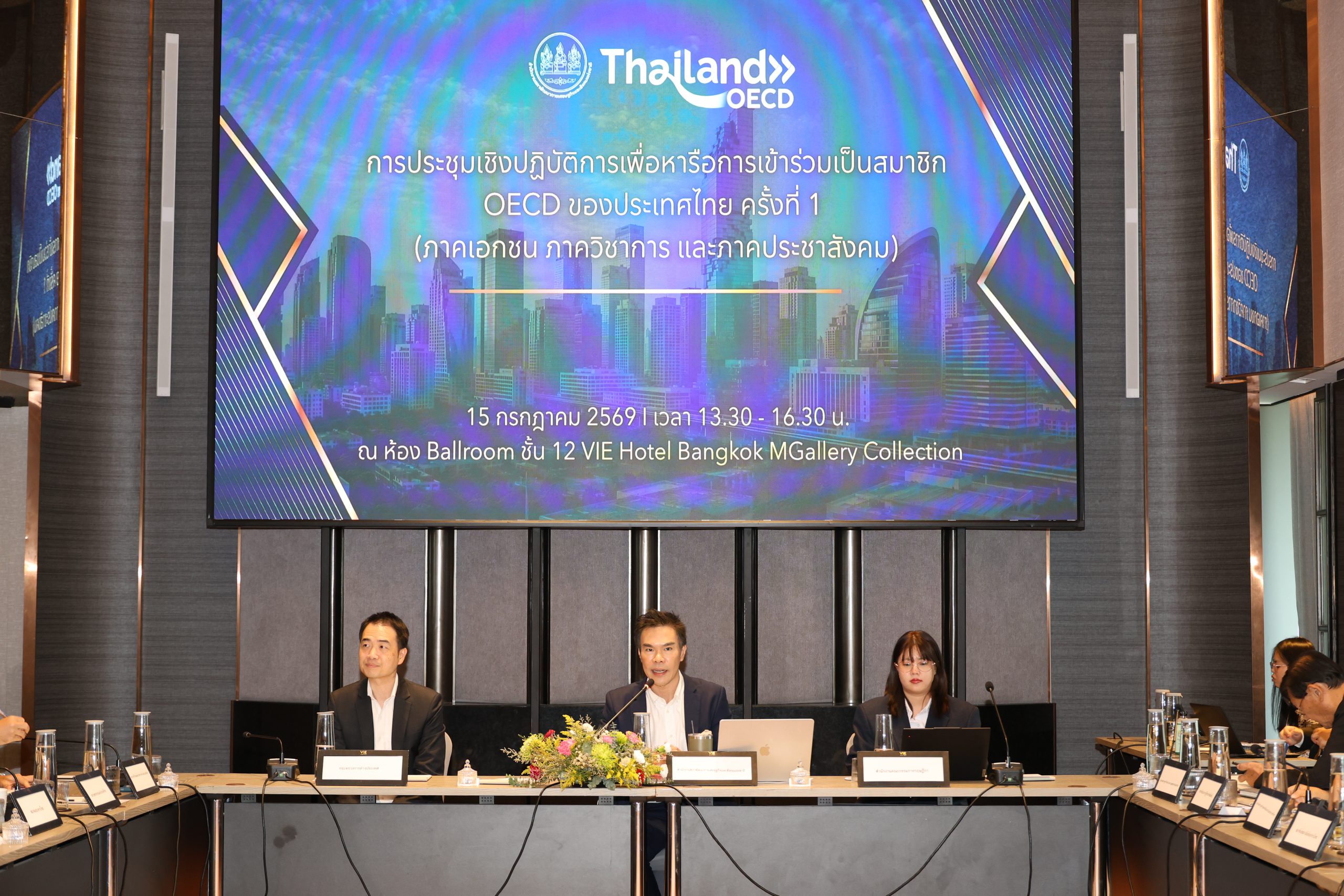
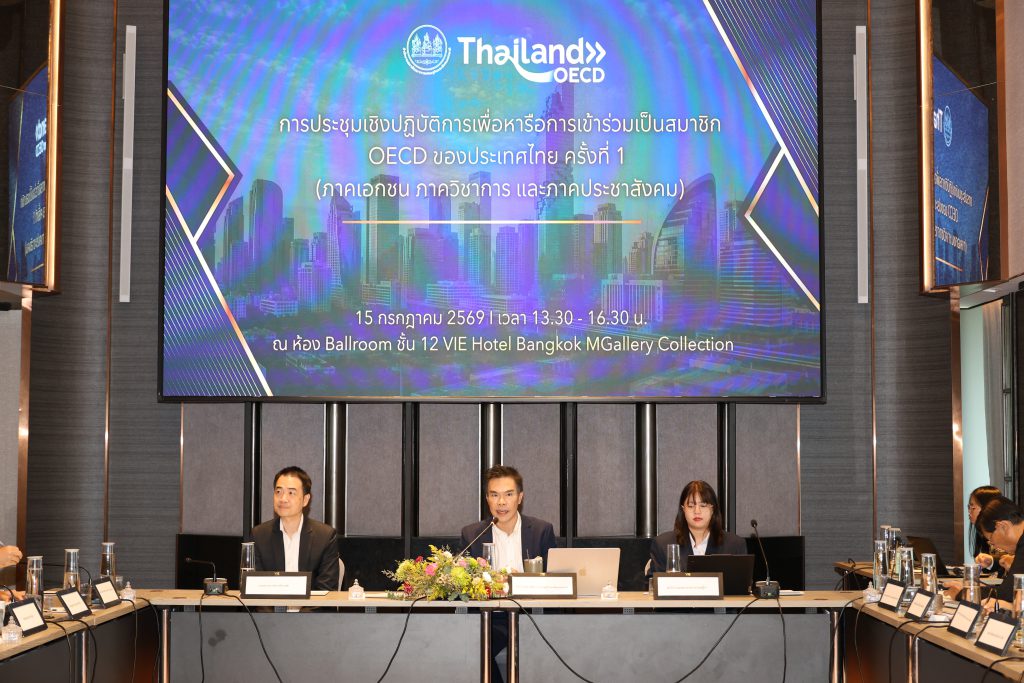
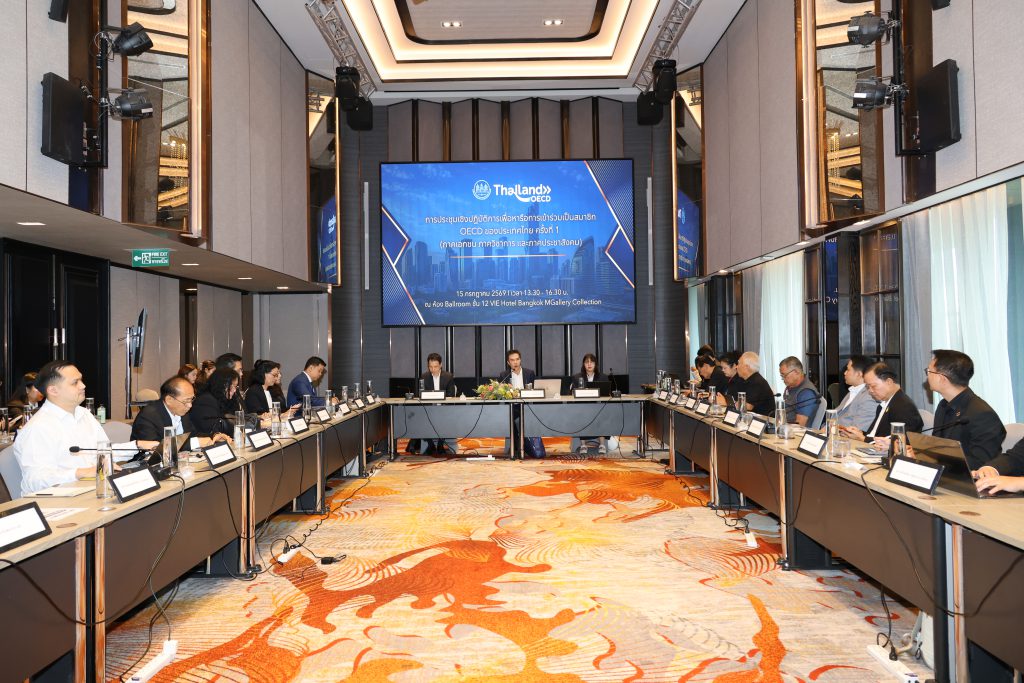
On July 15, 2026, the Office of the National Economic and Social Development Council (NESDC) organized the 1st Workshop to Discuss Thailand’s OECD Accession (Private Sector, Academic Sector, and Civil Society) at the Vie Hotel Bangkok, MGallery Hotel Collection. The event featuredrepresentatives from the NESDC, the Ministry of Foreign Affairs (MFA), and the Office of the Council of State (OCS), who jointly provided an overview and progress update on the OECD accession process. Attendees included representatives from the private sector, academia, and civil society, such as the President of the Thai SME Council, the President of the Thai Trade Union Congress, the Vice President of the Children and Youth Council of Thailand, the Director of the Anti-Corruption Organization (Thailand), the Managing Director of Hand Social Enterprise Co., Ltd., representatives from the Joint Standing Committee on Commerce, Industry and Banking (JSCCIB), representatives from the Council of University Presidents of Thailand, and researchers from the Thailand Development Research Institute (TDRI). They participated in discussions to exchange perspectives and opinions on OECD membership, which will be beneficial for the preparedness of all sectors.
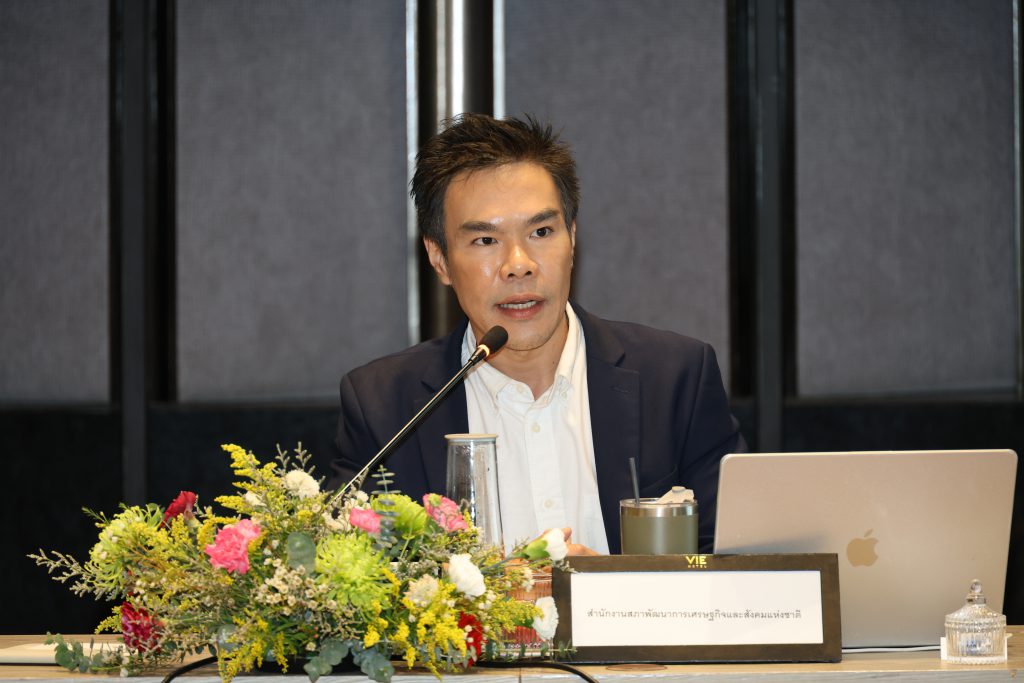
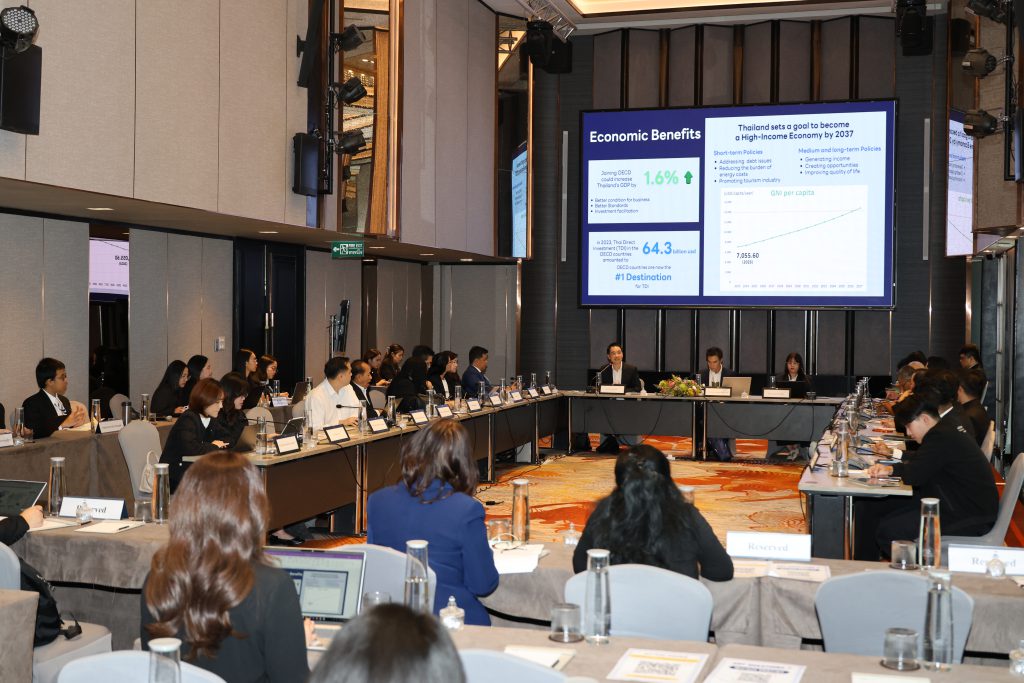
On this occasion, the NESDC representative presented information to build knowledge and understanding regarding the role of the OECD as a global standard-setter and a world data hub. The presentation also highlighted the benefits and challenges of OECD membership for various sectors. Benefits for Thailand include elevating governance and increasing transparency in public administration, which will enhance foreign confidence in all dimensions, provide opportunities for Thailand to compete in new markets, and improve the quality of life for citizens. Meanwhile, potential challenges include finding support measures during the transition period, particularly for MSMEs that may face higher costs from aligning standards with the OECD. This could create gaps or inequality between businesses that can adapt and vulnerable ones, which is a key task for the government to discuss with relevant sectors to find appropriate support measures moving forward.
Furthermore, information was provided regarding the progress of Thailand’s OECD accession. Currently, it is in the Technical Review stage, where the OECD is collecting data on Thailand to prepare a background report for the OECD Council. This will lead to Recommendations for Thailand to align its laws, policies, and practices with OECD standards. The government has set a goal to become an OECD member by 2028 to enhance the country’s competitiveness.
The MFA representative presented the foreign affairs dimension, stating that OECD membership is a vital tool for accelerating national structural reforms to become a high-income country by 2037 through three main strategies:
proactive diplomacy, serving as a data bridge, and capacity building. Meanwhile, the OCS representative clarified the legal and regulatory dimensions, emphasizing the elevation of national laws to be transparent, predictable, and not overly burdensome. To date, the OCS has integrated with 176 agencies to review the compliance of over 65,000 Thai laws and policies.
The final session was an open forum for exchanging opinions. Representatives from the private sector, academia, and civil society expressed their desire to be more involved in the OECD accession process and offered recommendations to the government for transition measures in five key areas: (1) Labor Protection and Employment Standards: There should be measures to mitigate impacts on the cost of living, as elevating labor laws may affect employment cost structures. (2) Informal Economy and MSME Adaptation: Support measures should be provided to reduce the cost burden of adjusting business operations to OECD standards, alongside developing proactive communication channels. Currently, some entrepreneurs are eager to adapt but lack coordination mechanisms and access to information on OECD standards, leading to misunderstandings. (3) Role of Children and Youth: Space should be provided for children and youth to express opinions and help shape long-term policies, as they are the direct beneficiaries and/or those affected in the future. (4) Public Procurement Standards: These must be elevated to be transparent and fair to allow entrepreneurs at all levels to compete equally. (5) Access to Information, Progress, and Coordination Systems: Communication mechanisms with relevant agencies and sectors should be urgently developed in a unified manner to reduce communication gaps and drive the OECD standard implementation process with continuous sustainability.
International Strategy and Coordination Division
Office of the National Economic and Social Development Council
July 17, 2026