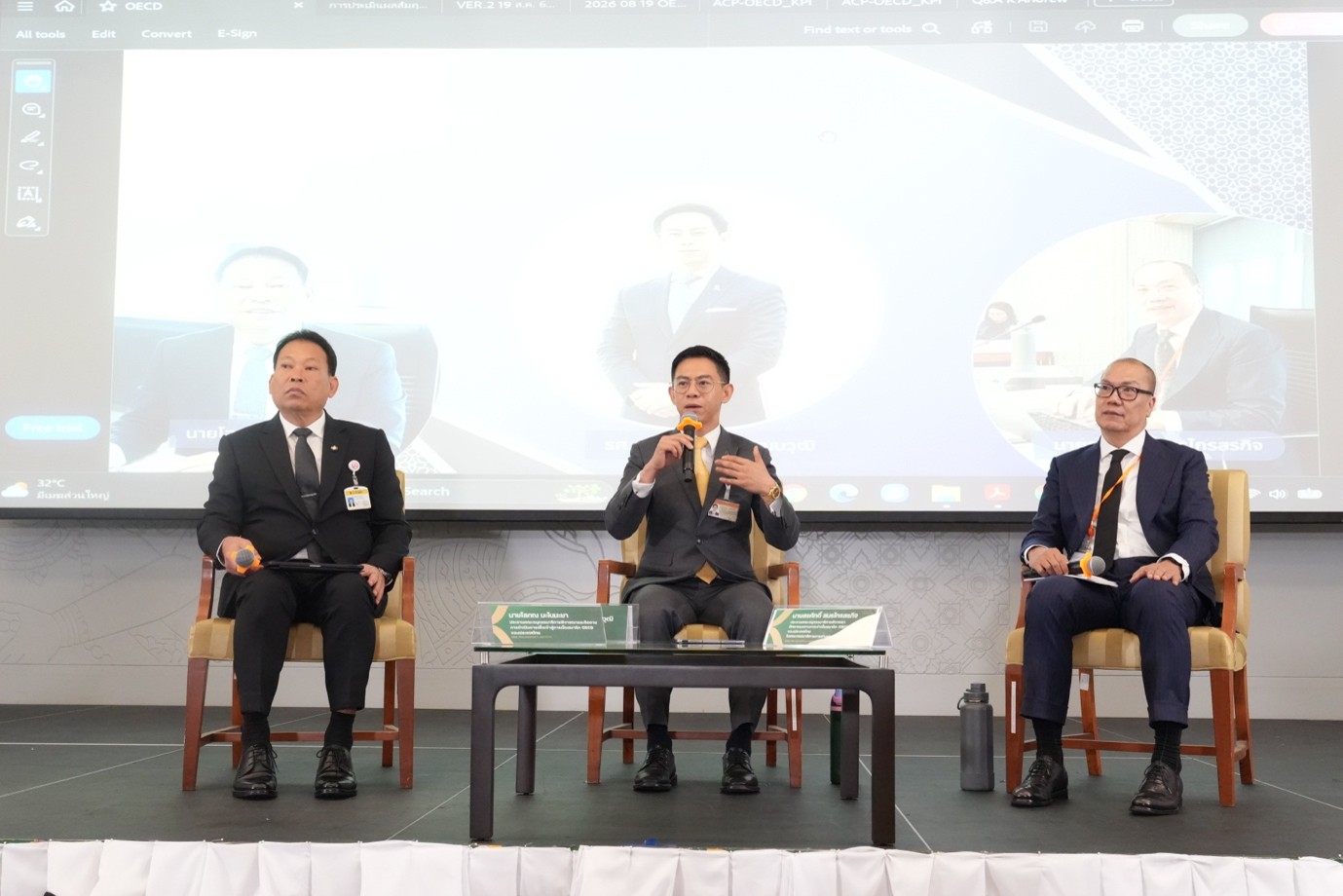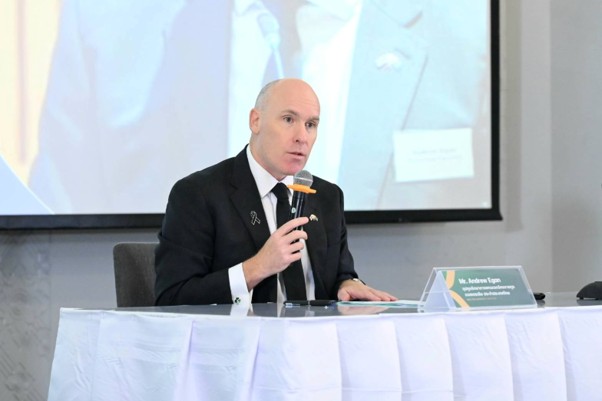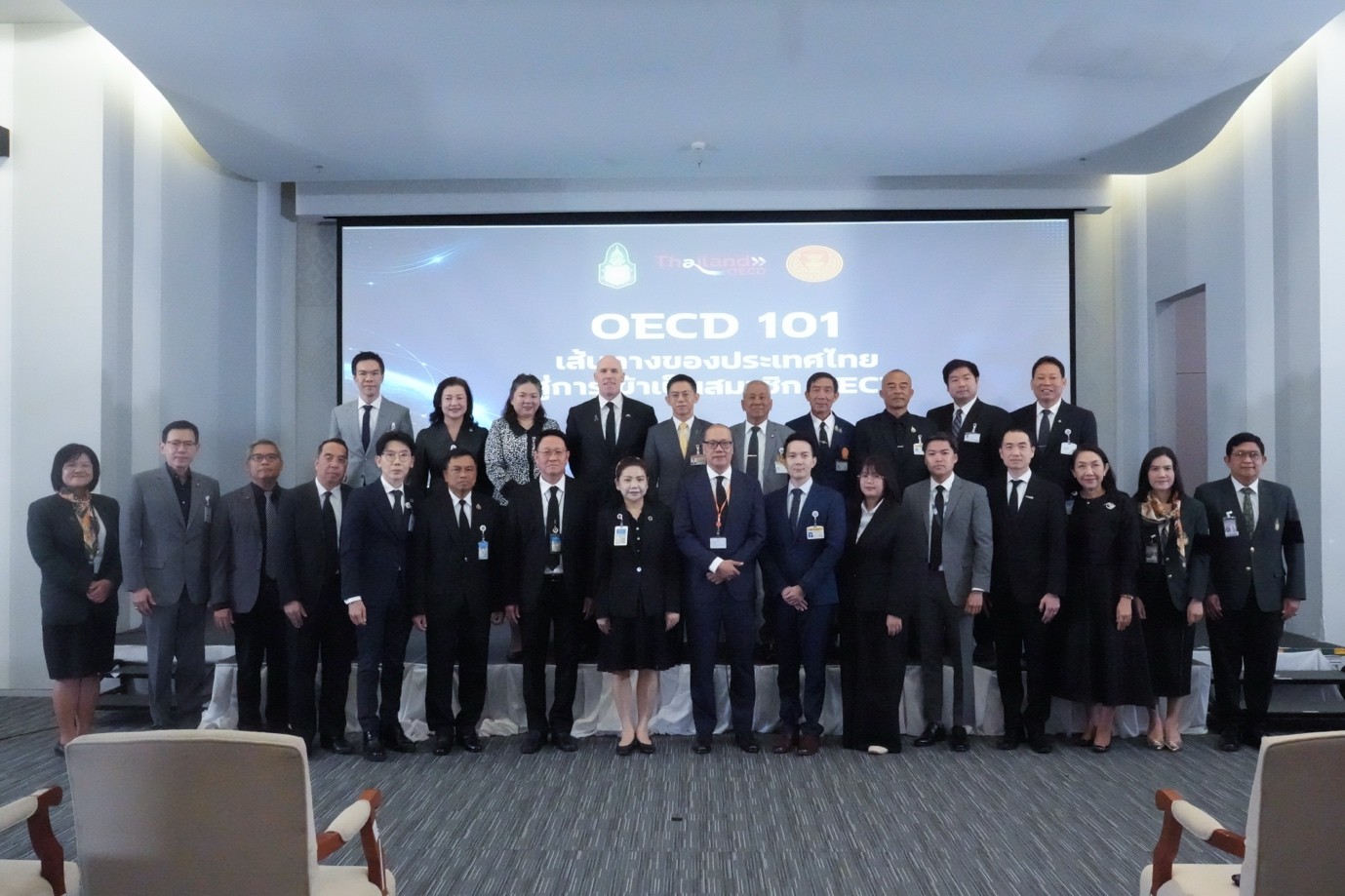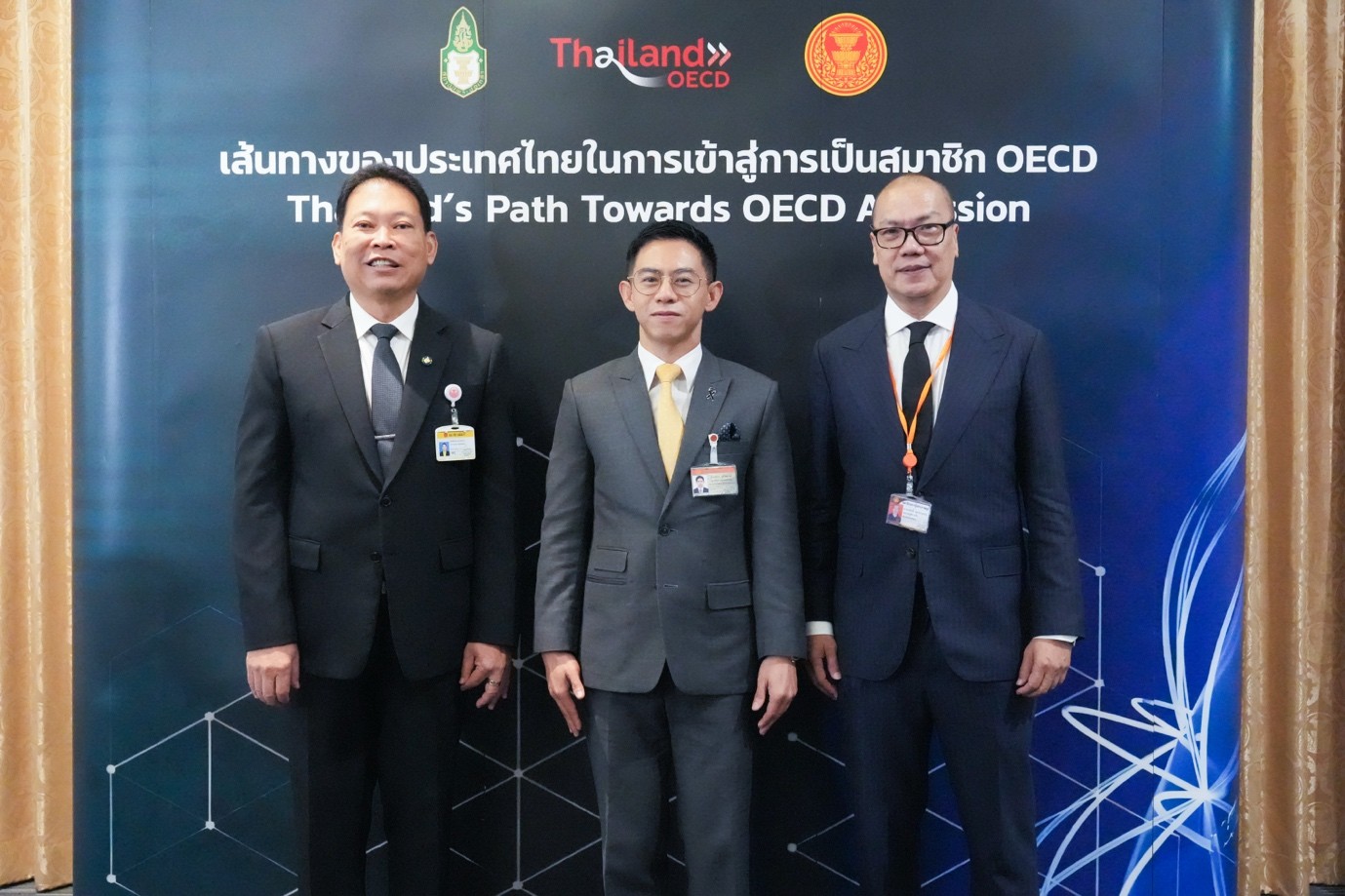
On August 19, 2026, King Prajadhipok’s Institute, in collaboration with the Secretariat of the House of Representatives, organized a seminar titled “OECD 101: Thailand’s Path to OECD Membership.” The event was attended by Ms. Steejit Taipiboonsuk, Deputy Secretary-General of the House of Representatives; Assoc. Prof. Dr. Woothisarn Tanchai, Secretary-General of King Prajadhipok’s Institute; Mr. Andrew Egan, Chargé d’Affaires a.i. of the Australian Embassy to Thailand; members of the Senate and the House of Representatives, representatives from agencies driving Thailand’s OECD accession, and parliamentary officials, totaling over 150 participants. The event was also broadcast live via King Prajadhipok’s Institute’s Facebook LIVE.
The seminar aimed to disseminate fundamental knowledge and understanding regarding the role of the OECD, international standards, and the accession process to members of Parliament. This was intended to enhance the capacity and role of parliamentarians in discussing and exchanging policy perspectives related to Thailand’s OECD accession process, as well as to present progress updates, exchange opinions, and share Australia’s experiences in leveraging OECD membership.
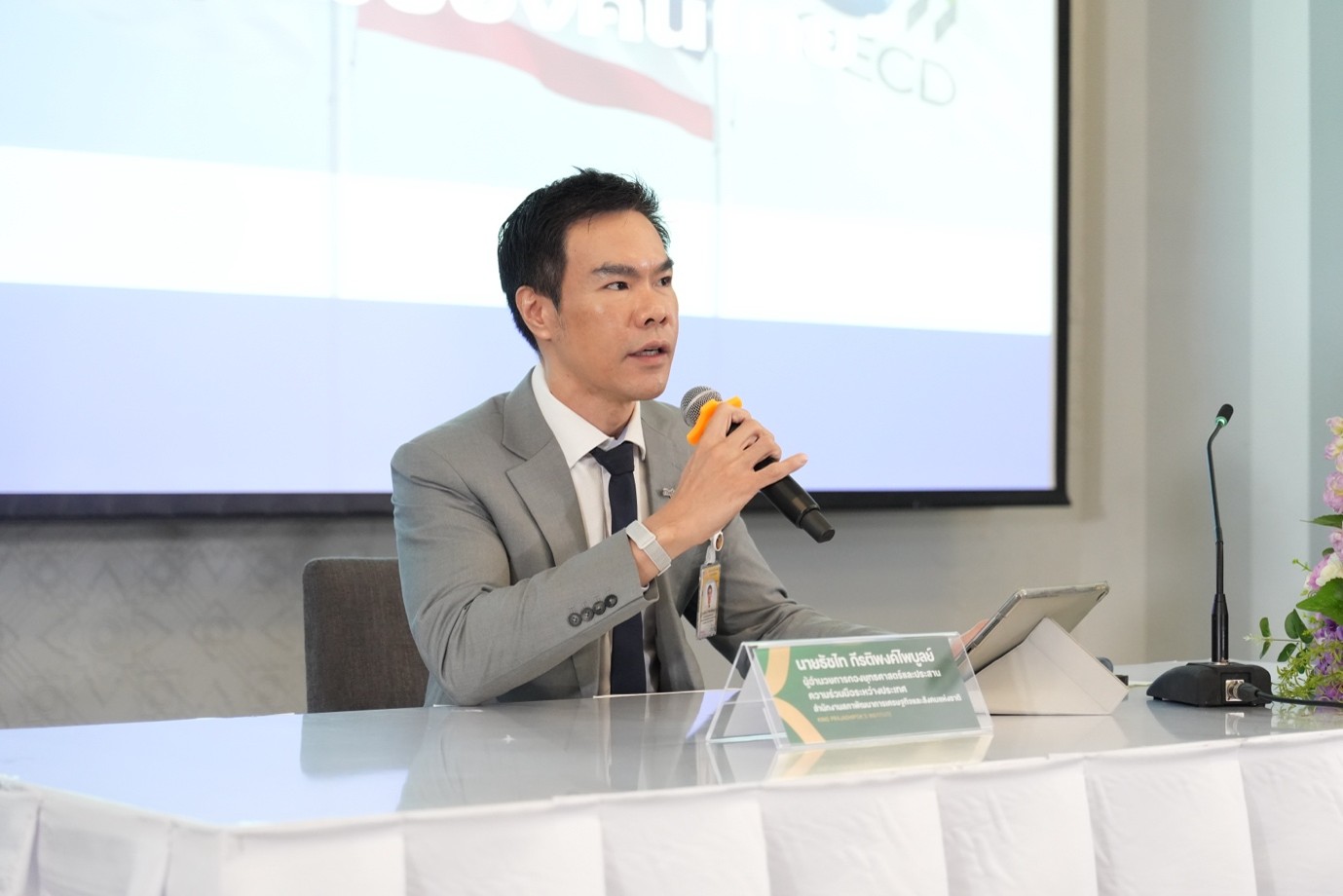
On this occasion, representatives from the agencies driving Thailand’s OECD accession—namely the Office of the National Economic and Social Development Council (NESDC), the Office of the Council of State (OCCC), and the Ministry of Foreign Affairs (MFA)—jointly delivered presentations to provide relevant information. The NESDC representative emphasized the importance of membership, noting that it not only helps Thailand align with international OECD standards but also allows the country to participate in shaping global rules. It was stressed that Thailand must transition from being a Rule Taker to a Rule Shaper to create new economic and social opportunities for the country. Meanwhile, the OCCC representative presented that many of Thailand’s laws and regulations are already largely consistent with OECD standards. However, Thailand must prove to the OECD that these rules are implemented effectively in practice, as the OECD prioritizes the translation of policy into practice to assess how such policies improve the quality of life for citizens. The MFA representative highlighted the importance of participating in OECD meetings, particularly high-level visits that demonstrate Thailand’s political will to engage with and become part of the OECD, as well as pushing the OECD agenda within other frameworks where Thailand plays a significant role, such as the ASEAN-OECD cooperation during Thailand’s ASEAN Chairmanship in 2028.
Furthermore, there was a discussion and exchange of views among parliamentarians, featuring Mr. Sophon Manomaya, Chairman of the Senate Sub-committee on Considering and Monitoring the Implementation of Thailand’s OECD Accession, and Mr. Sorasit Samornkraisakit, Chairman of the House Sub-committee on Studying Guidelines for Thailand’s OECD Accession. They exchanged views on the collaborative roles of the Senate and the House of Representatives in driving Thailand toward OECD membership. The Senate emphasized raising awareness of OECD accession among various sectors, particularly the education sector and the general public, to ensure an understanding of the benefits Thailand will receive. Meanwhile, the House of Representatives focused on monitoring the progress of amending relevant laws and regulations on a case-by-case basis to expedite the legislative process as much as possible, aiming for Thailand to achieve OECD membership by the 2028 target.
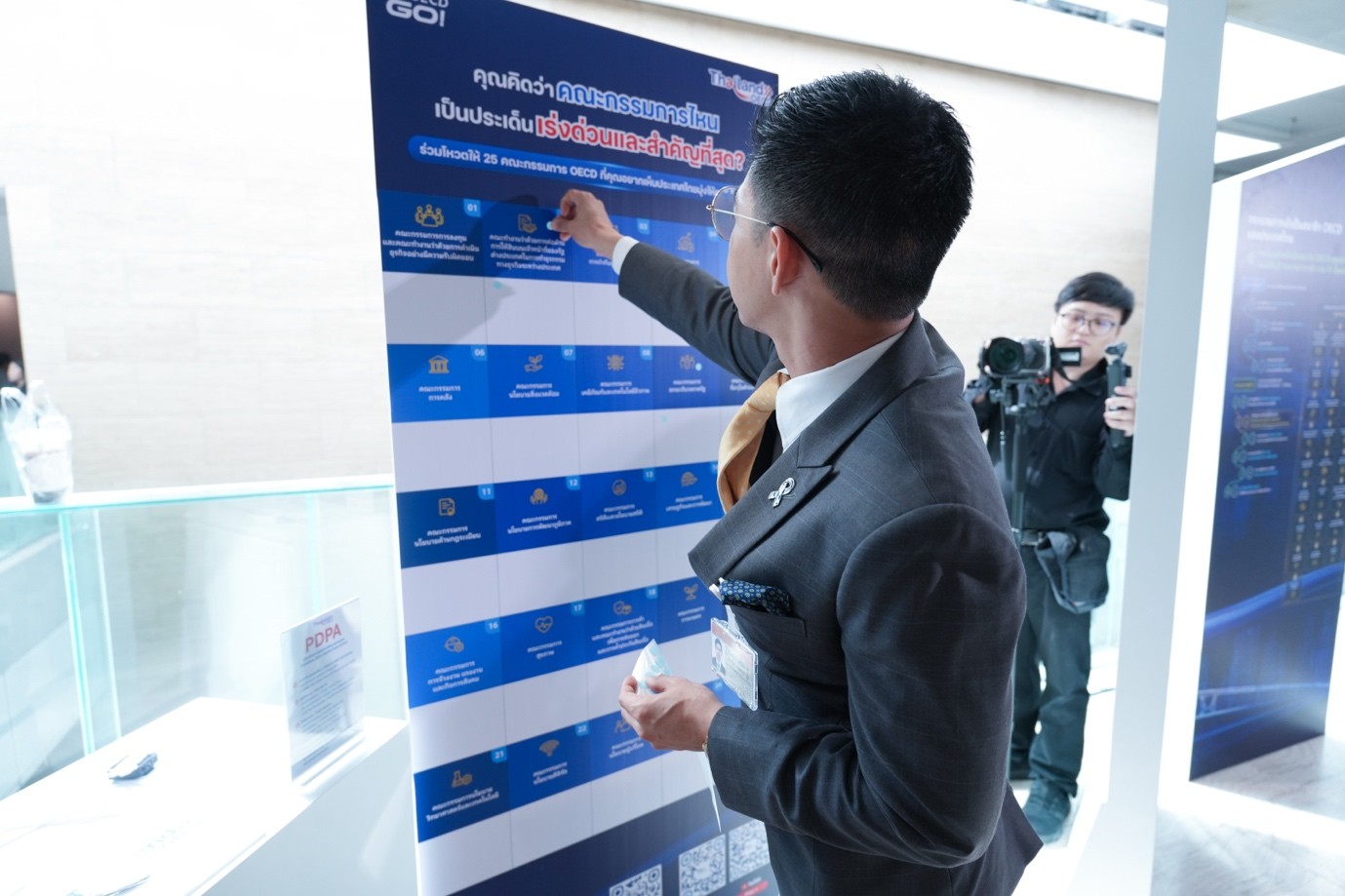
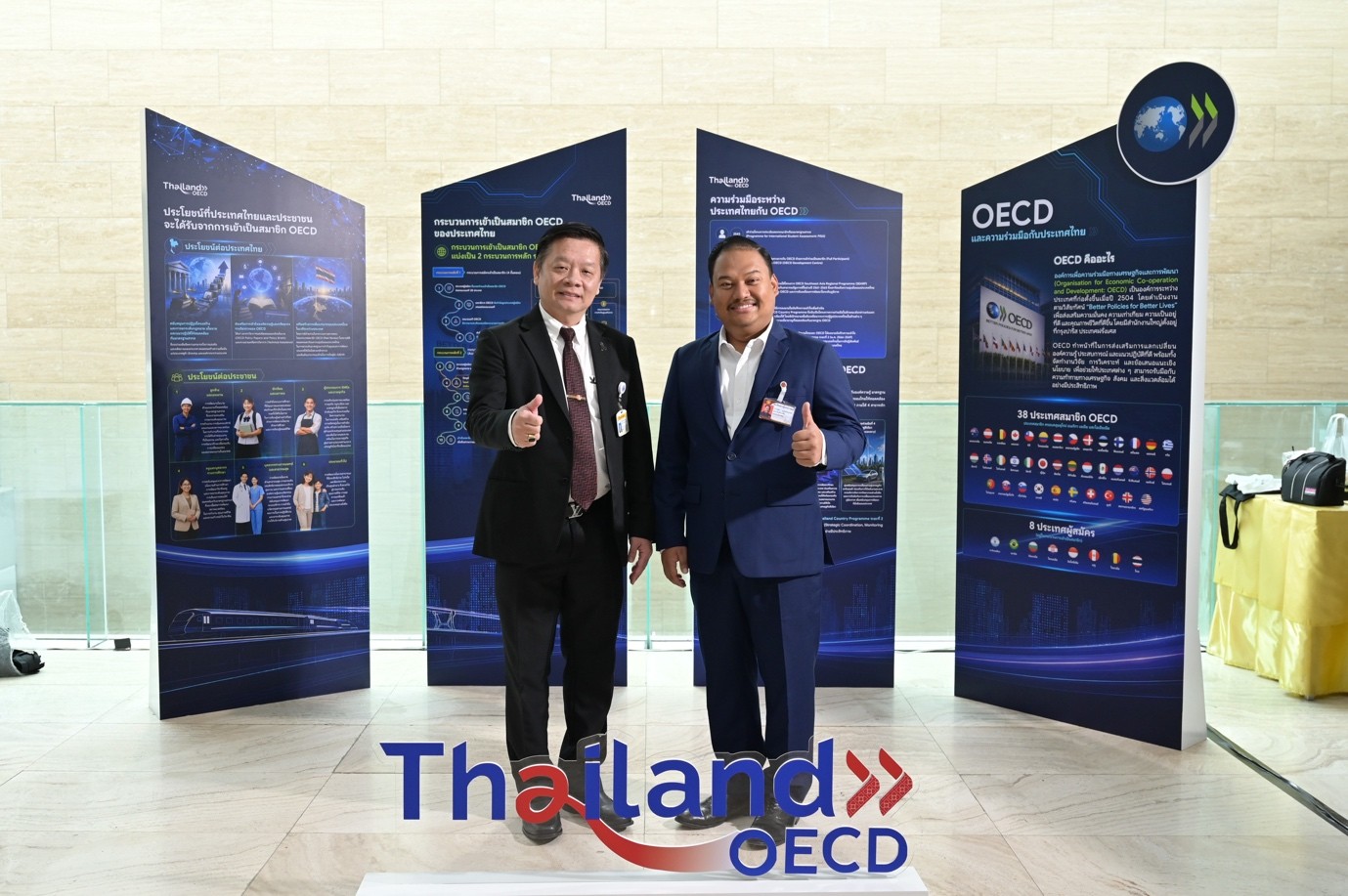
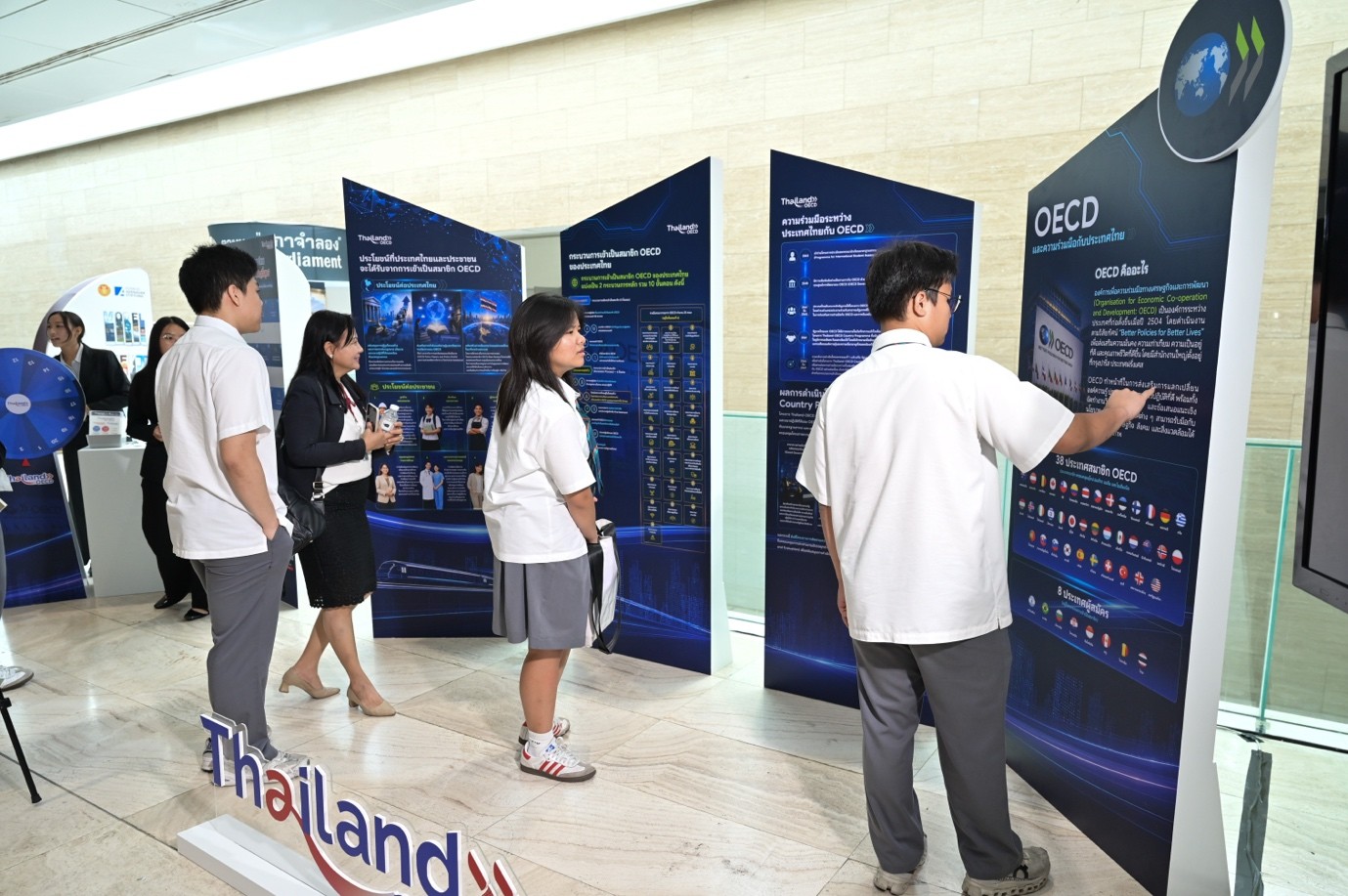
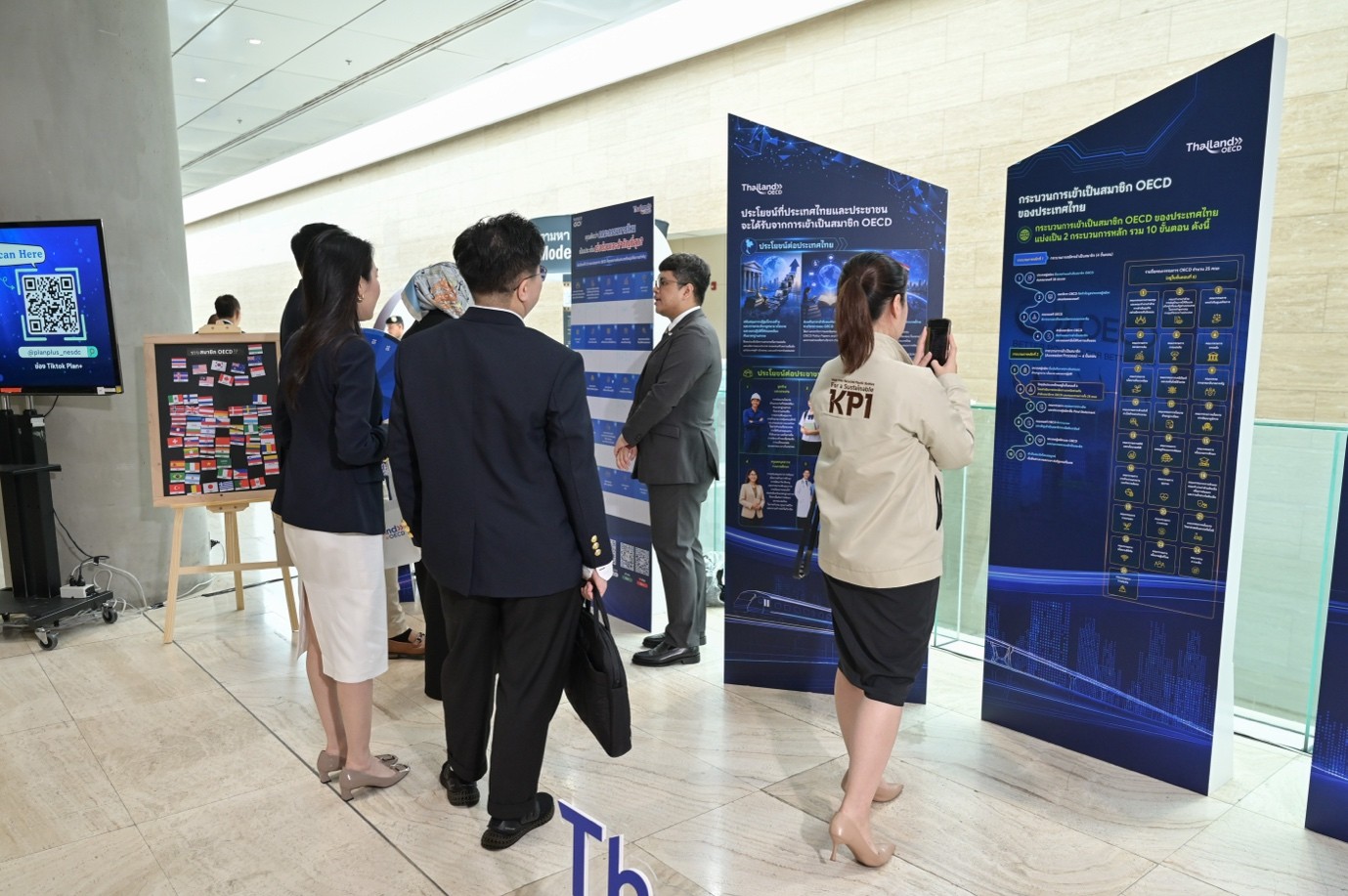
During the seminar, the NESDC also organized an “OECD Knowledge Enhancement Exhibition” aimed at promoting understanding of the cooperation between Thailand and the OECD, the accession process, and the benefits for Thailand. This was presented through an Interactive Board, allowing participants and the general public to easily access and understand OECD-related information by spinning a wheel to answer basic questions about the OECD, such as the list of member countries and well-known OECD standards. Participants were also invited to prioritize 25 Thai reform issues under the OECD accession drive that the OECD will evaluate. The top three prioritized issues were public governance, anti-bribery, and economic and development policies, along with other economic and social issues such as the environment, education, and digital policy.
The exhibition was open for viewing and participation throughout the day, drawing significant interest from members of the House of Representatives, the Senate, parliamentary officials, and the general public. Many participants also followed the NESDC’s OECD accession public relations channels via TikTok and the PlanPlus YouTube channel.
News: Strategy and International Cooperation Coordination Division
Photo: International Strategy and Cooperation Division and King Prajadhipok’s Institute