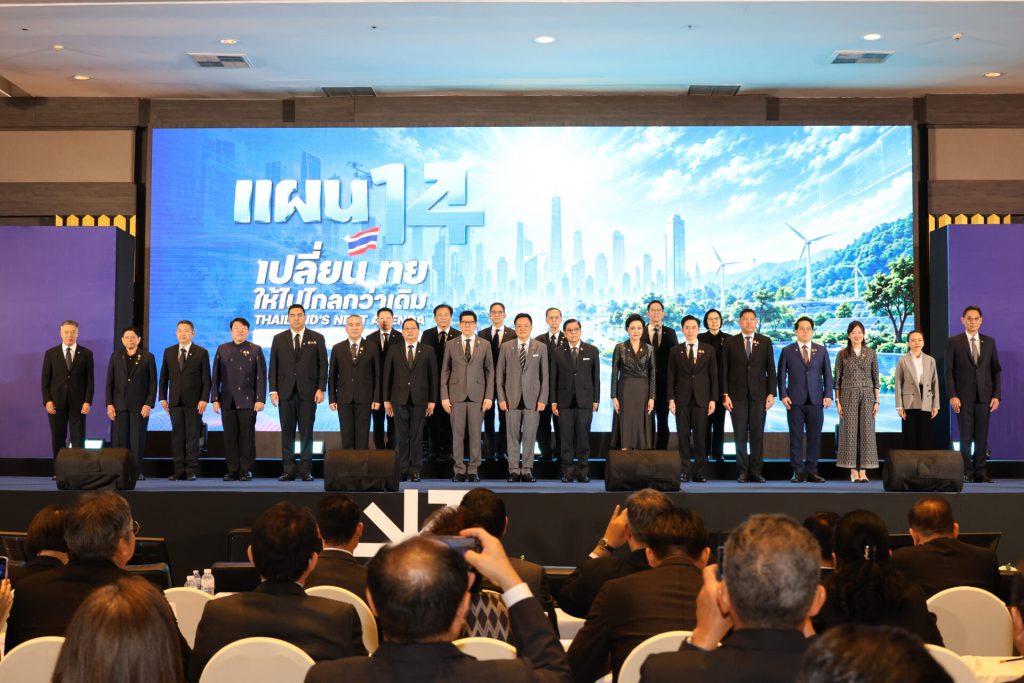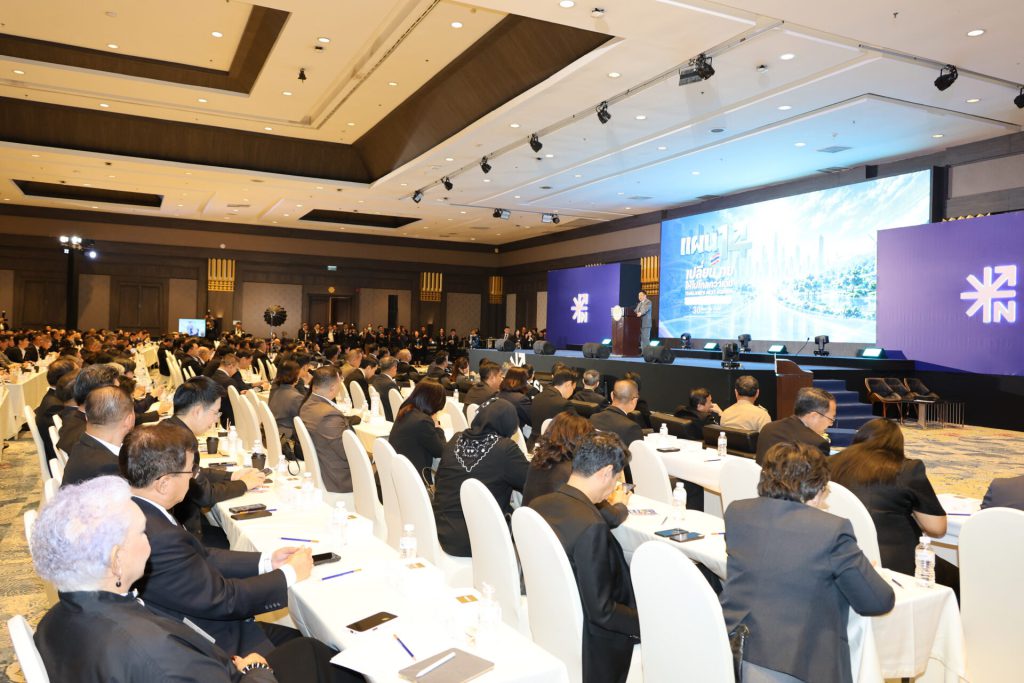
Today (September 30, 2026), Mr. Anutin Charnvirakul, Prime Minister and Minister of Interior, presided over the opening ceremony and delivered a keynote address at the 2026 Annual Meeting of the Office of the National Economic and Social Development Council (NESDC), held under the theme “The 14th Plan: Thailand’s Next Agenda,” at the Grand Diamond Ballroom, IMPACT Exhibition and Convention Center, Muang Thong Thani, Nonthaburi. The meeting aimed to present the direction and core substance of the Draft 14th National Economic and Social Development Plan (2028-2032) amidst global shifts, including geopolitics, a super-aged society, technology and Artificial Intelligence (AI), and climate change. The event was attended by over 2,000 participants, including Cabinet members, parliamentarians, representatives from the public and private sectors, academics, local authorities, civil society, the media, and the general public, all joining to brainstorm the answer to: “What must Thailand change to ensure we can continue and go further than ever before?”
Mr. Supavud Saicheua, Chairman of the National Economic and Social Development Council, reported on the objectives of the event, stating that it serves to present the core substance of the Draft 14th National Economic and Social Development Plan (2028-2032), scheduled for official promulgation in October 2027. The meeting also serves as a platform to build understanding among all sectors, emphasizing the importance of collective effort in driving the 14th Plan into full implementation to achieve goals efficiently and effectively for Thailand’s future and the improved quality of life for all Thais.
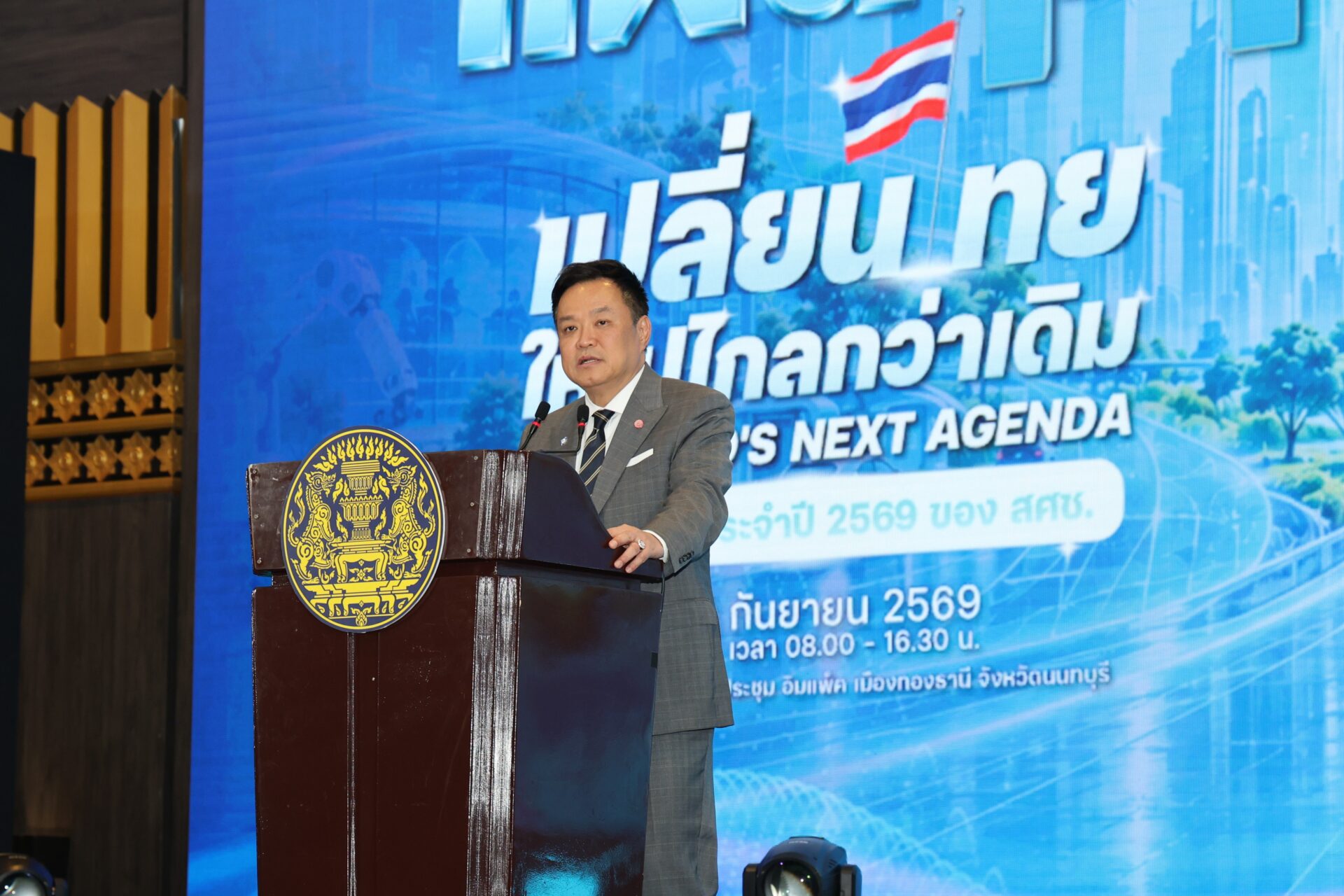
Mr. Anutin Charnvirakul, Prime Minister and Minister of Interior, delivered the opening remarks and a keynote address, emphasizing that the world of tomorrow will not be the same and global rules are changing rapidly. Standing still may mean falling behind; therefore, Thailand can no longer rely on traditional mindsets or address problems on a case-by-case basis. Instead, the 14th Development Plan must serve as a compass to turn uncertainty into opportunity through systematic drivers in 5 key areas: (1) Transforming the economic structure based on productivity and innovation, while unlocking investment and attracting future industries; (2) Reforming public administration for speed, reduced redundancy, and elevating governance to international standards (OECD); (3) Upgrading human capital to address a super-aged society, including birth support and skill development for all ages; (4) Transforming natural resources and the environment into development capital, while enhancing water management and disaster response; and (5) Investing in and utilizing technology and innovation by linking research to actual production and service sectors. He further stressed that “The 14th Plan must be more than a government document; it must be a national agenda for Thailand, measuring success by actual outcomes. Thailand will only go further when we all move forward together.”
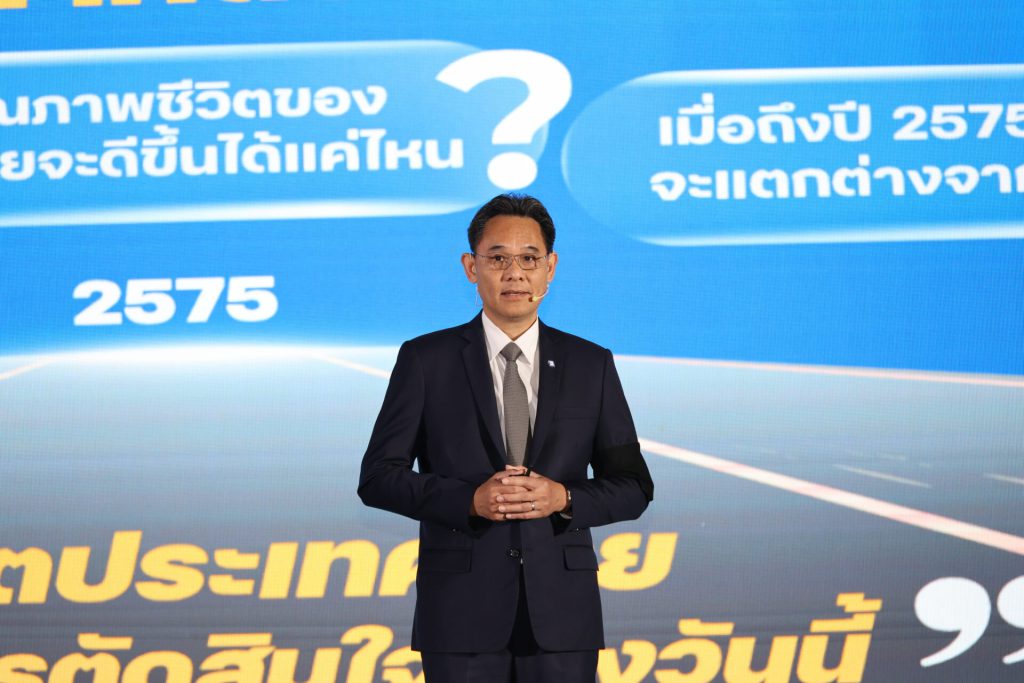
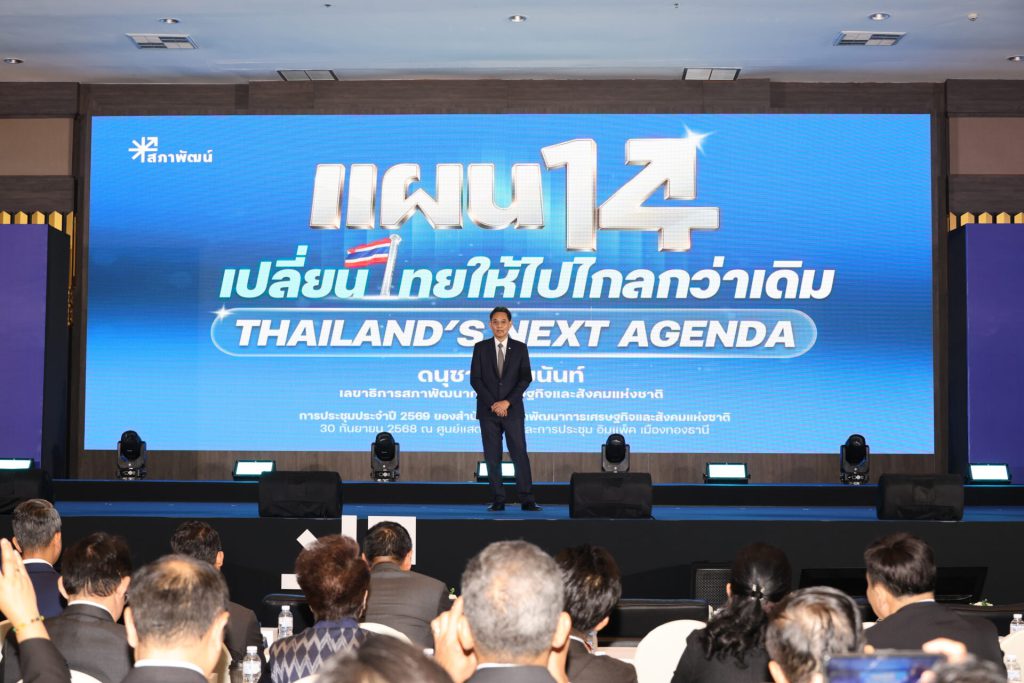
Subsequently, Mr. Danucha Pichayanan, Secretary-General of the National Economic and Social Development Council, presented on the topic “The 14th Plan: Thailand’s Next Agenda,” reflecting on the development outcomes of the previous 13th Development Plan. While progress was made in several areas, results remain far from key targets. In terms of economy and competitiveness, per capita income increased but remains far from high-income status due to low economic and productivity growth, while several competitiveness components declined. Regarding human development and inequality, although the expenditure gap narrowed, human potential development—particularly in education, health, and participation—remains limited. In environment and climate, greenhouse gas reduction has not met targets amidst extreme weather risks ranked globally, and public sector efficiency still falls short of goals, acting as a constraint on national progress.
Mr. Danucha stated that, based on lessons learned from the 13th Plan and nationwide public consultations, the NESDC has formulated the framework for the Draft 14th National Development Plan with the ultimate goal of achieving “inclusive and sustainable high economic growth.” The plan focuses on increasing productivity and competitiveness through the guiding principle of “Repair-Reinforce-Relinquish-Reinvent,” which entails repairing weak foundations, reinforcing existing Thai potential, relinquishing restrictive constraints, and reinventing new capabilities for the future. This approach aims to achieve four main goals and accelerate progress through 13 key reform levers, while simultaneously shifting the entire system under the 5 pillars of development (T-R-U-S-T):
• T – Transform the Economy: Transforming the structure of target production and services toward a productivity-based foundation, creating quality jobs, and strengthening fiscal and economic stability.
• R – Reform the Public Sector: Reforming the government structure to be leaner and more modern, repealing obsolete laws, and eliminating corruption.
• U – Upgrade Human Capital: Promoting childbirth, reforming education, vocational training, and universities, while upgrading labor skills and sustainable welfare systems.
• S – Sustain Resources and the Environment: Managing resources to create value, integrating digital water management and early warning systems, proactively managing pollution, and transitioning toward a low-carbon society.
• T – Transfer Technology and Innovation: Developing and transferring technology in strategic sectors, enhancing high-skilled manpower, and adjusting research budget mechanisms to meet national needs.
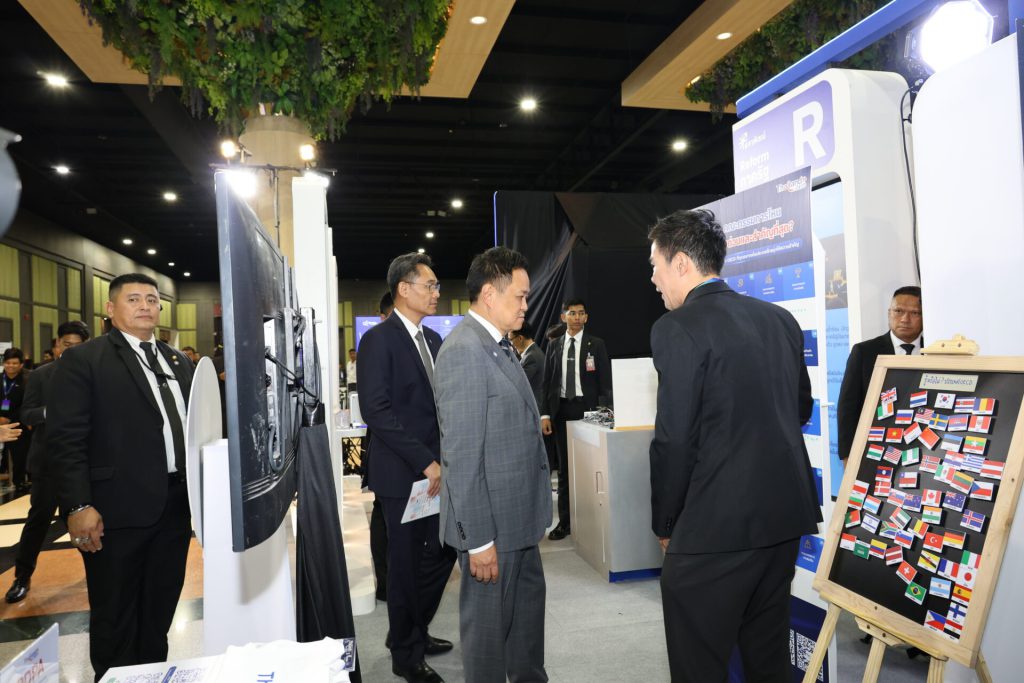
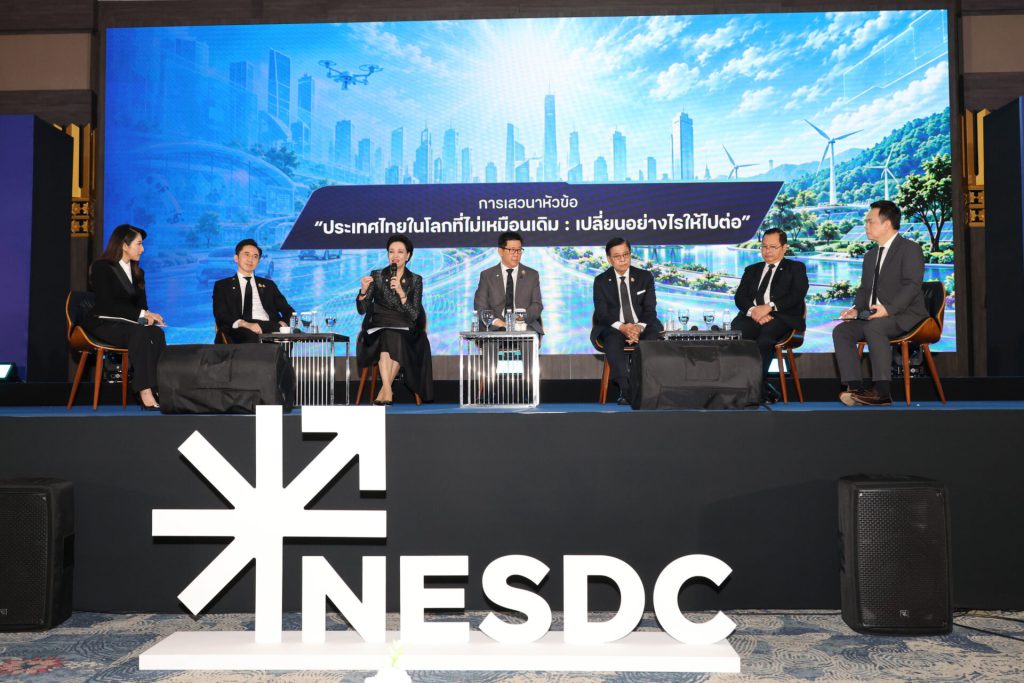
Following this was a panel discussion titled “Thailand in a Changed World: How to Change to Move Forward,” featuring five Deputy Prime Ministers who shared perspectives across five key dimensions: Mr. Ekniti Nitithanprapas, Deputy Prime Minister and Minister of Finance; Mrs. Suphajee Suthumpun, Deputy Prime Minister and Minister of Commerce; Mr. Sihasak Phuangketkeow, Deputy Prime Minister and Minister of Foreign Affairs; Mr. Yossanan Wongswasdi, Deputy Prime Minister and Minister of Higher Education, Science, Research and Innovation; and Mr. Pakorn Nilprapunt, Deputy Prime Minister. Additionally, the event featured the “Thailand’s Next Chapter” exhibition, showcasing success models and innovations resulting from cooperation between the public sector, private sector, and academic institutions, which the Prime Minister also visited.
The afternoon session featured breakout brainstorming sessions for participants from all sectors to co-design the 14th Plan across the 5 development pillars: Economic Restructuring, Public Sector Reform, Human Capital Upgrading, Sustainable Natural Resource and Environmental Management, and Investment and Transfer of Research, Technology, and Innovation. The NESDC will compile all opinions and suggestions from the meeting for processing and synthesis to refine the Draft 14th Development Plan in detail, ensuring it is comprehensive, clear, and equipped with measurable indicators. It will also be linked to budget allocation strategies and Flagship Projects to ensure maximum efficiency in implementation before proceeding through official channels for promulgation in October 2027.
The NESDC expects the 2026 Annual Meeting to be a vital starting point in turning every concern into confidence, every challenge into possibility, and collectively acting to transform Thailand to move further with stability and sustainability: “Thailand’s Next Agenda.”
Story and Photos: Office of the National Economic and Social Development Council
https://www.nesdc.go.th/nesdc-30092569
September 30, 2026