
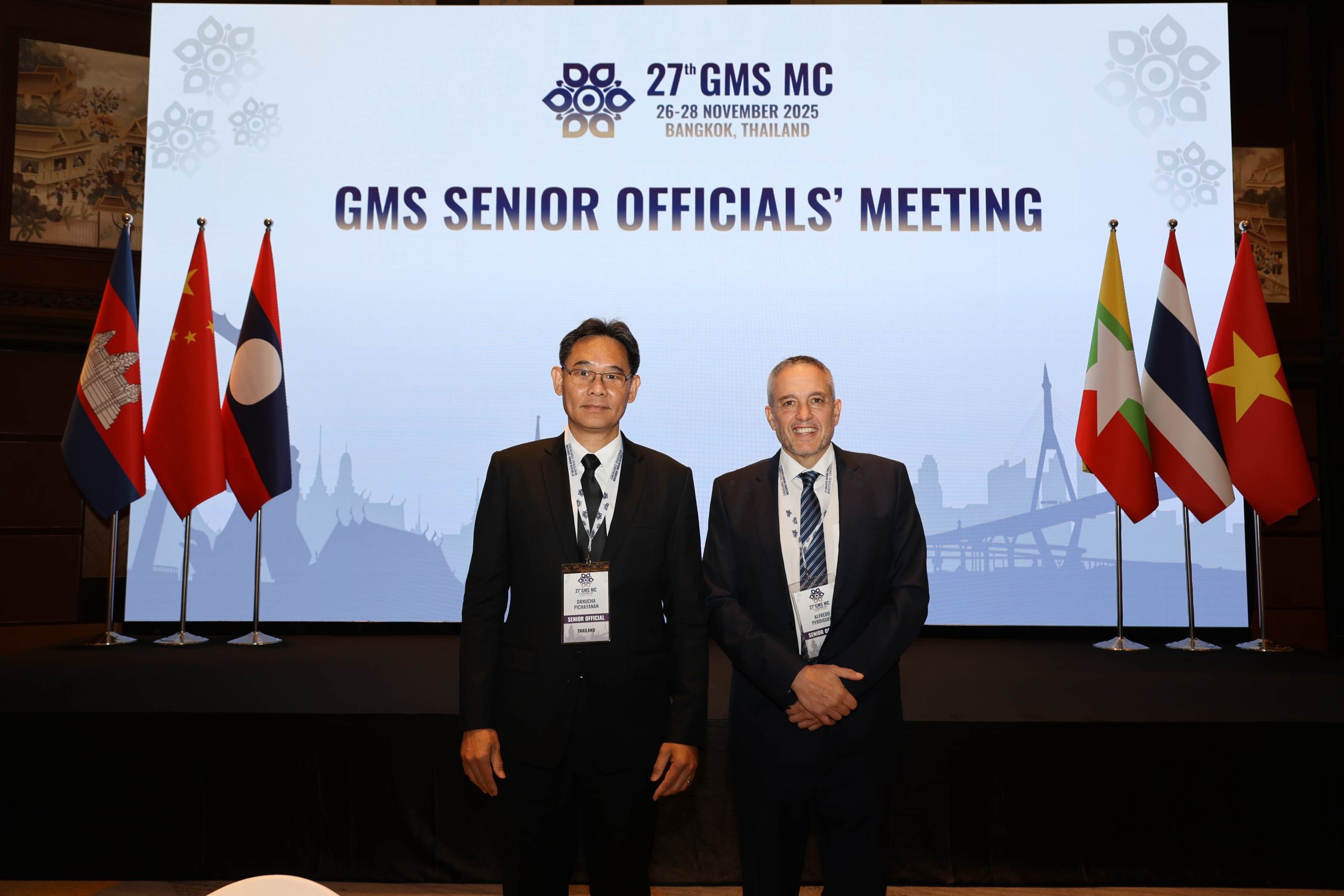
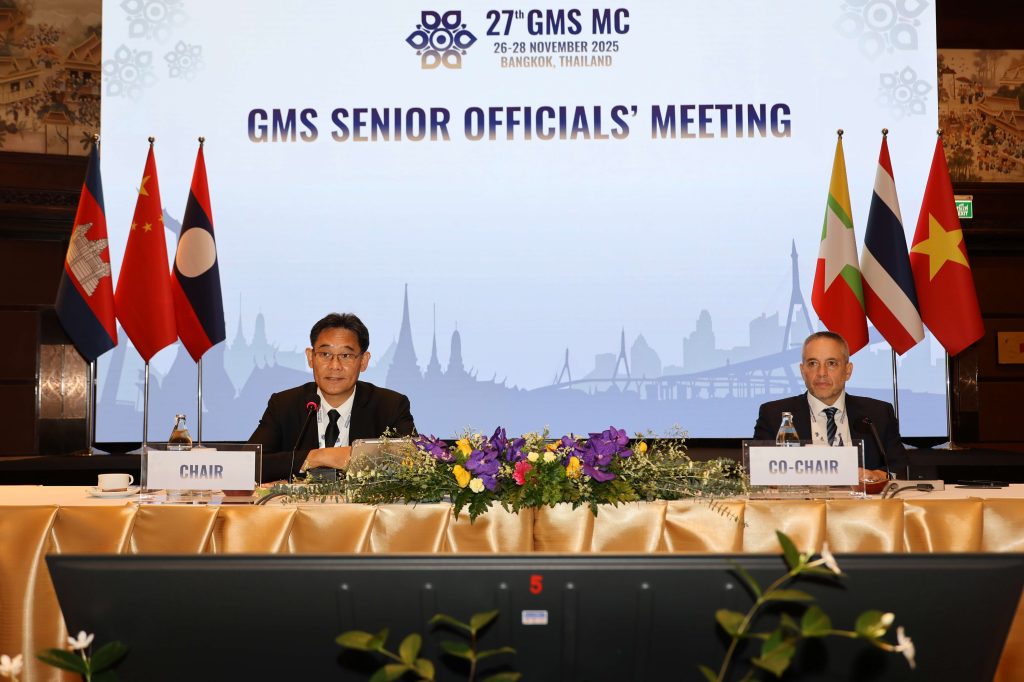
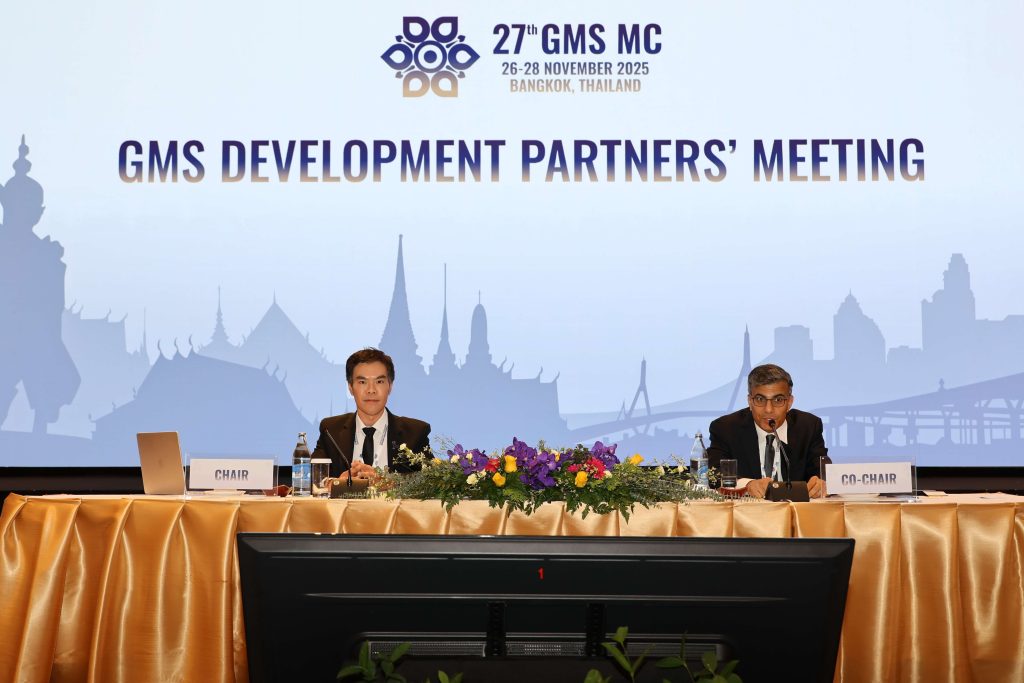
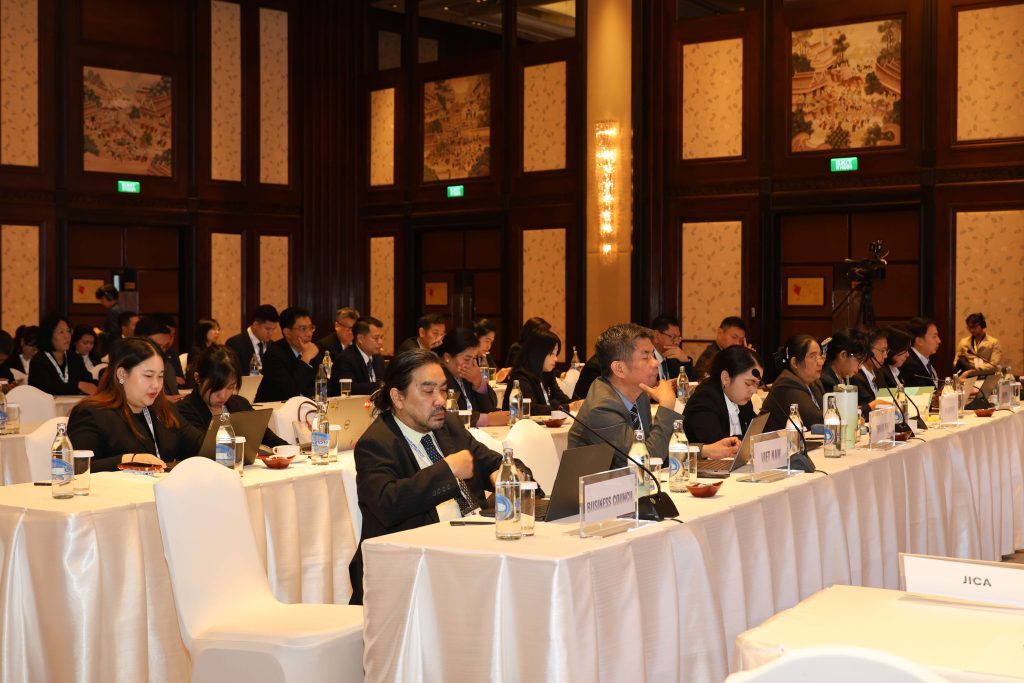
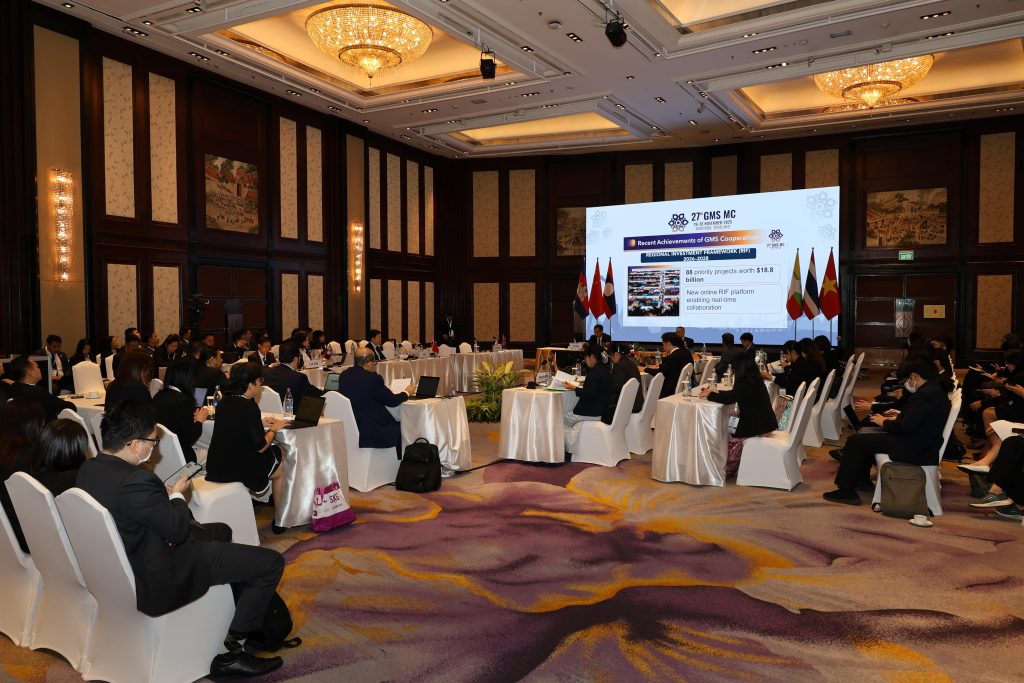
On November 26, 2025, the Office of the National Economic and Social Development Council (NESDC), in collaboration with the Asian Development Bank (ADB), organized the Senior Officials’ Meeting during the 27th Ministerial Conference of the Six-Country Greater Mekong Subregion Economic Cooperation Program (Greater Mekong Subregion: GMS) at the Shangri-La Hotel, Bangkok. Mr. Danucha Pichayanan, Secretary-General of NESDC, as Thailand’s GMS Senior Official, co-chaired the meeting with Mr. Alfredo Perdiguero, Director of Regional Cooperation in Southeast Asia Department, ADB, along with senior officials from 5 Mekong countries, representatives from the GMS Business Council, and relevant agencies.
The meeting aimed to prepare for the 27th GMS Ministerial Conference scheduled for Friday, November 28, 2025. The meeting reviewed the draft Senior Officials’ Meeting report and the draft Joint Ministerial Statement, while also considering two documents for endorsement at the Ministerial Conference: (1) the GMS Private Sector Engagement Strategy and (2) the GMS Regional Investment Framework 2026-2028. The meeting also acknowledged various reports, including the Local Government Engagement Strategy, Innovation Task Force Work Plan, and sector working group strategies in agriculture, tourism, energy, and transport.
The meeting also monitored the preparation of parallel meetings, including the GMS Local Governments’ Forum, GMS Business Forum 2025, and High-Level Dialogue between the Government and Business Leaders of GMS.
On the same day, a meeting was held with development partners from over 19 organizations, including UN specialized agencies, ASEAN Secretariat, Asian Infrastructure Investment Bank, Neighboring Countries Economic Development Cooperation Agency (Public Organization), and international cooperation organizations, exchanging recommendations on three main issues:
(1) Innovation through implementation under the GMS Innovation Strategy for Development 2030, supporting the development of smart logistics to enhance transport efficiency and reduce economic costs, applying innovation/AI technology for infrastructure and public service systems, and expanding the regional digital economy to increase business opportunities, cross-border services, and strengthen MSMEs’ capabilities.
(2) GMS Knowledge Network to enhance human resource capacity, which is fundamental to subregional cooperation, through promoting training and knowledge exchange in high-demand sectors among member countries, particularly in modern agriculture, food security, and agricultural technology.
(3) Regional Investment Framework (RIF) with recommendations to support RIF implementation during 2026-2028, focusing on ensuring GMS investment projects are well-prepared, efficient, and better aligned with member countries’ needs, particularly in environmental transition and connectivity enhancement to support long-term sustainable economic growth in the subregion.
By: International Strategy and Coordination Division
Office of the National Economic and Social Development Council
Photo: Methtiya Wongpakdee