
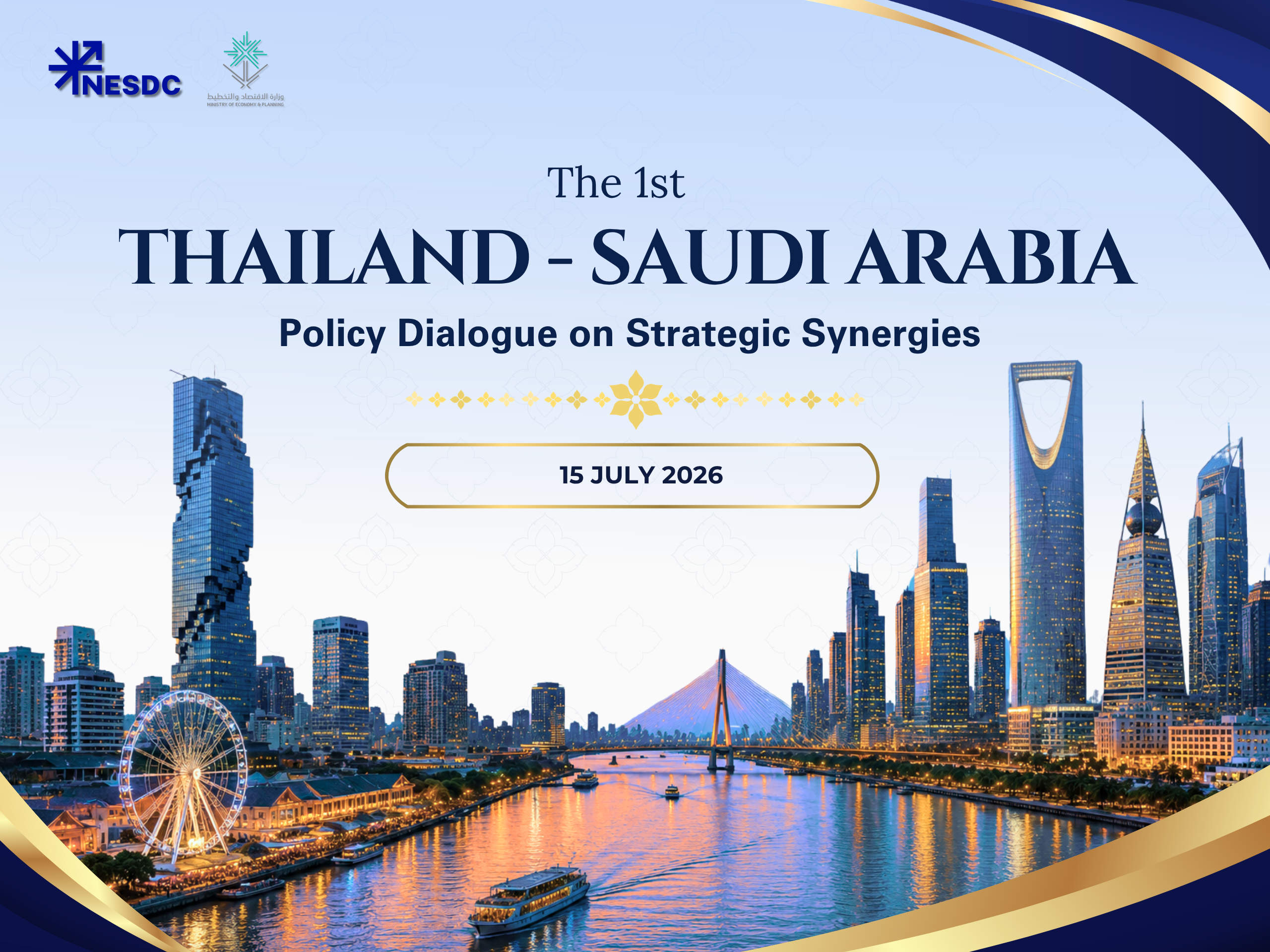
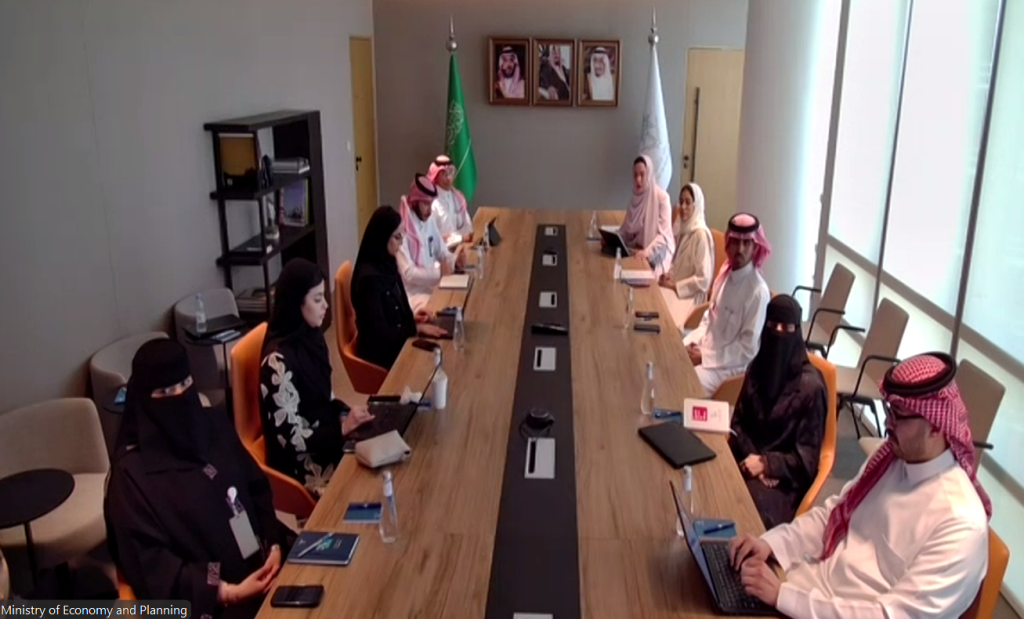
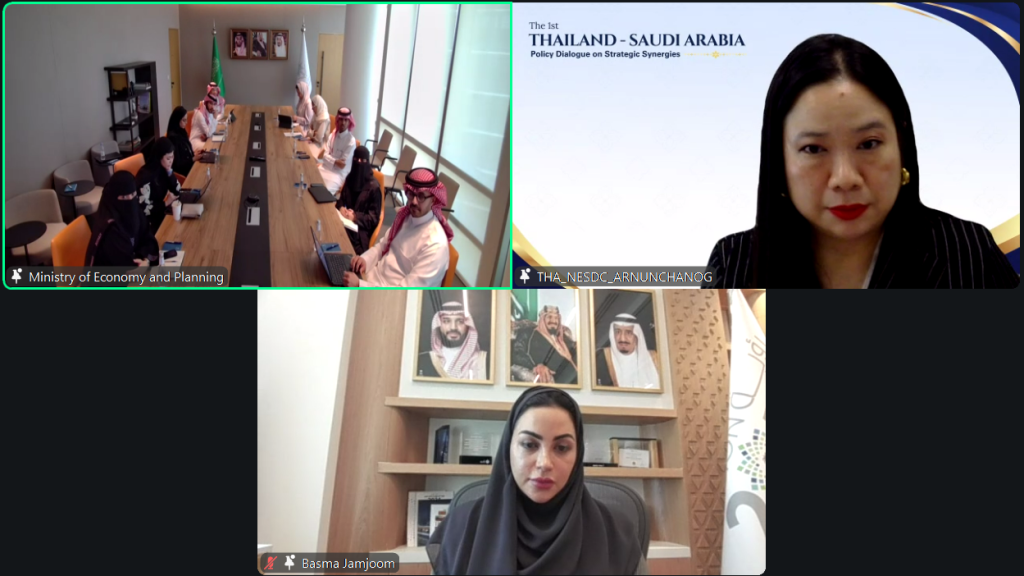
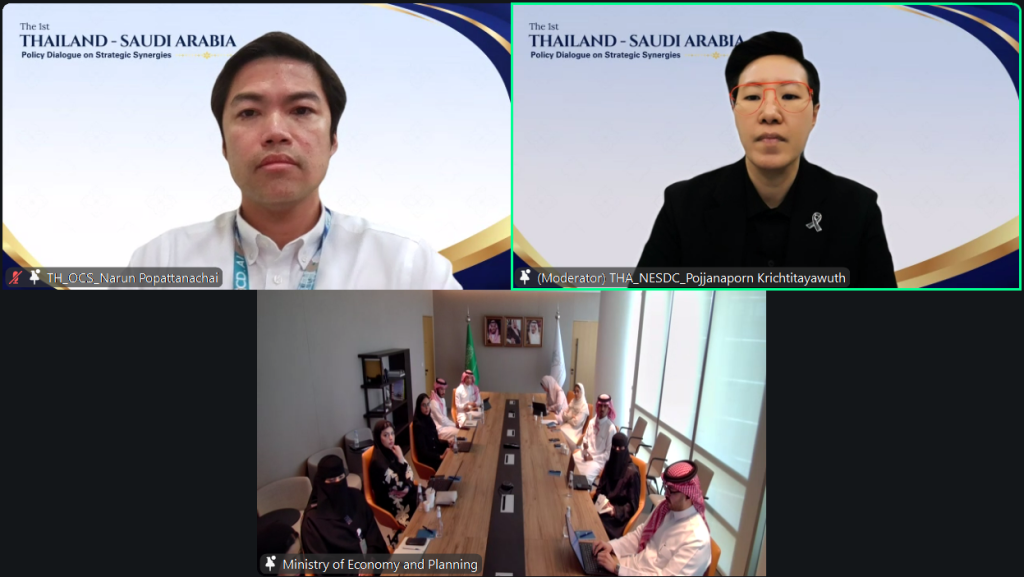
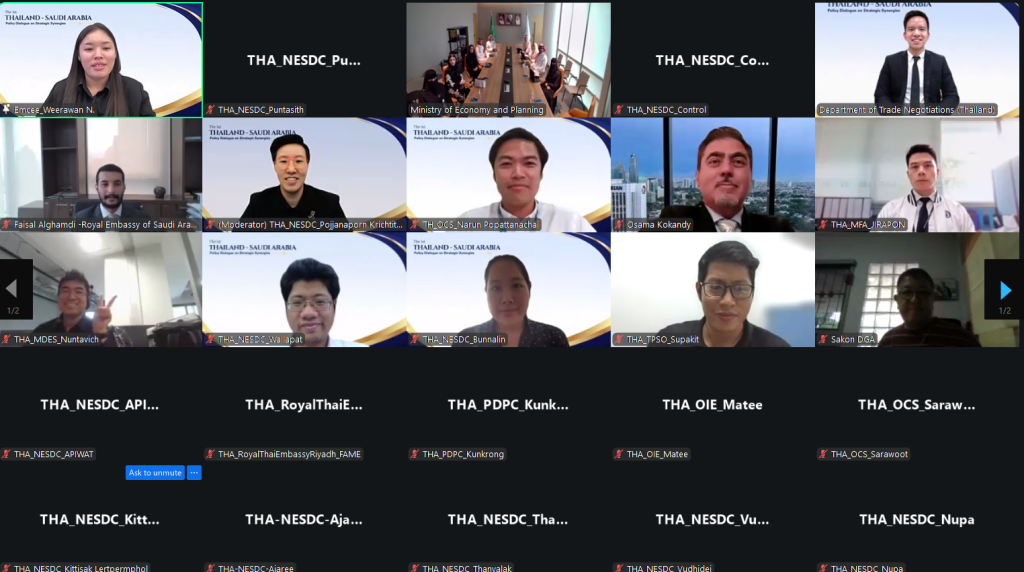
On July 15, 2026, the Office of the National Economic and Social Development Council (NESDC) and the Ministry of Economy and Planning (MEP) of the Kingdom of Saudi Arabia co-hosted the 1st Thailand–Saudi Arabia Policy Dialogue on Strategic Synergies via teleconference. The objective was to exchange experiences and best practices in driving the national development strategies of Thailand and Saudi Arabia toward inclusive economic growth. The dialogue also explored ways to apply Artificial Intelligence (AI) in public policy design to support economic development and structural reforms. More than 50 representatives from the public, private, and academic sectors of both countries attended. This meeting is a key cooperation activity under the Economic and Trade Committee of the Saudi–Thai Coordination Council (STCC), a bilateral mechanism aimed at elevating relations between the two nations.
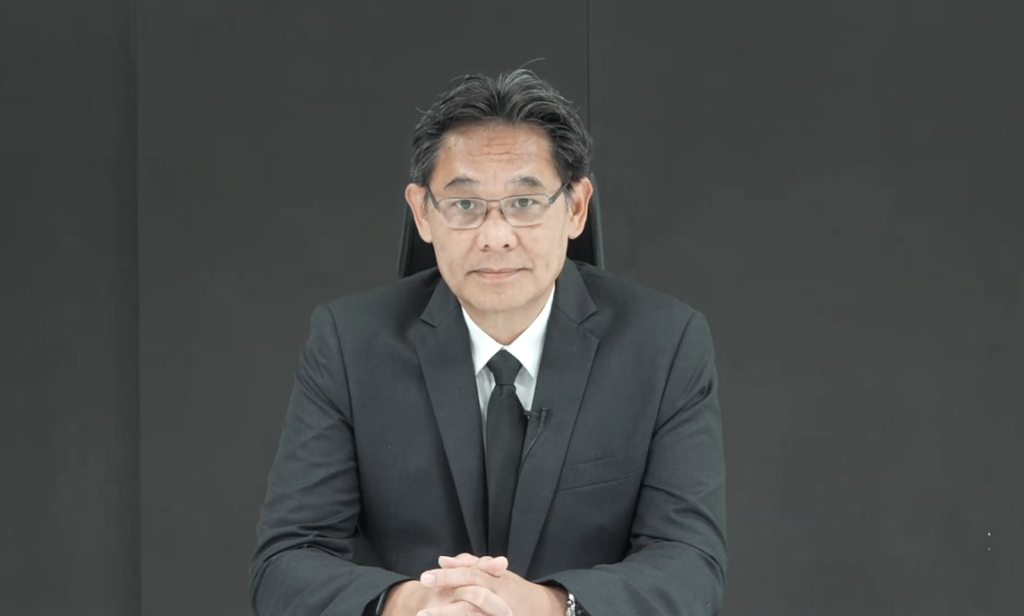
On this occasion, Mr. Danucha Pichayanan, Secretary-General of the NESDC, delivered the opening remarks, emphasizing the importance of collaboration in addressing volatile and complex global challenges. The meeting topics, which included driving national strategies and applying AI as a policy tool and development engine, are areas of mutual importance. These issues are directly linked to upgrading the entire national development planning process. Consequently, the dialogue serves as a vital platform for exchanging knowledge, experiences, and best practices, as well as laying the foundation for long-term institutional cooperation to strengthen the strategic partnership and lead to sustainable development for both countries in the future.
Meanwhile, Ms. Rozan Naji, General Manager of the International Strategic Partnerships Department at the MEP, representing the Saudi side, co-delivered the opening remarks. She emphasized that this policy dialogue reflects the commitment of both countries to strengthening bilateral cooperation for sustainable economic development. She also highlighted the importance of the STCC as an institutional mechanism that has yielded positive results in economic, trade, and investment cooperation in recent times. Saudi Arabia reaffirmed its commitment to continuously promoting economic relations with Thailand, and this meeting provides an opportunity to exchange policy knowledge and best practices to foster mutual economic growth in the future.
The meeting was divided into two sessions:
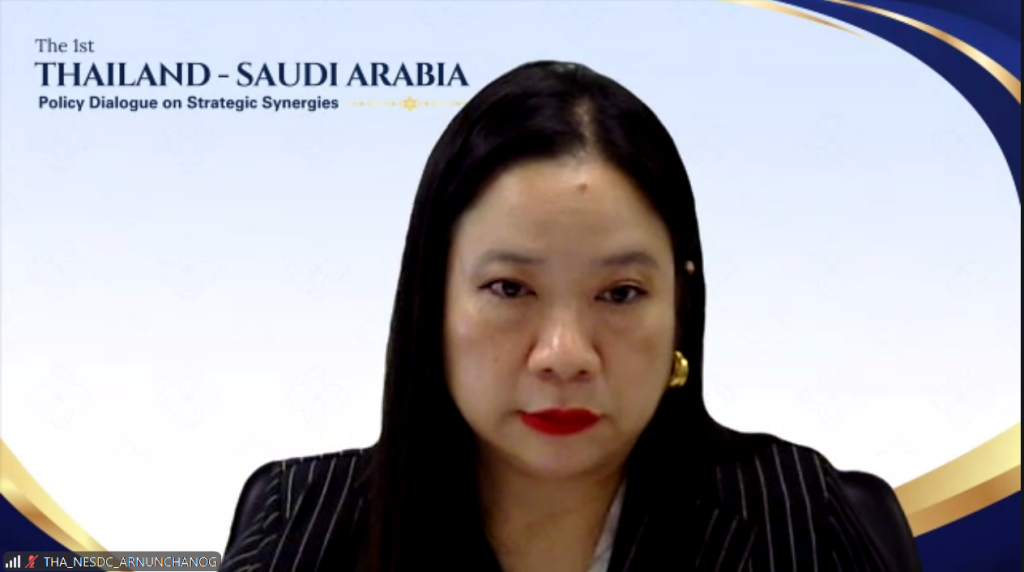
1. The Concept of the National Development Strategies, featuring Dr. Ananchanok Sakonthawat, Acting Policy and Plan Advisor at the NESDC, and Ms. Basma Jamjoom, Executive Director of the Vision Realization Office at the Strategic Management Office of Saudi Arabia, as speakers. The discussion was moderated by Ms. Dana Damanhouri, Director of the Joint Committee Department at the MEP. On this occasion, the speakers presented analyses of the socio-economic challenges of both countries, which have been used as concepts for public policy formulation and national strategic planning—specifically Thailand’s 13th National Economic and Social Development Plan, the draft of the 14th Plan, and Saudi Arabia’s Vision 2030. They also exchanged practices regarding mechanisms for translating national development plans into concrete actions. Furthermore, both sides presented the application of quantitative indicators used to evaluate the success of national development plans.
2. Artificial Intelligence as Policy and Regulatory Toolkit and Development Engine, featuring Dr. Naran Phorpattanachai, Director of the Law Reform Division at the Office of the Council of State, and Dr. Wajdi Aljedaani, Director of AI Maturity at the Saudi Data and AI Authority, as speakers. The discussion was moderated by Ms. Potjanaporn Krichitayawut, Urban Development Strategy Specialist at the NESDC. The speakers exchanged views on applying AI to enhance public sector capabilities within the policy management cycle (Plan-Do-Check-Act: PDCA) to support national strategy implementation and structural reforms. They analyzed key challenges in using AI for public policy formulation and regulatory reform, and discussed ways to develop AI experts and digital capabilities within government agencies. They also presented the role of AI in driving economic development and inclusive growth.
This meeting provided an opportunity for participants from the public, private, and academic sectors of both countries to listen to and exchange best practices for public policy operations and the application of AI with standards and governance to enhance public sector capabilities in the next phase. Furthermore, the meeting marks another significant milestone under the STCC in strengthening cooperation and the good relationship between the two countries.
International Strategy and Coordination Division
Office of the National Economic and Social Development Council
July 17, 2026