
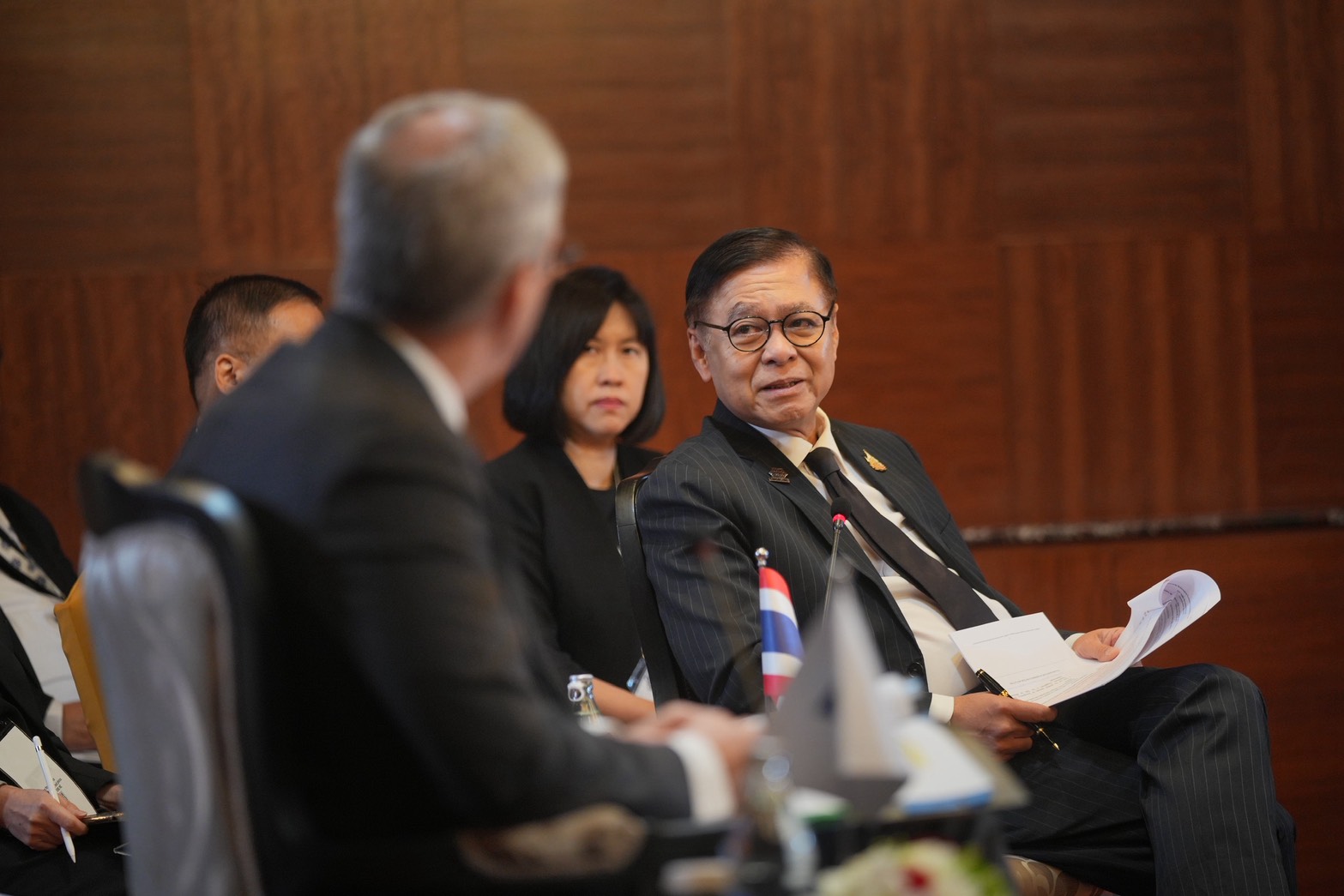
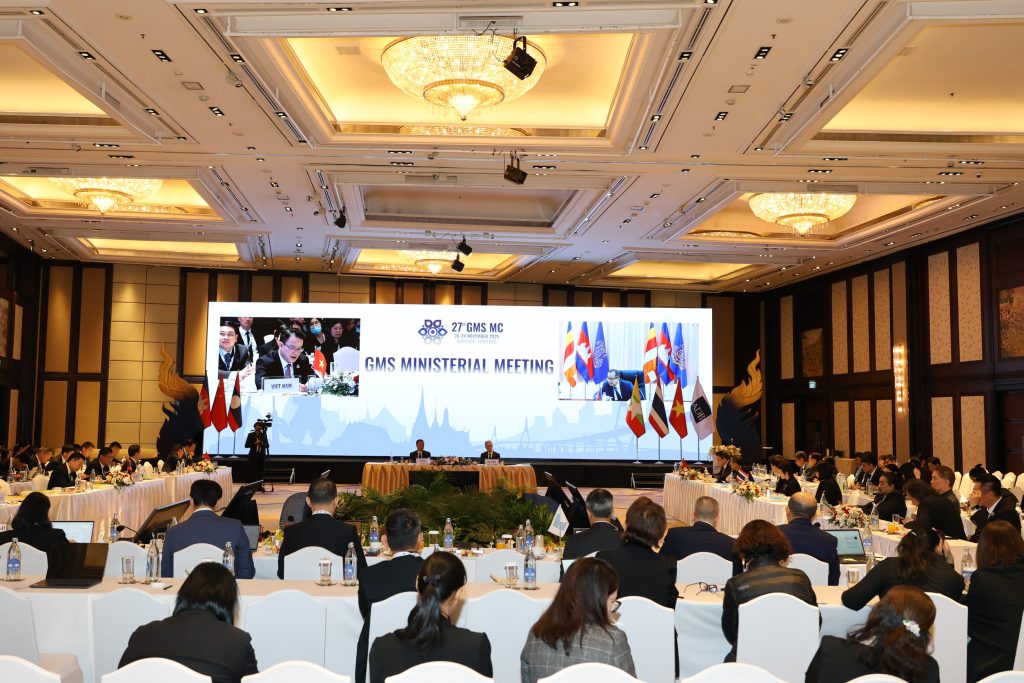
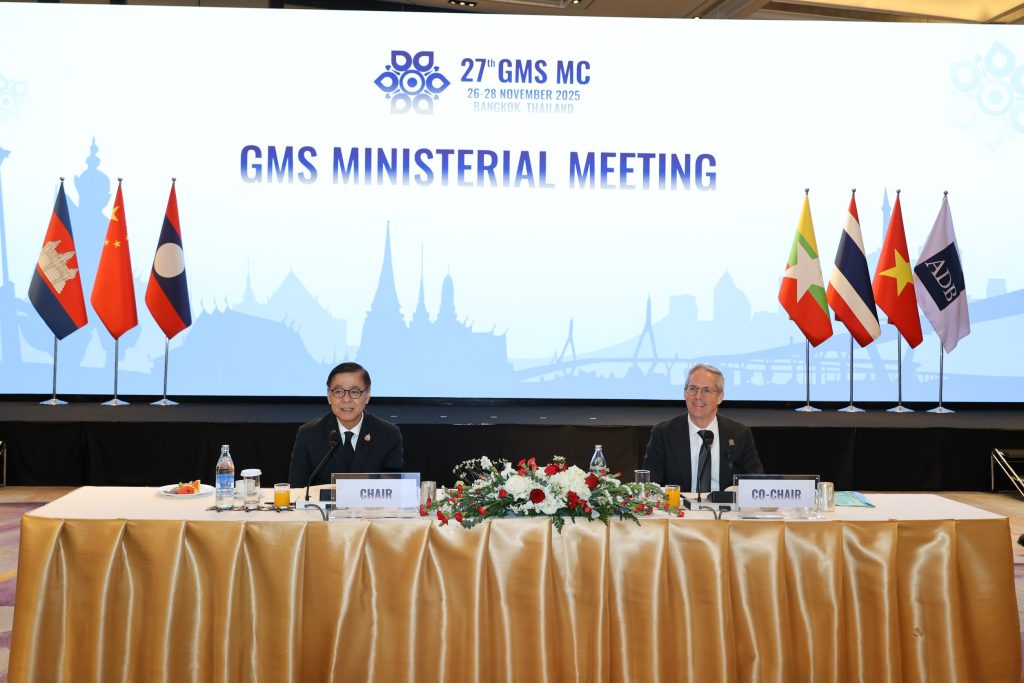
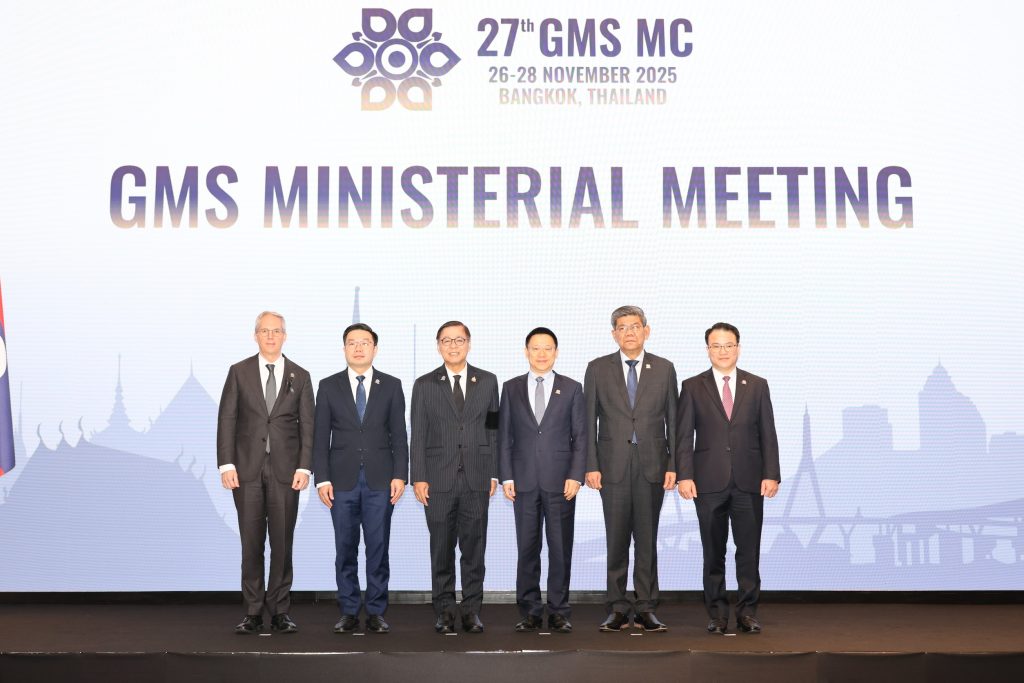
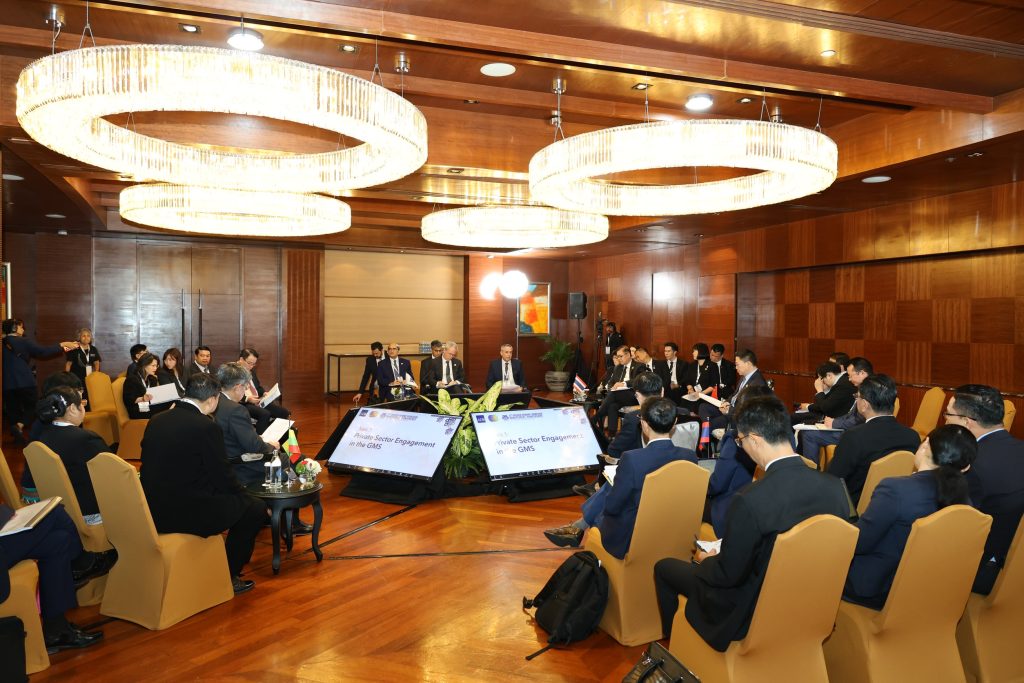
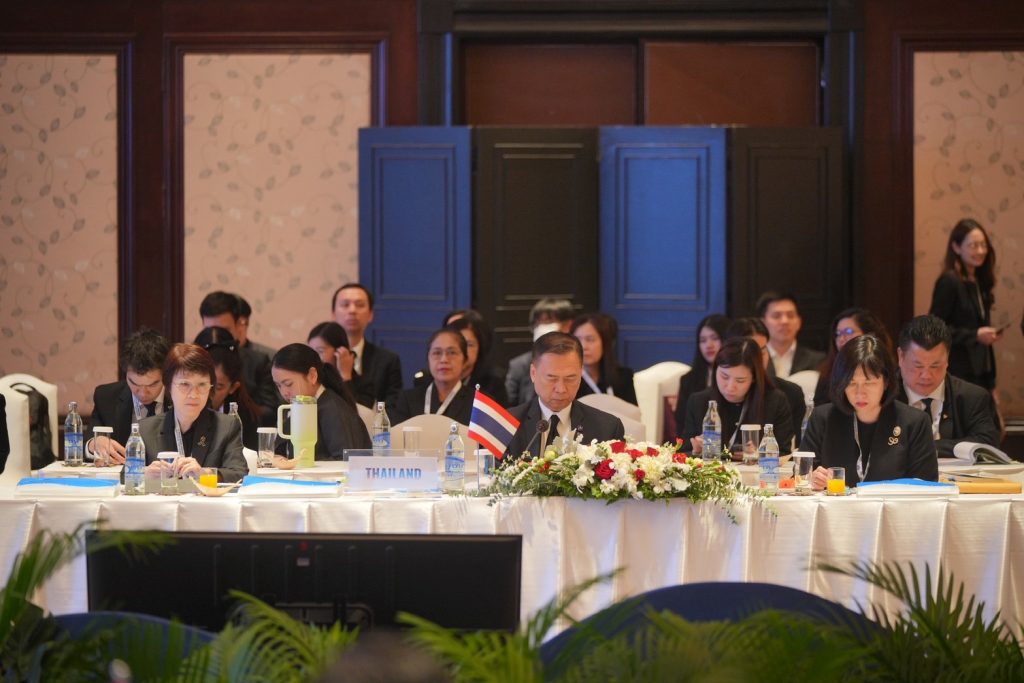
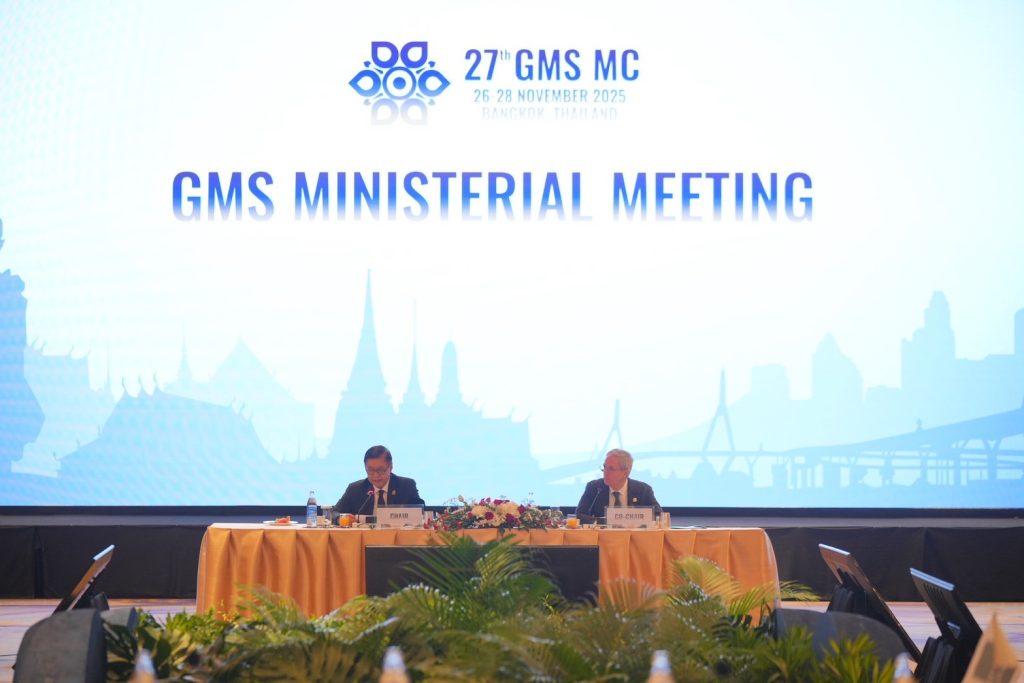
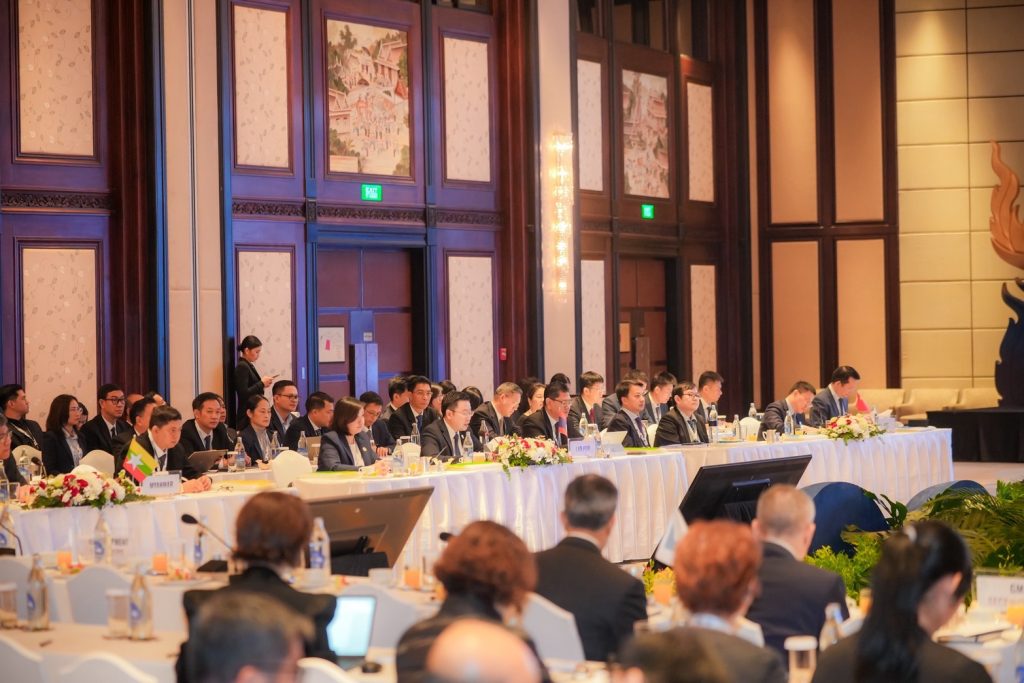
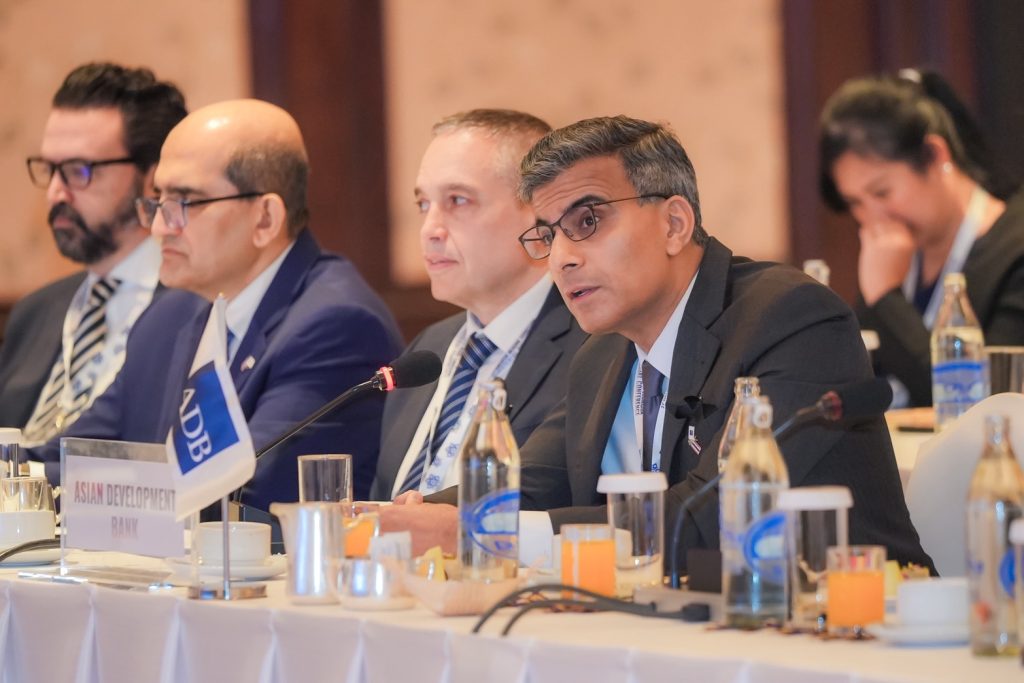
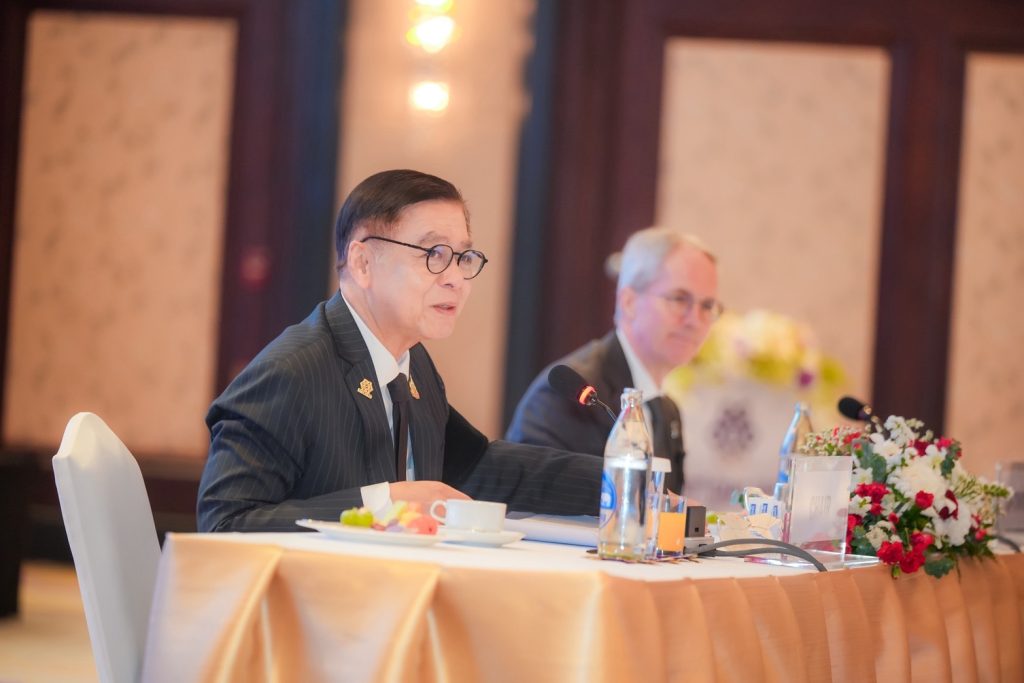
On Friday, November 28, 2025, Thailand hosted the 27th Greater Mekong Subregion Economic Cooperation Program Ministerial Conference (The 27th GMS Ministerial Conference) at the Shangri-La Hotel, Thailand. Mr. Sihasak Phuangketkeow, Minister of Foreign Affairs, serving as Thailand’s GMS Minister, chaired the meeting. The conference was attended by H.E. Chhieng Yanara, Minister Attached to the Prime Minister and Second Vice-Chairman of the Council for the Development of Cambodia, Mr. Liao Min, Vice Minister of Finance of the People’s Republic of China, Mr. Soulivath Souvannachoumkham, Vice Minister of Finance of the Lao People’s Democratic Republic, Mr. Than Zin Lwin, Deputy Minister of Investment and Foreign Economic Relations of the Republic of the Union of Myanmar, Mr. Tran Quoc Phuong, Vice Minister of Finance of the Socialist Republic of Vietnam, and Mr. Scott Morris, Vice President for East Asia, Southeast Asia, and the Pacific of the Asian Development Bank (ADB), Mr. Wichawat Isarabhakdi, Vice Minister of Foreign Affairs, along with senior officials from GMS member countries and representatives from the public sector, private sector, and development partners.
The Ministerial Meeting consists of formal (Plenary) and informal (Retreat) sessions. The objective is to provide an opportunity for ministers to engage in policy discussions and exchange comprehensive views on key issues of the GMS Program. The focus is on promoting private sector and local government participation, supporting the subregion’s shared vision of “becoming a more integrated, prosperous subregion that aims to reduce inequality and leave no one behind” through implementation under the Greater Mekong Subregion Economic Cooperation Program Strategic Framework 2030 (GMS 2030). This framework serves as a crucial compass in driving cooperation in infrastructure, trade, investment, and sustainable development of the subregion.
During this occasion, the Conference acknowledged progress and expedited the implementation of various projects under the GMS Program, while expressing gratitude to the working groups for their continued efforts across different sectors. The Conference also discussed cross-sectoral integration issues, with significant progress including (1) enhancing local government roles through various cooperation forums such as the Economic Corridors’ Forum, Governors’ Forum, and Sub-corridor Forums to promote urban development and connectivity with development partners; (2) innovation initiatives, particularly in workforce skill enhancement and promoting digital and green economy transition; and (3) advancing gender equality through framework development, indicator review, and capacity building for more inclusive and sustainable operations.
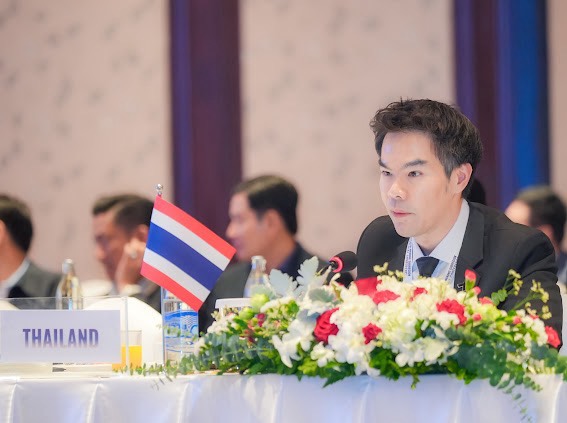
Thailand presented future cooperation directions under the GMS Program, emphasizing three main aspects: (1) addressing urgent subregional challenges such as transnational crime, air pollution, and water resource management, requiring efficient information exchange, law enforcement, and technological innovation; (2) strengthening physical and digital connectivity by building upon the Cross-Border Transport Facilitation Agreement and utilizing Thailand’s international digital trade platforms such as the National Digital Trade Platform (NDTP), PromptTrade, and PromptBiz to facilitate trade and transport; and (3) expanding cooperation with other subregional frameworks including ACMECS, MLC, IMT-GT, and BIMSTEC for more integrated and mutually supportive development. The Conference reaffirmed its commitment to advancing cooperation in alignment with each country’s strategies to address challenges and promote connectivity and development beneficial to the subregion’s population.
The Conference endorsed three outcome documents: (1) Joint Ministerial Statement of the 27th GMS Ministerial Conference, (2) GMS Regional Investment Framework 2026-2028, and (3) GMS Private Sector Engagement Strategy. These three documents will serve as important directional frameworks for driving future economic cooperation in the Greater Mekong Subregion, ensuring member countries’ operations are aligned, connected, and concretely responsive to sustainable development goals.
By: International Strategy and Cooperation Coordination Division
Office of the National Economic and Social Development Council