On May 19, 2026, the Cabinet acknowledged the progress of Thailand’s OECD accession process and approved the appointment of the Committee for Directing Thailand’s Accession to the OECD. Chaired by the Prime Minister, the committee aims to set the direction, expedite, and monitor the operations of all sectors effectively and with unity.
The committee consists of 17 members, with Prime Minister Anutin Charnvirakul serving as Chairman. Deputy Prime Ministers, including Mr. Ekniti Nitithanprapas, Mr. Sihasak Phuangketkeow, and Mr. Pakorn Nilprapunt, serve as Vice Chairmen. Representatives from relevant agencies, including the Director of the Bureau of the Budget, the Secretary-General of the OCSC, the Chairman of the Joint Standing Committee on Commerce, Industry, and Banking (JSCCIB), and the Secretary-General of the NESDC, serve as members. External experts, including Mr. Kitti Tangjitrmaneesakda, Mr. Taveelap Rittapirom, Mr. Sarun Charoensuwan, and Professor Emeritus Kittipong Kittayarak, also join as members. Meanwhile, the three main coordinating agencies—the Office of the National Economic and Social Development Council (NESDC), the Ministry of Foreign Affairs (MFA), and the Office of the Council of State (OCS)—serve as the secretariat.
Furthermore, the Cabinet also approved the establishment of the position of OECD Chief Coordinator for Thailand to act as the primary liaison for OECD accession both domestically and internationally. This role will work alongside the three main coordinating agencies to translate executive policies and guidelines into concrete actions.
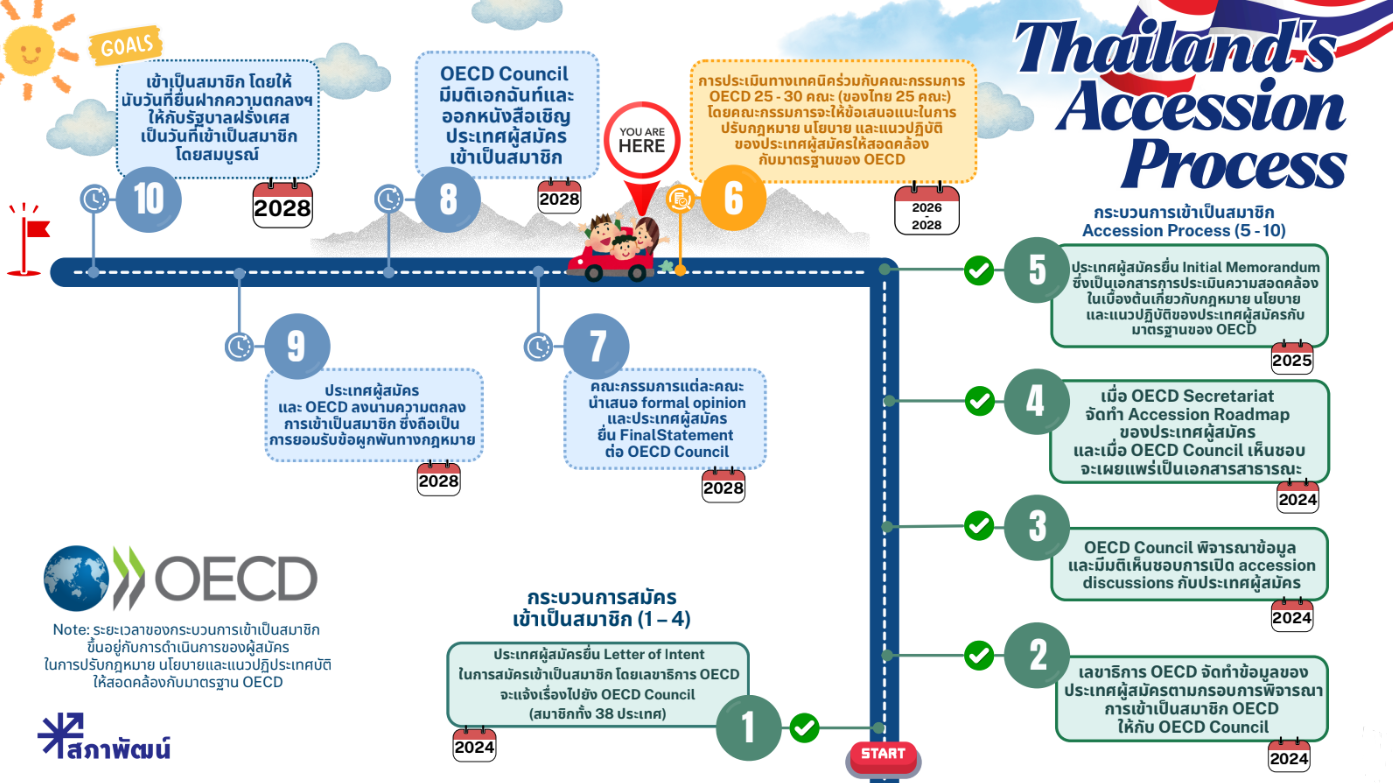
OECD accession is considered a key government agenda, with the goal for Thailand to become an OECD member by 2028. This is not merely a symbolic target but part of elevating and reforming Thailand across multiple dimensions to align with international standards, including the economy, law, governance, investment, competition, innovation, and the environment. This will help boost investor confidence and prepare Thailand to be competitive and play a significant role on the global stage, which will directly benefit the public in the long term.
Previously, the NESDC, MFA, and OCS have continuously driven the OECD accession process. Domestically, this includes organizing consultative meetings on operational guidelines, stakeholder consultations, and lectures for various sectors, including the private sector and academia, as well as producing public relations materials to raise awareness and foster participation from all sectors through online and offline channels. Internationally, efforts include organizing workshops with OECD member countries to build the capacity of Thai officials and attending meetings with the OECD to build strong interactions. Regarding regulations, a platform has been developed to translate OECD legal instruments for the public, and consultations are provided to relevant agencies on adjusting domestic standards to align with the OECD.
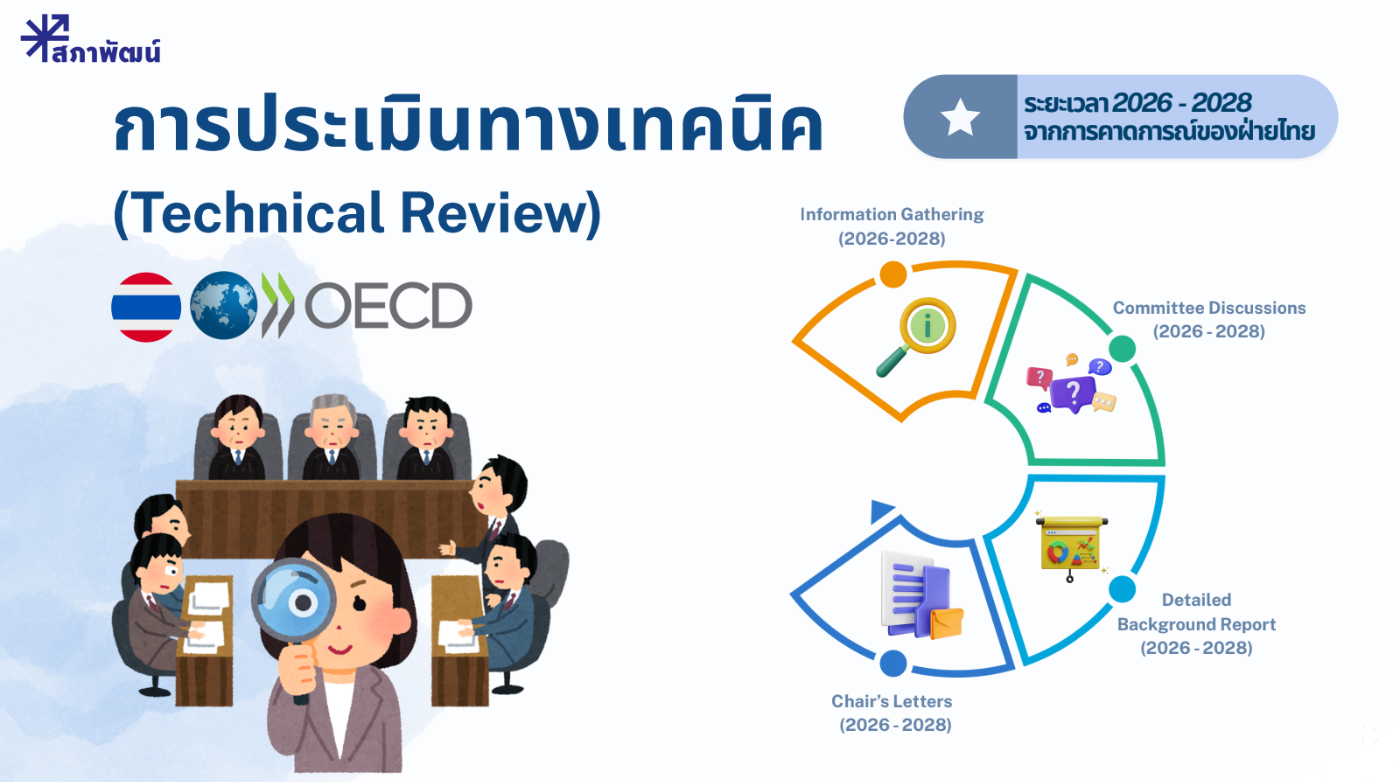
Regarding the latest progress in the OECD accession process, Thailand is currently in the Technical Review stage, which involves completing questionnaires and providing additional information to the OECD. Once the OECD has completed its review, it will provide recommendations for Thailand to improve its laws, policies, and practices to align with OECD standards. The government will continue to provide regular progress updates to the public.
Source: https://www.thaigov.go.th/th/news/164225