
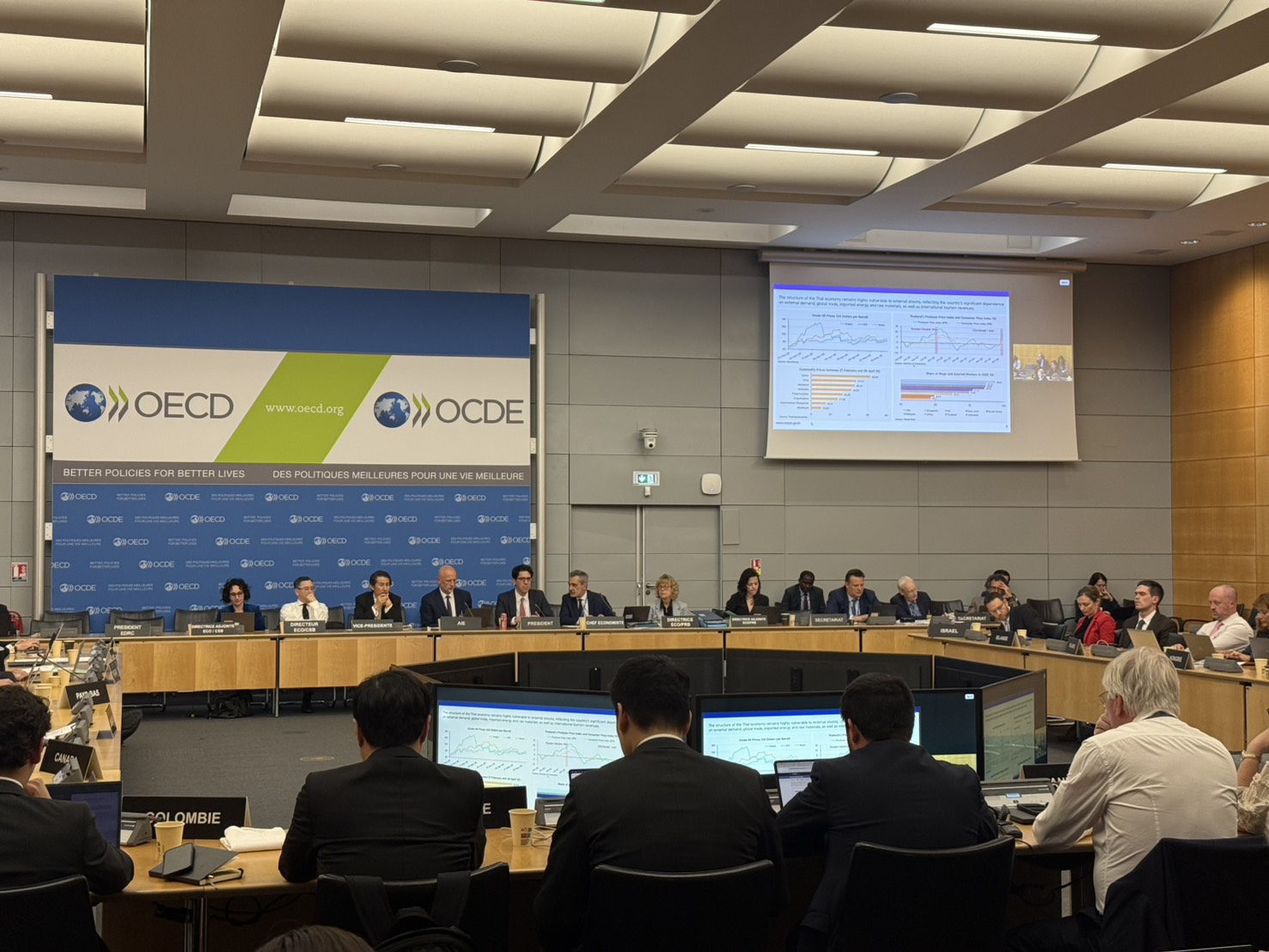
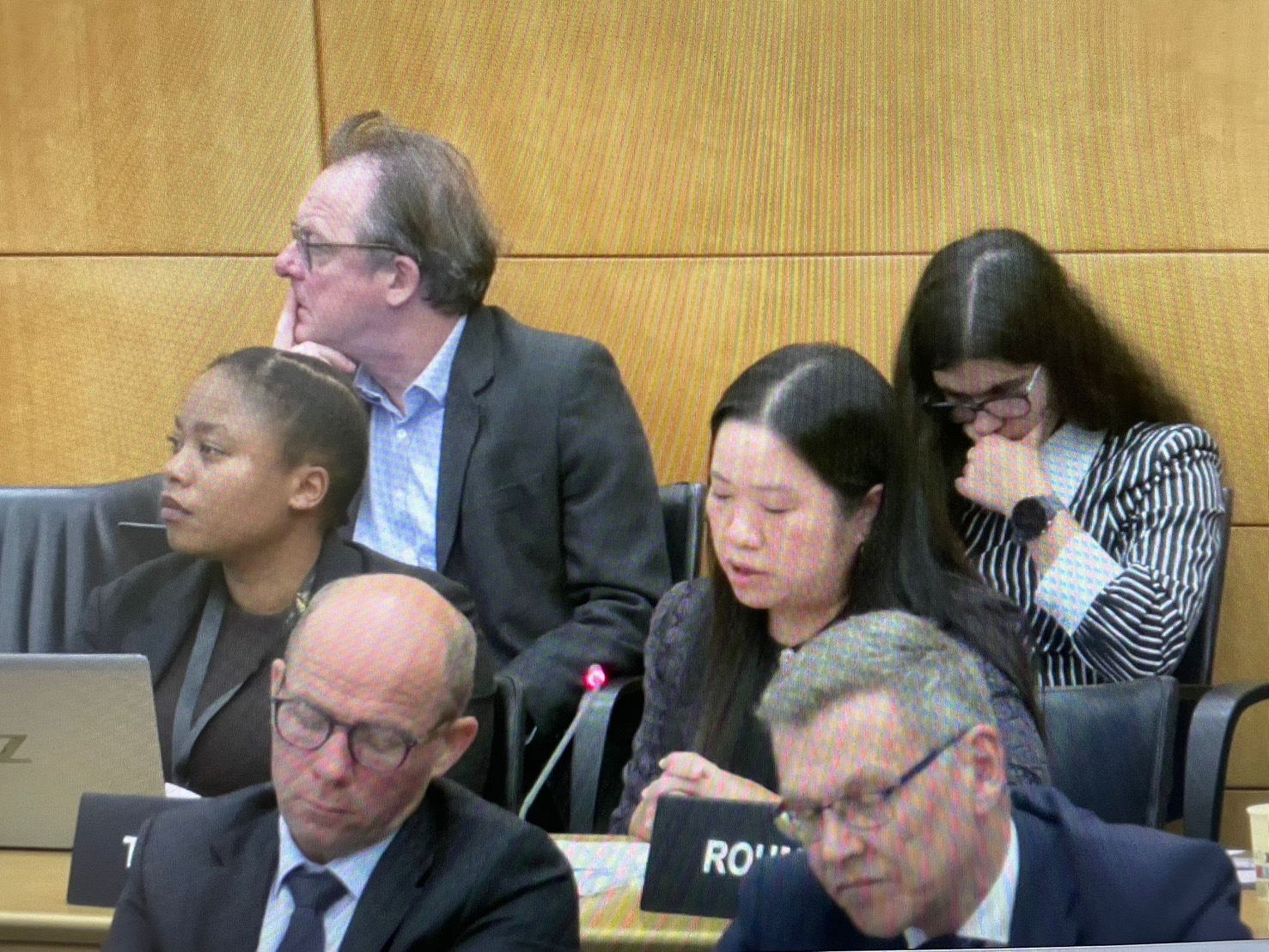
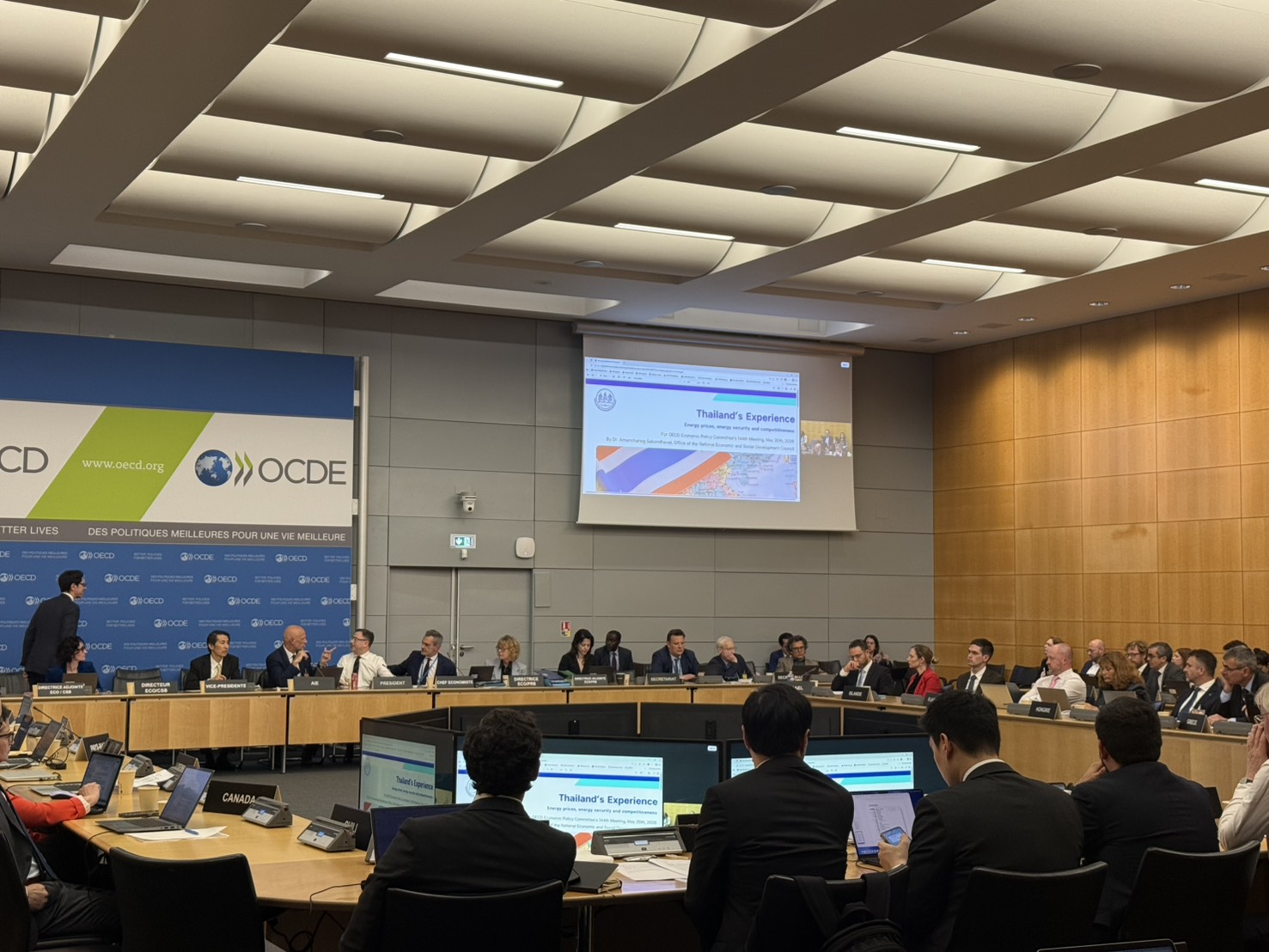
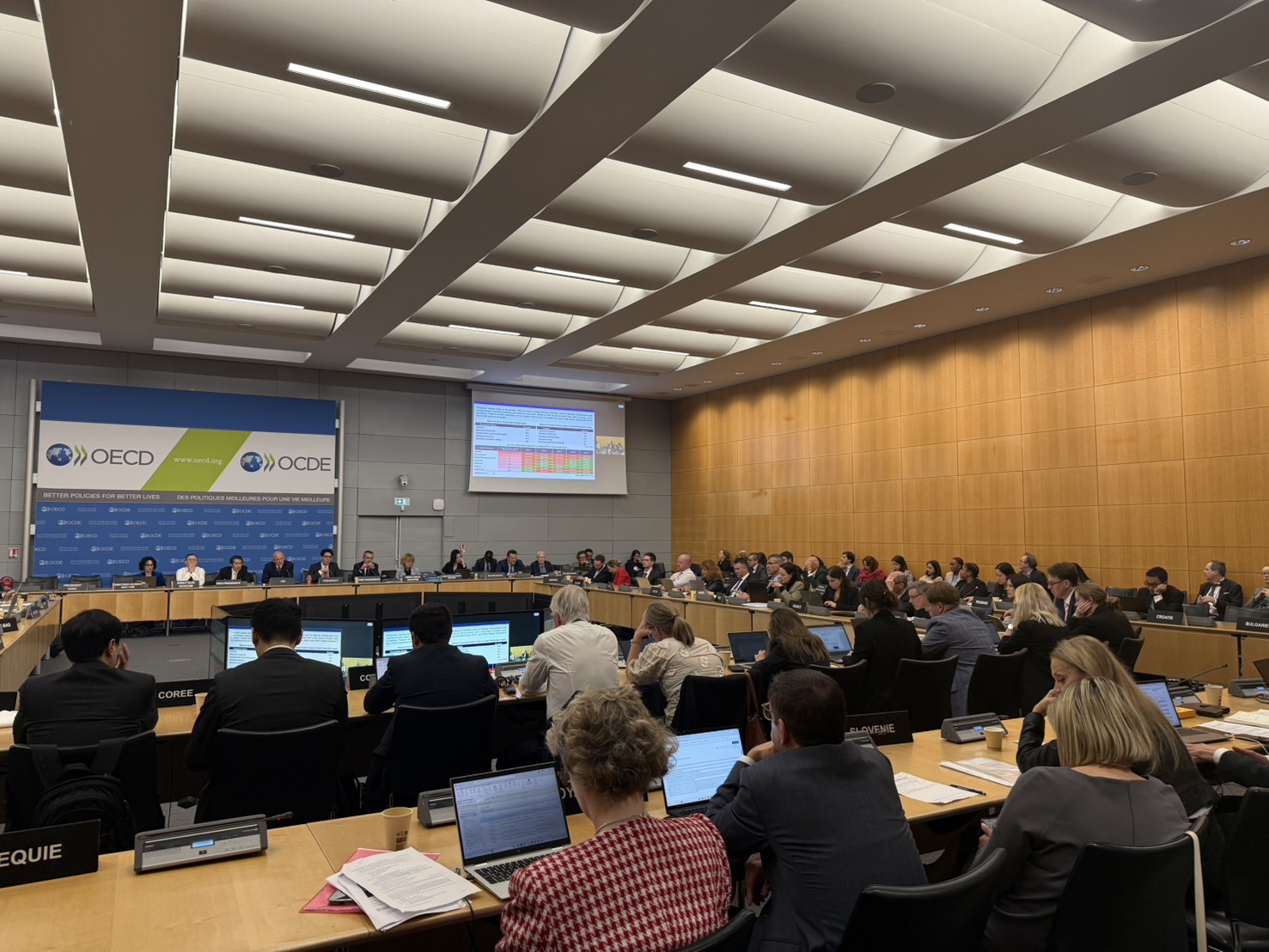
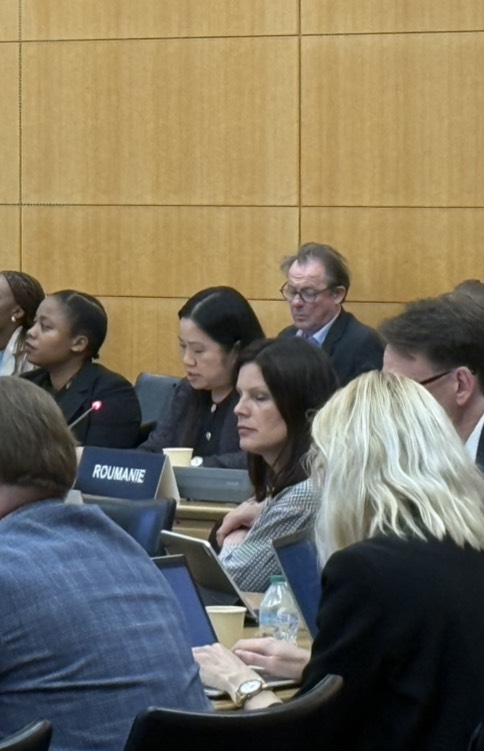
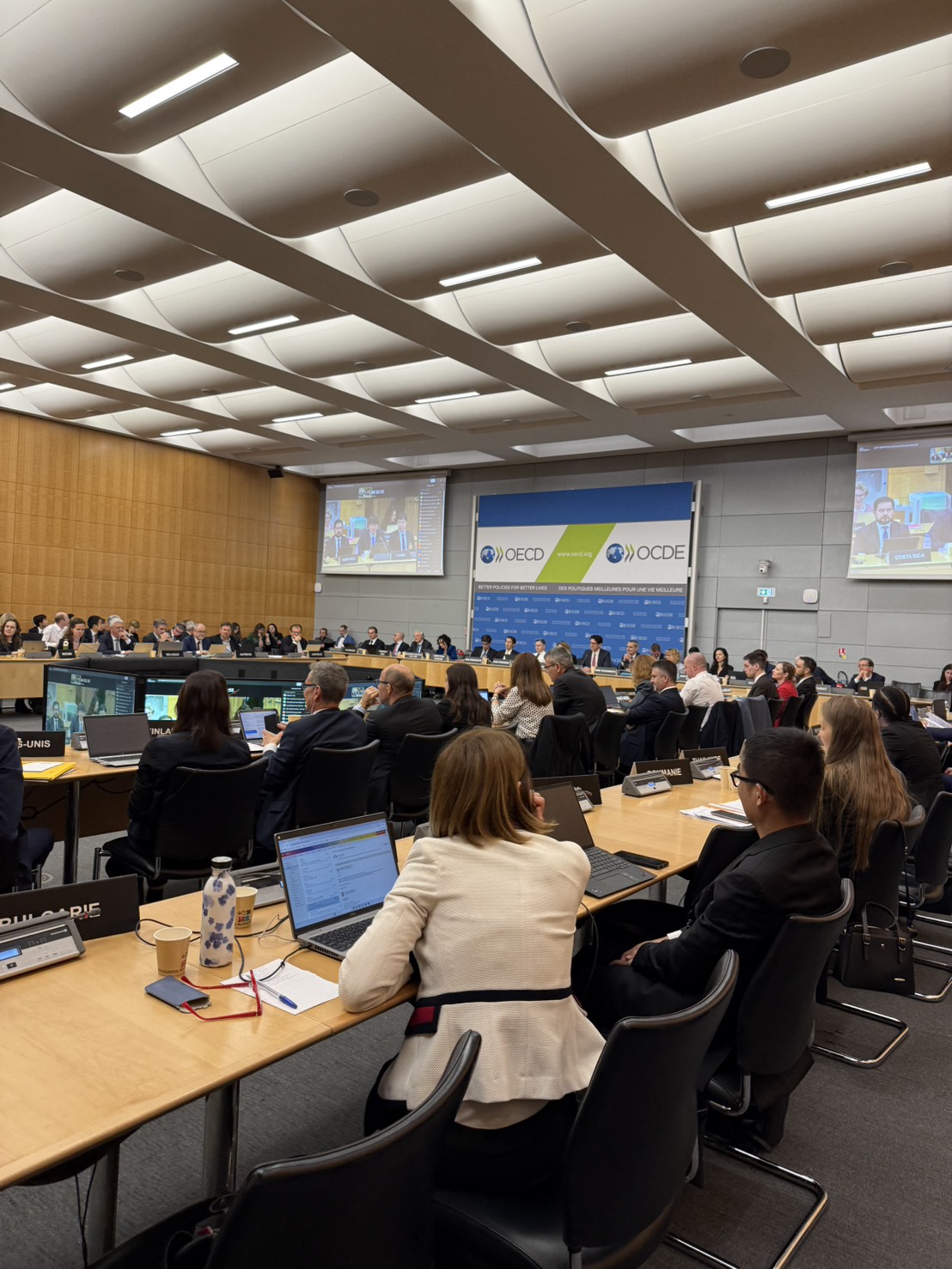
On May 20-21, 2026, representatives from the Office of the National Economic and Social Development Council (NESDC), led by Ms. Ananchanok Sakanthawat, Acting Policy and Plan Advisor and Director of the Macroeconomic Strategy and Planning Division, along with officials from the Macroeconomic Strategy and Planning Division, attended the 144th Economic Policy Committee (EPC) meeting at the OECD Headquarters in Paris, French Republic. The purpose was to exchange views on global economic situations and trends and to present Thailand’s experiences in implementing policies to mitigate impacts and prepare for the conflict in the Middle East. The OECD Economic Policy Committee consists of senior executives from member countries and accession countries. Its primary mission is to analyze structural and macroeconomic issues and monitor the economic policies of each country, focusing on key issues such as economic growth, labor markets, pension systems, and public finance, as well as discussing in-depth studies on specific macroeconomic topics.
During the meeting, the OECD reported on the “Economic Outlook and Risks” for 2026-2027. The OECD estimated that prior to the Middle East conflict, the global economy in 2026 was likely to expand by approximately 3.2%. However, following the conflict, the OECD revised its global economic projections downward into two scenarios: First, the “Mild Disruption” scenario, where energy prices gradually decrease according to market mechanisms, resulting in an expected global economic growth of 2.8% in 2026 before a slight recovery to 3.1% in 2027. Second, the “Prolonged Disruption” scenario, where energy and fertilizer prices remain high for an extended period, coupled with shortages of energy and key production factors. In this case, the global economy is expected to grow by 2.1% in 2026 and 1.8% in 2027, with many countries at risk of entering a recession in the second half of the year. The differences between these scenarios depend on oil price levels, changes in inflation expectations, and the degree of global financial tightening.
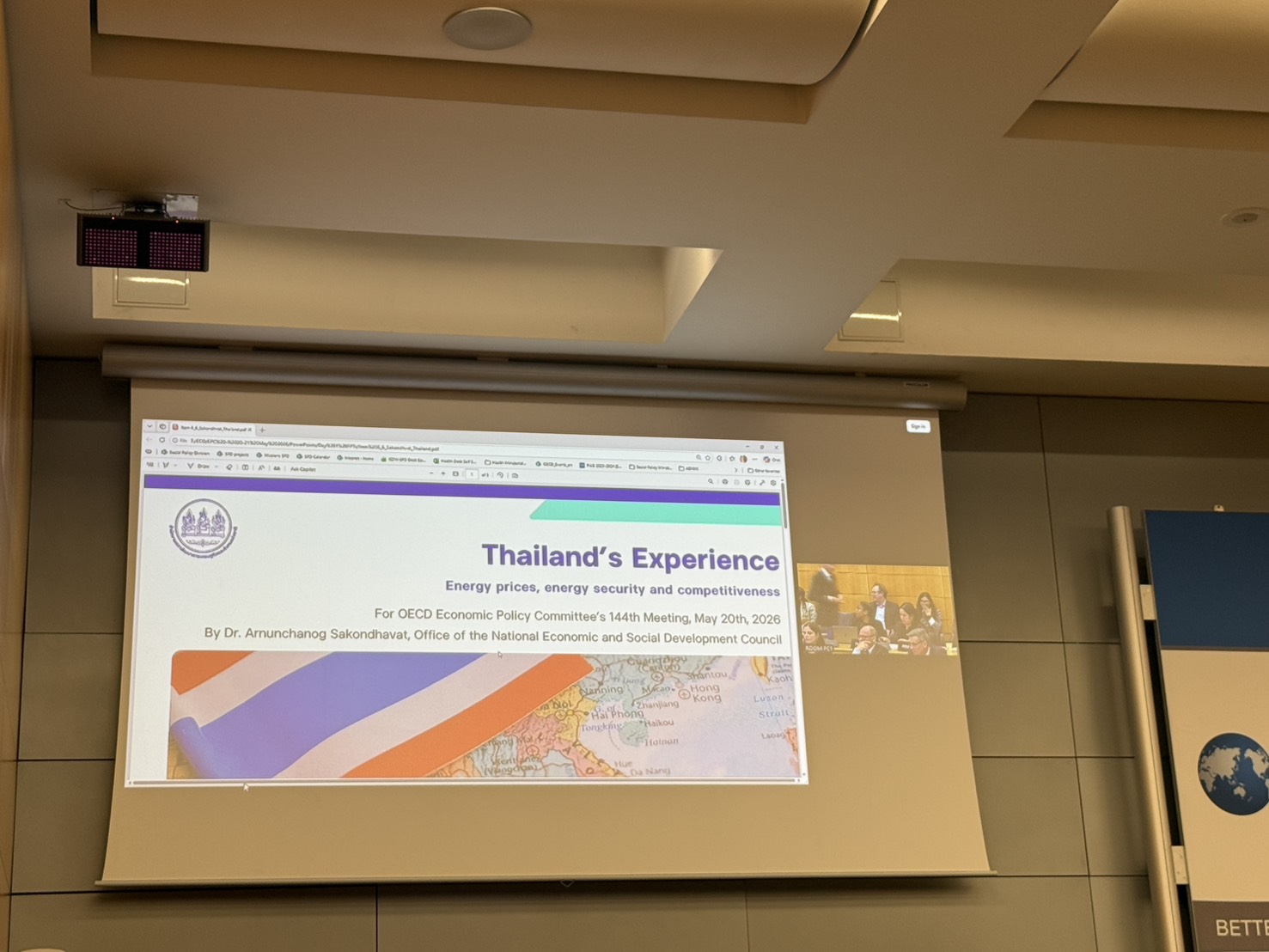
At the meeting, the NESDC representative presented Thailand’s experiences regarding “Energy Prices, Energy Security, and Competitiveness.” In summary, Thailand has been affected by the Middle East conflict through rising energy prices and supply chain risks. However, the private sector has adapted by diversifying import sources and increasing the use of bio-packaging and alternative materials. Meanwhile, the government has implemented short-term measures to mitigate the impact on the cost of living and energy costs for citizens and businesses, particularly vulnerable groups and the agricultural sector. In the medium term, the government aims to use this crisis as an opportunity to accelerate the energy transition by increasing the proportion of renewable energy, reducing dependence on fossil fuels, and promoting green investment to strengthen energy security and maintain the country’s long-term competitiveness.
Furthermore, the meeting discussed additional key economic issues, including fiscal policy and fiscal sustainability, in a context where many countries face increased fiscal pressure from past economic crises, aging societies, and continuously rising public expenditures. Other topics included labor market changes regarding short- and medium-term developments amidst structural shifts in work patterns; the role and development of transshipment and trade diversion; and structural changes in global value chains under the context of geopolitical tensions and increasing global trade polarization. The discussion also covered foreign investment screening measures and trends in outbound investment controls, which some countries have begun to implement to regulate the transfer of technology or capital to security-sensitive sectors.
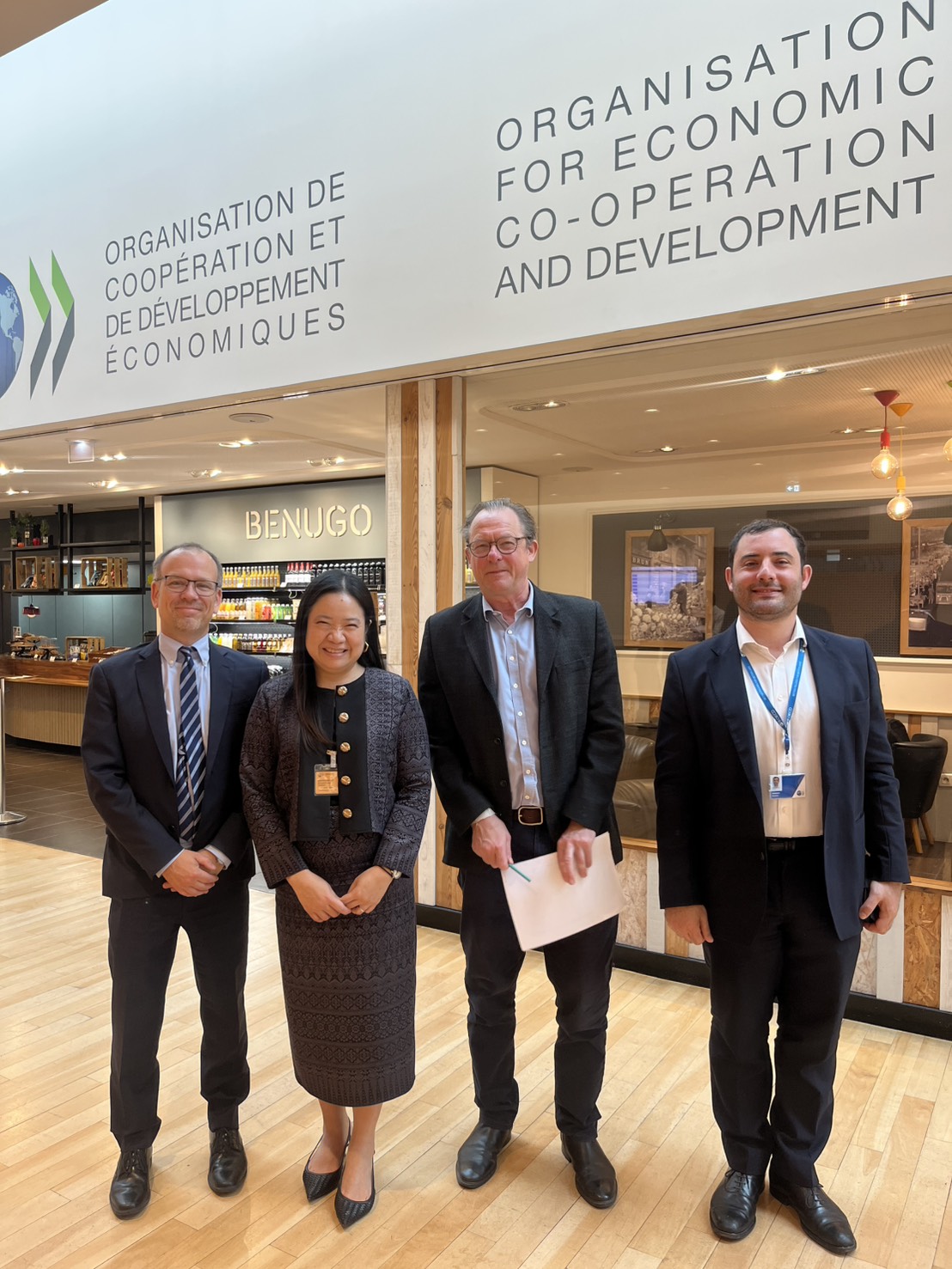
On the same occasion, the NESDC representative also met with Mr. Jens Arnold, Head of Division, and officials from the OECD Economics Department to prepare for the upcoming Thailand Economic Survey. They exchanged views and assumptions regarding Thailand’s economic growth outlook and discussed plans for Thailand’s future Economic and Development Review Committee (EDRC) meetings.
News/Photo: Macroeconomic Strategy and Planning Division, Office of the National Economic and Social Development Council