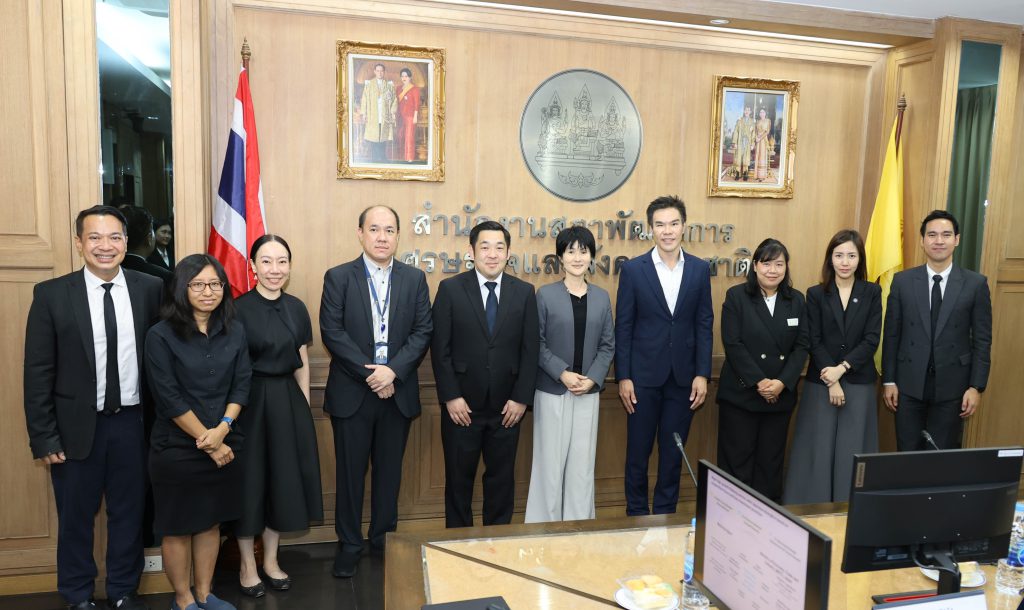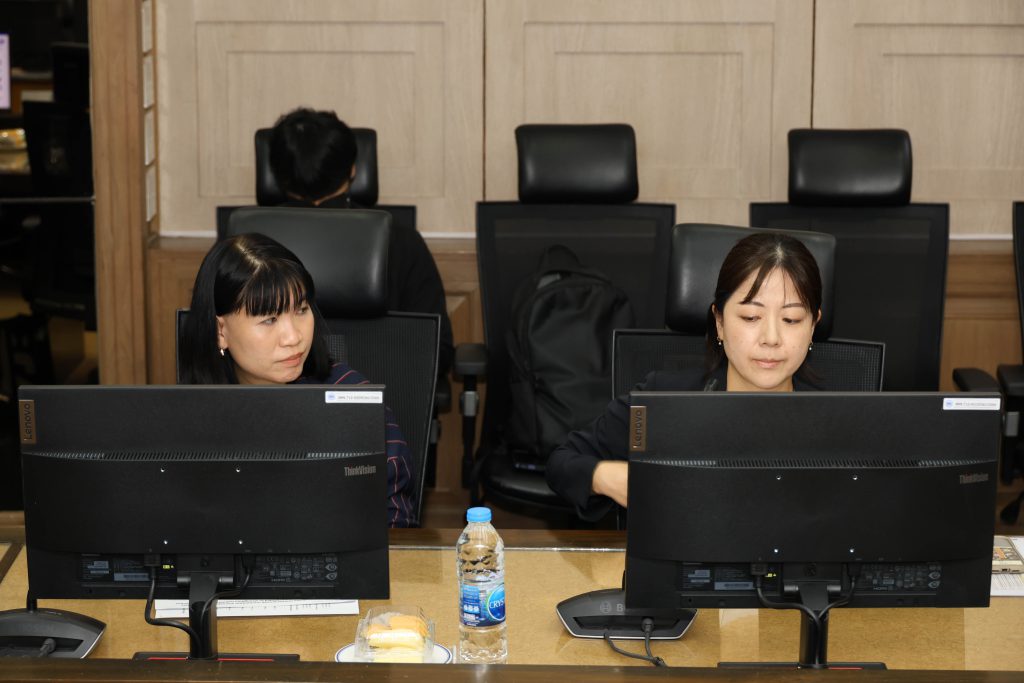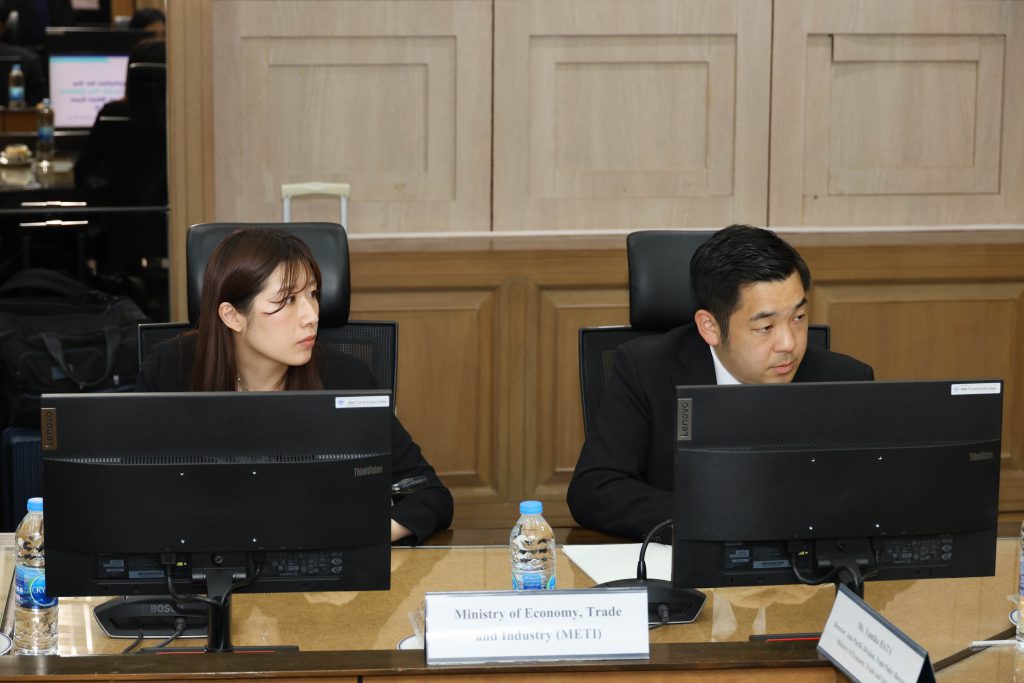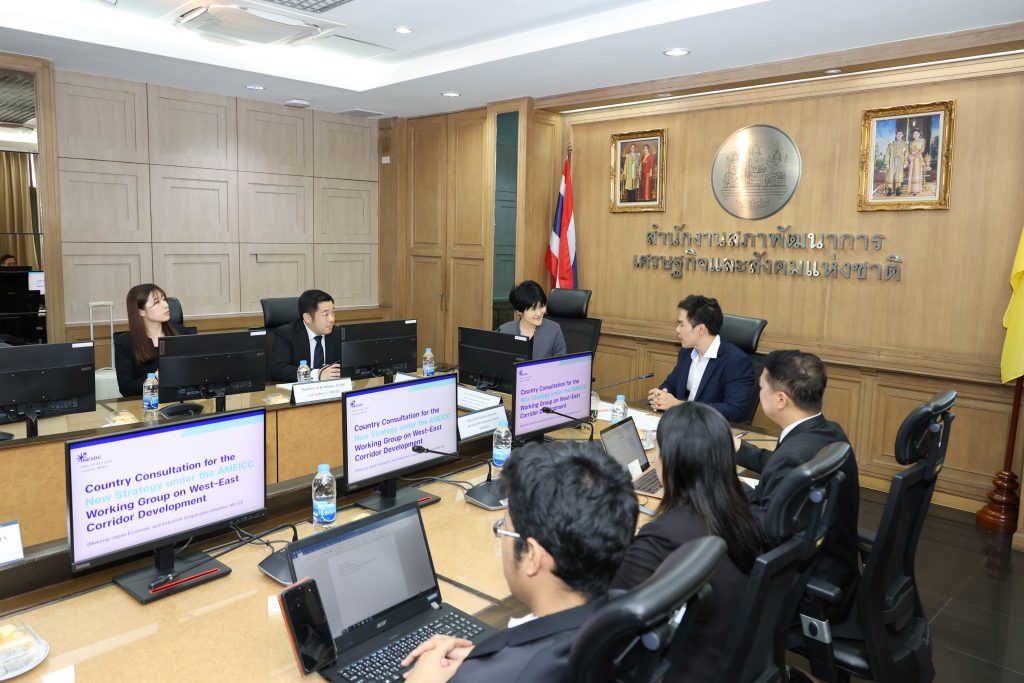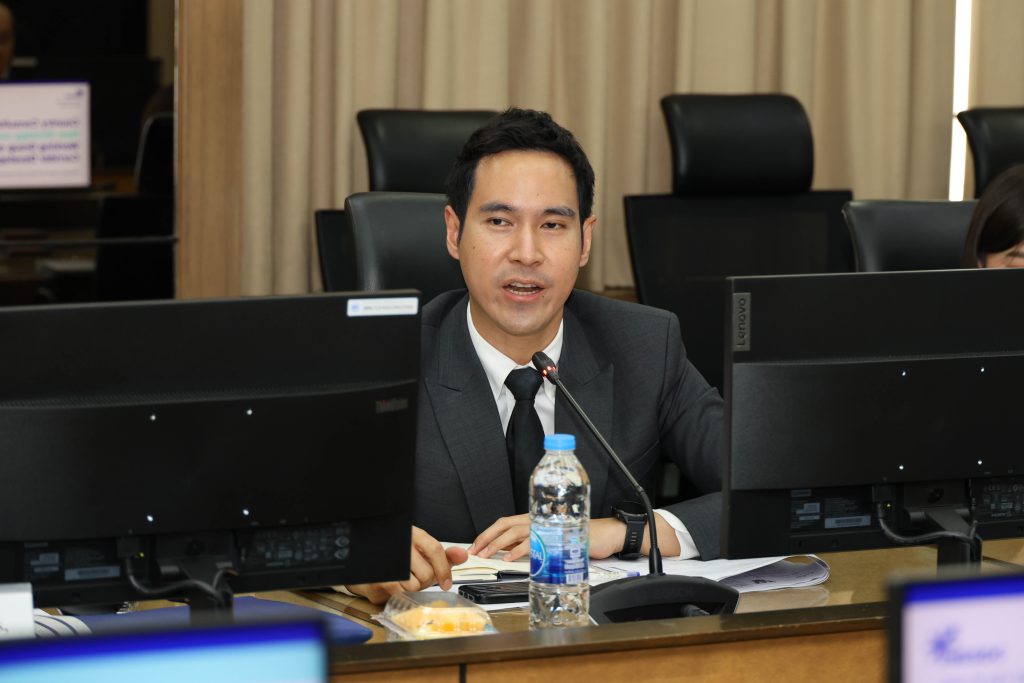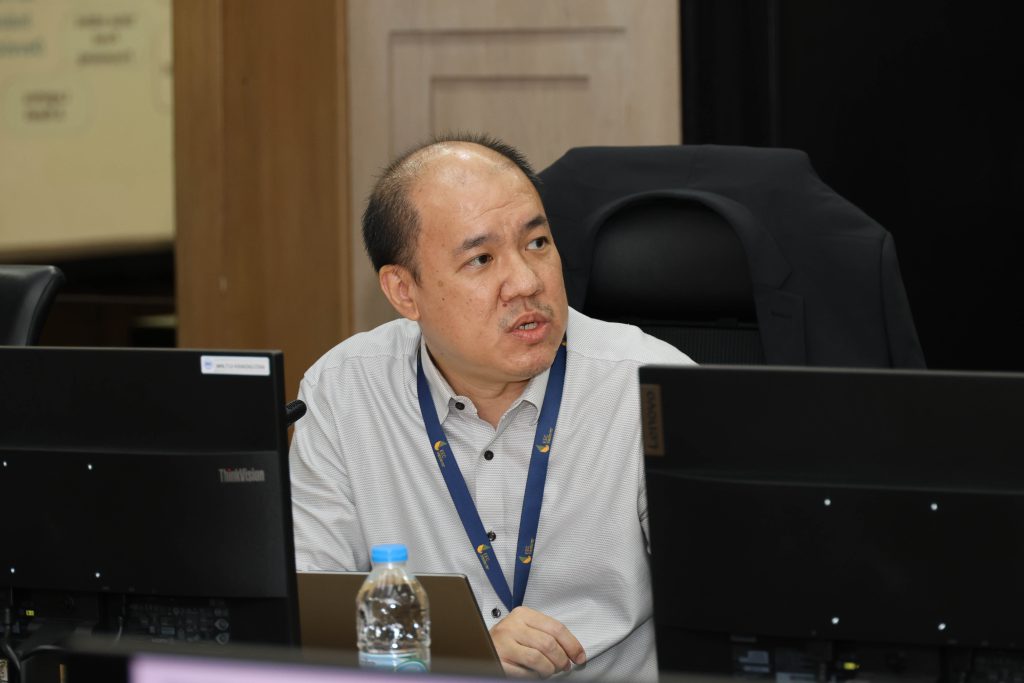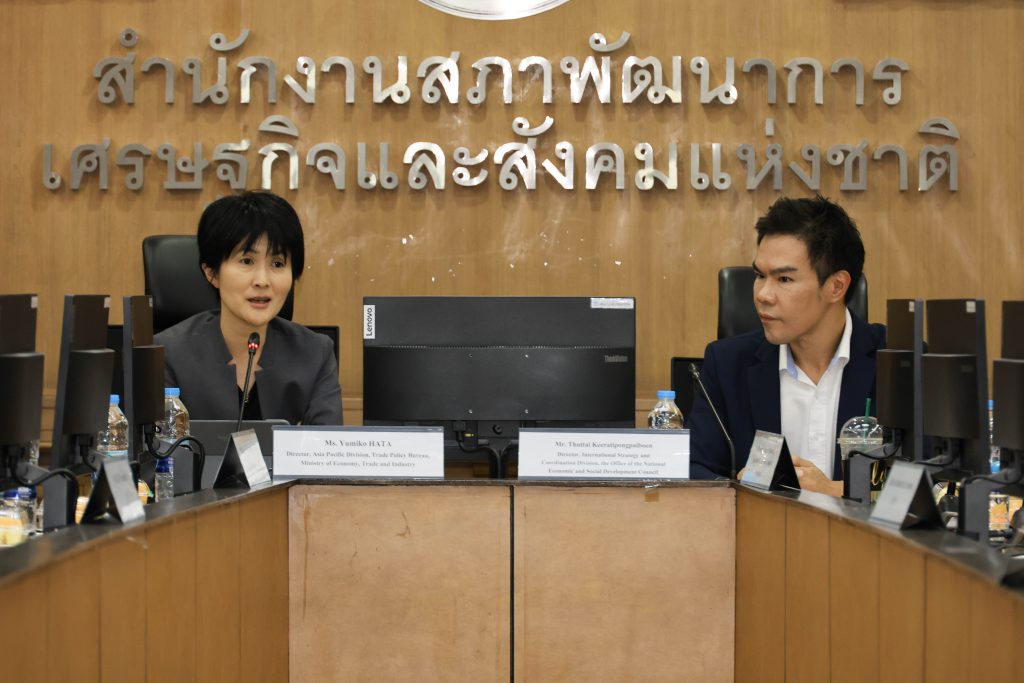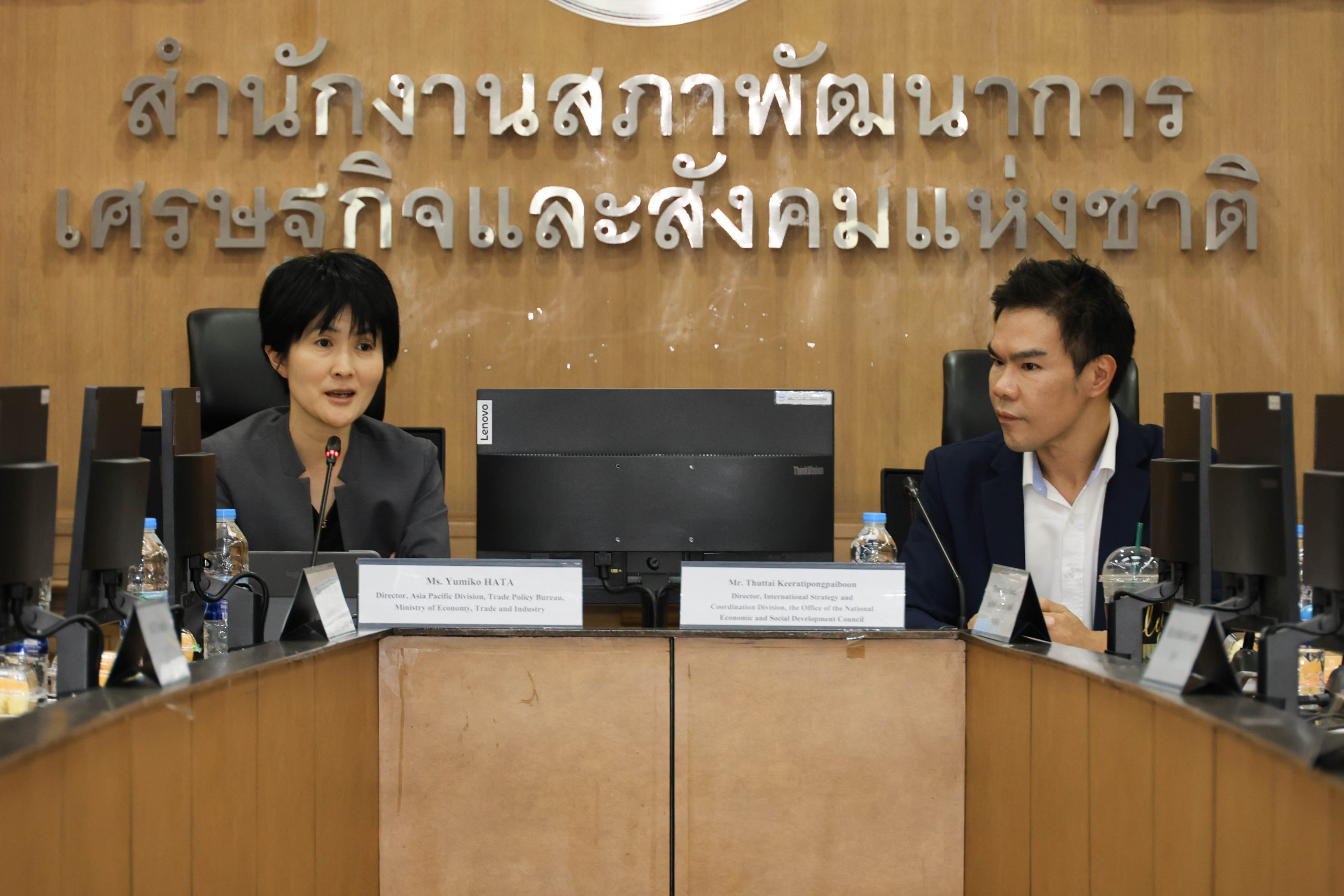
On July 16, 2026, the Office of the National Economic and Social Development Council (NESDC), led by Mr. Thatchai Keeratiphongphaiboon, Director of the International Strategy and Cooperation Division, and Ms. Yumiko Hata, Director of the Asia and Pacific Division, Trade Policy Bureau, Ministry of Economy, Trade and Industry (METI) of Japan, co-chaired a consultation meeting on the formulation of “The New Mekong Strategy.” This was held under the AEM-METI Economic and Industrial Cooperation Committee – Working Group on West-East Corridor Development (AMEICC WEC-WG) within the framework of the Mekong-Japan Economic and Industrial Cooperation Initiative (MJ-CI). Representatives from the Office of Industrial Economics, the Ministry of Transport, the Department of Trade Negotiations, the Department of Foreign Trade, the Board of Investment, the Industrial Estate Authority of Thailand, and the Eastern Economic Corridor Office also attended the meeting.
The objective of this meeting was to exchange views and provide recommendations on the new strategy proposed by the AMEICC WEC-WG Secretariat, ensuring it aligns with Thailand’s development priorities and goals to effectively address shared regional challenges.
The AMEICC WEC-WG Secretariat, in collaboration with Deloitte, presented the New Mekong Strategy, which aims to highlight the key advantages and challenges for Thailand and other subregional countries. While the region has the potential to continuously attract investors and serve as a major production base, investment standards and regulations often lack consistency across countries and continuity over time. Consequently, the strategy proposes regulatory harmonization, industrial capacity building, environmental resilience enhancement, and the upskilling of the workforce to high-quality standards to establish the region as an export hub.
In this regard, the NESDC proposed Thailand’s development guidelines aligned with the strategy, which are linked to the draft framework of the 14th National Economic and Social Development Plan. This plan focuses on restructuring all economic sectors to enhance competitiveness, alongside concepts of market creation coupled with environmental conservation and human capital development to prepare for future changes. Furthermore, the NESDC expressed Thailand’s commitment
to joining the OECD, which requires future research and development of various regulations. The New Mekong Strategy can tangibly support Thailand’s development path in this direction.
Additionally, the meeting provided feedback on the strategy, supporting the harmonization of regional market regulations. This could include promoting common industrial standards and shared labor incentive systems to attract investors and various labor groups. However, the meeting noted that differences in regional supply chains might make the harmonization of regulations and standards challenging. This requires collaboration between both public and private sectors to strengthen domestic industrial markets, leading to genuine regional integration.
Finally, the meeting emphasized the strong cooperation between Thailand and AMEICC and expressed readiness to support the New Mekong Strategy to achieve true regional integration. Further details regarding comprehensive development guidelines for this strategy will be discussed at the AMEICC WEC-WG Senior Officials’ Meeting in August.