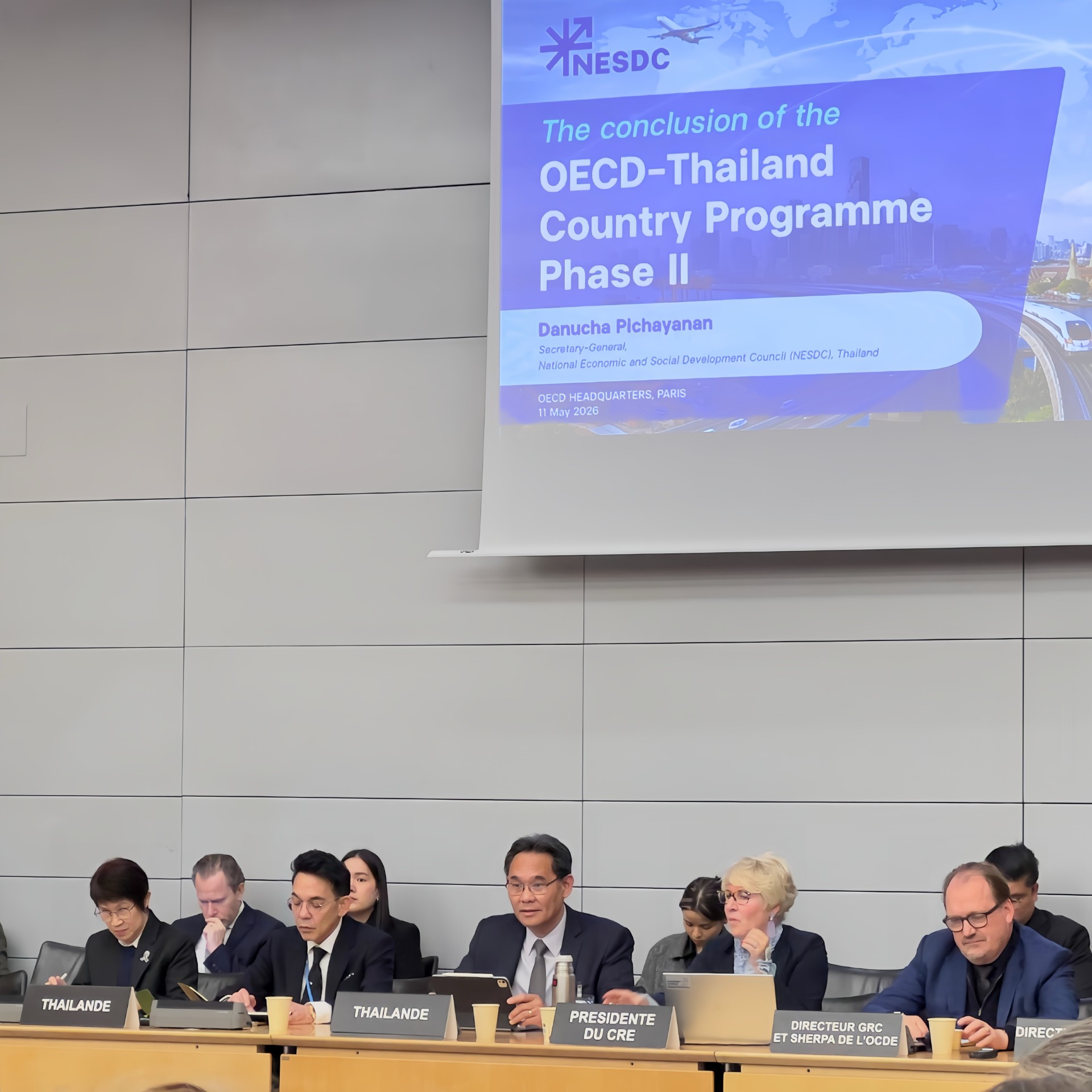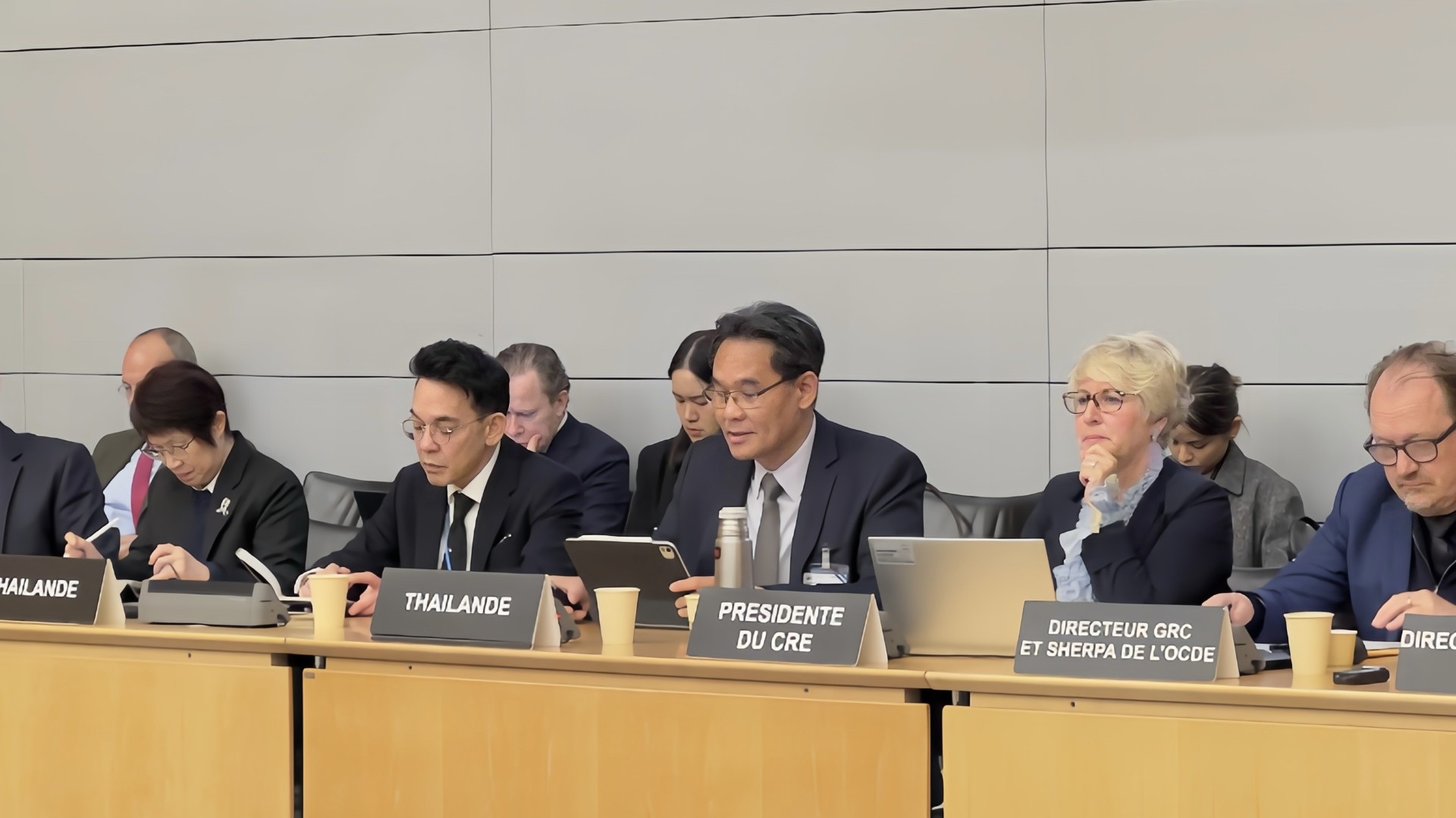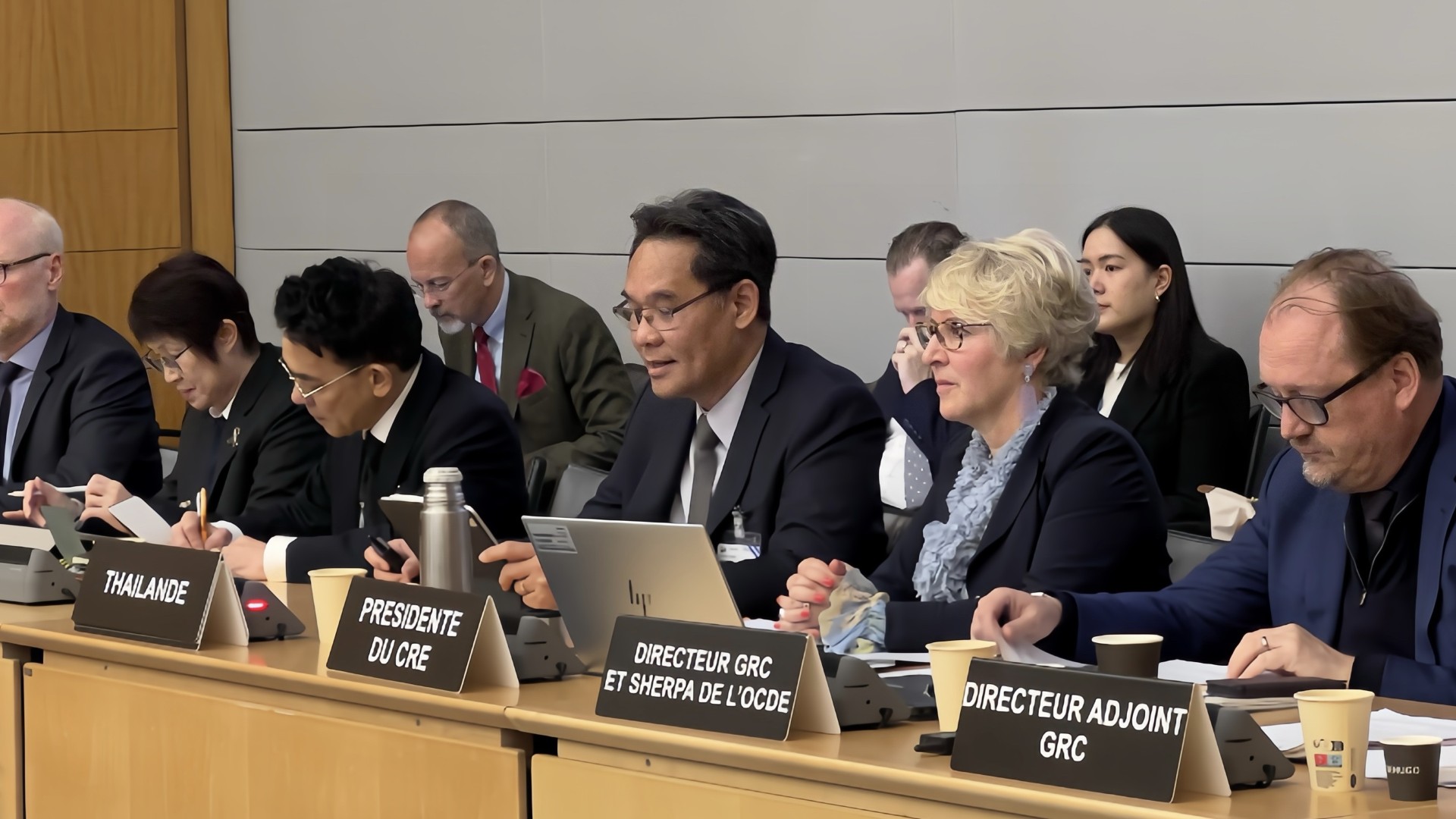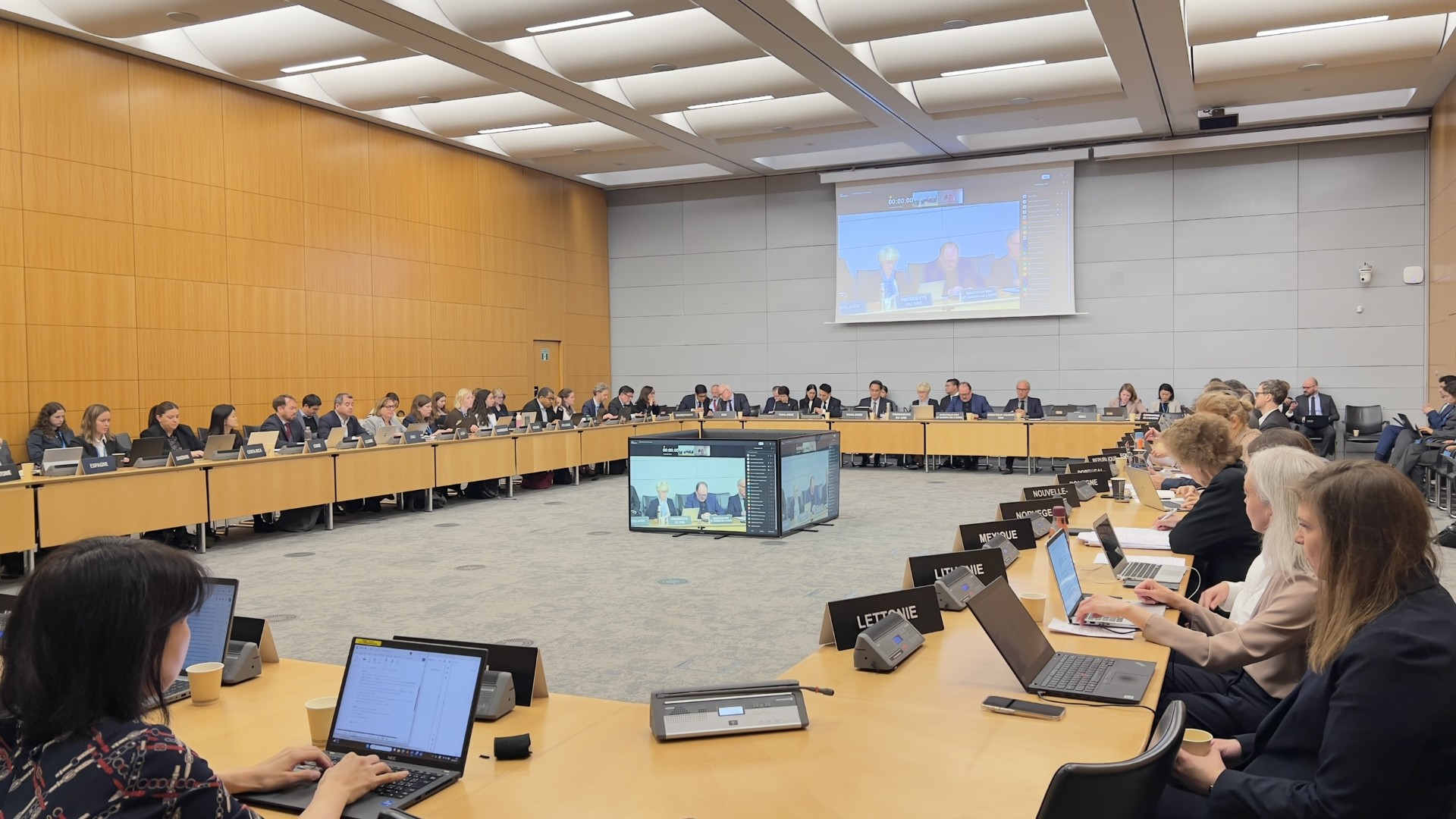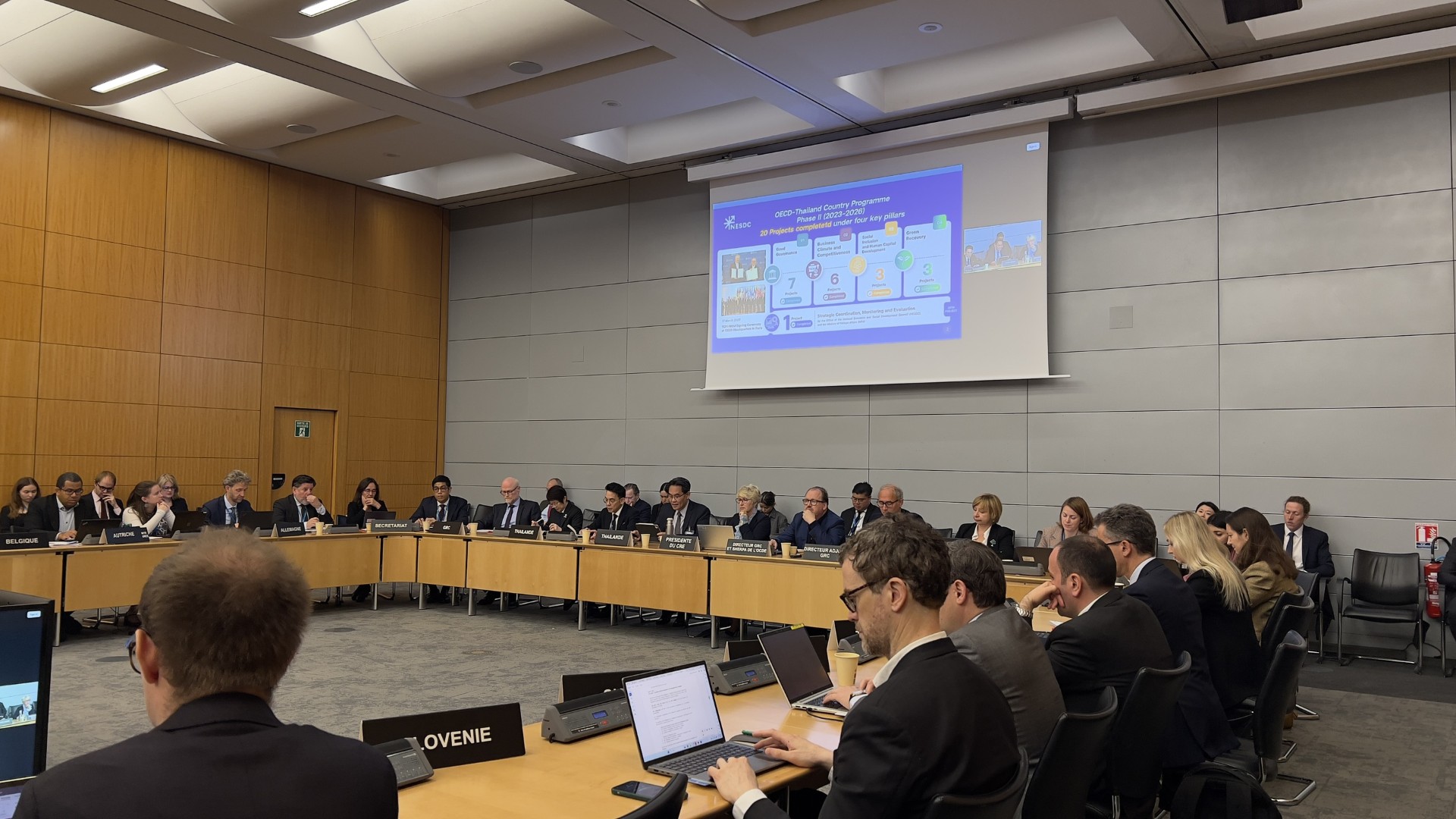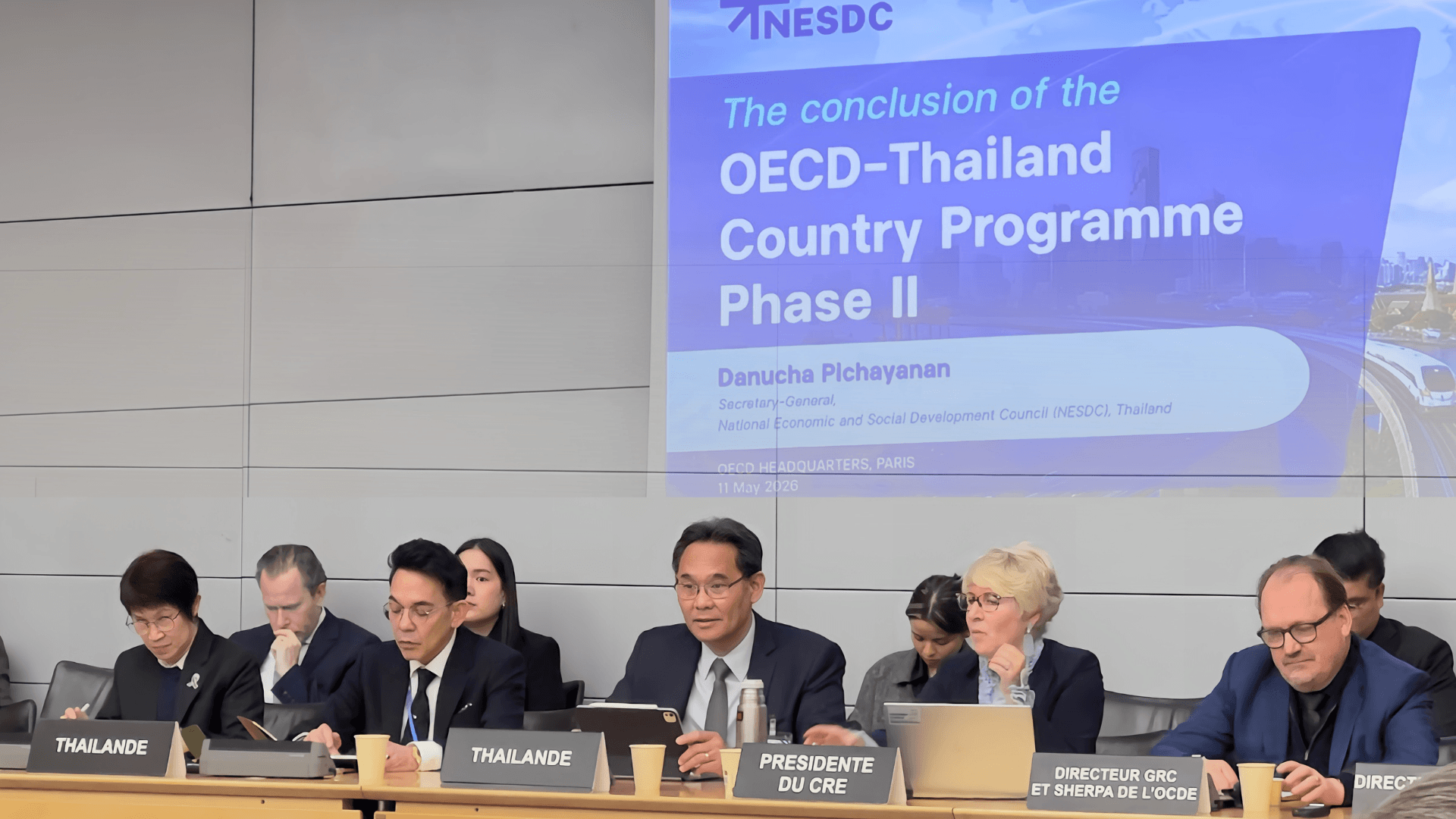
On May 11, 2026, a Thai delegation led by Mr. Danucha Pichayanan, Secretary-General of the National Economic and Social Development Council (NESDC), and Mr. Nikorndej Balankura, Ambassador of Thailand to France, along with Thai officials, attended the External Relations Committee (ERC) meeting at the OECD Headquarters in Paris, France. The purpose was to report on the progress of the OECD-Thailand Country Programme Phase 2 (CP2) and discuss the roadmap for Thailand’s OECD accession process.
During the ERC meeting, the Secretary-General of the NESDC presented a summary report on the implementation of CP2 over the past three years (2023–2026). CP2 builds upon the success of Phase 1, aiming to provide Thailand with continuous access to OECD knowledge, standards, and best practices. It consists of 20 sub-projects under four pillars of cooperation: (1) Governance, (2) Business Environment and Competitiveness, (3) Social Inclusion and Human Capital Development, and (4) Green Recovery. The NESDC and the Ministry of Foreign Affairs serve as the primary agencies for supervising, coordinating, and monitoring the program’s progress. Currently, Thai agencies have completed all sub-projects and have utilized OECD recommendations to further structural reforms. Furthermore, the program has helped accelerate Thailand’s OECD accession process by supporting the alignment of Thai laws, policies, and practices with international OECD standards, enhancing experience and cooperation between Thai agencies and the OECD, and demonstrating Thailand’s commitment to continuous engagement with the organization.
On this occasion, the Secretary-General of the NESDC discussed the Thai government’s goal of achieving OECD membership by 2028 to attract foreign trade and investment, increase competitiveness, and promote transparency. Simultaneously, Thailand is drafting the 14th National Economic and Social Development Plan (2028–2032), which focuses on achieving high-level, inclusive, and sustainable economic growth. Thailand views the OECD accession process as a vital mechanism to accelerate reforms and support the achievement of national development goals across all dimensions. OECD member countries, including Canada, Australia, Japan, Poland, Portugal, the United Kingdom, Switzerland, South Korea, Costa Rica, Austria, and Germany, congratulated Thailand on the success of the CP2 program and expressed their readiness to support the accession process through technical assistance, capacity-building activities, and the secondment of Thai officials to the OECD Headquarters to strengthen cooperation and expedite Thailand’s official membership in the near future.
The Secretary-General of the NESDC also met with Ms. Tatiana Vargas, Chargé d’Affaires of Costa Rica to the OECD, and Ms. Elisaveta Simeonova, Minister-Counsellor and OECD Accession Coordinator for Bulgaria, to exchange guidelines and recommendations for Thailand’s preparation. Discussions covered driving government policies, demonstrating continuous political will, building cooperation with all sectors, and maintaining close coordination with the OECD to ensure an efficient accession process.
Additionally, meetings were held with Ms. Gita Kothari, Director for Legal Affairs and OECD Accession Coordinator, and Mr. Andreas Schaal, Director for Global Relations and Cooperation, to discuss the overall progress of the OECD accession process. The OECD encouraged Thai agencies to engage more frequently with the OECD Secretariat and member countries during visits to the OECD Headquarters to build mutual familiarity. They also discussed preparations for the OECD Secretary-General’s visit to Thailand to attend the CP2 Concluding Event in November 2026 at the NESDC, which will host the upcoming meeting.