
TIJ Partners with UNDP and WJP to Launch the Thailand Rule of Law Leadership Programme, Bringing Together Leaders from All Sectors to Drive Thailand Toward OECD Membership
“Thailand possesses a strong private sector, resilient entrepreneurs, a strategic geographical location, and robust social and cultural capital. However, over the past several years, the Thai economy has grown very slowly—slower than other countries in the same region… This is because we face a significant structural obstacle: the lack of the rule of law.”
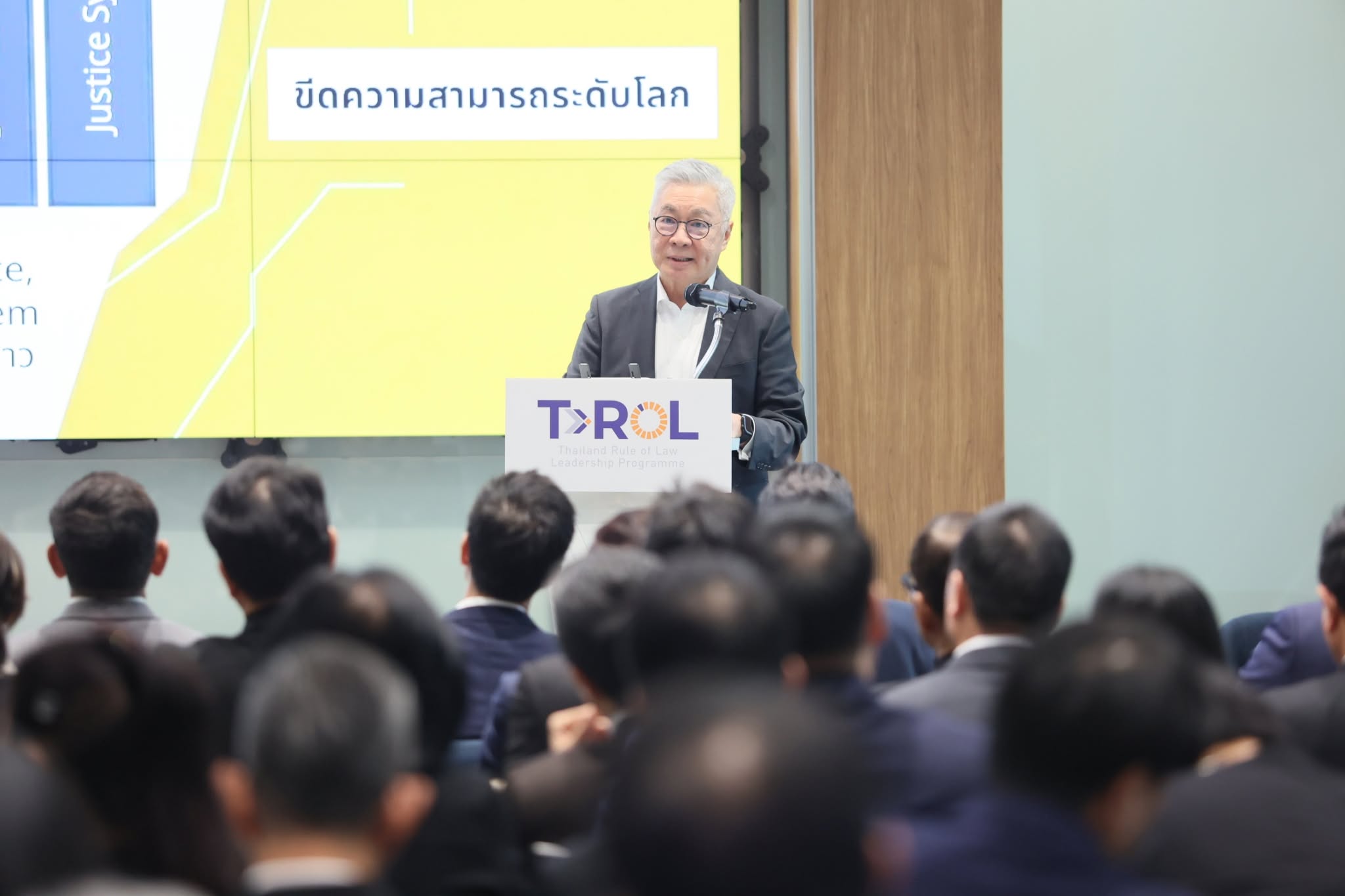
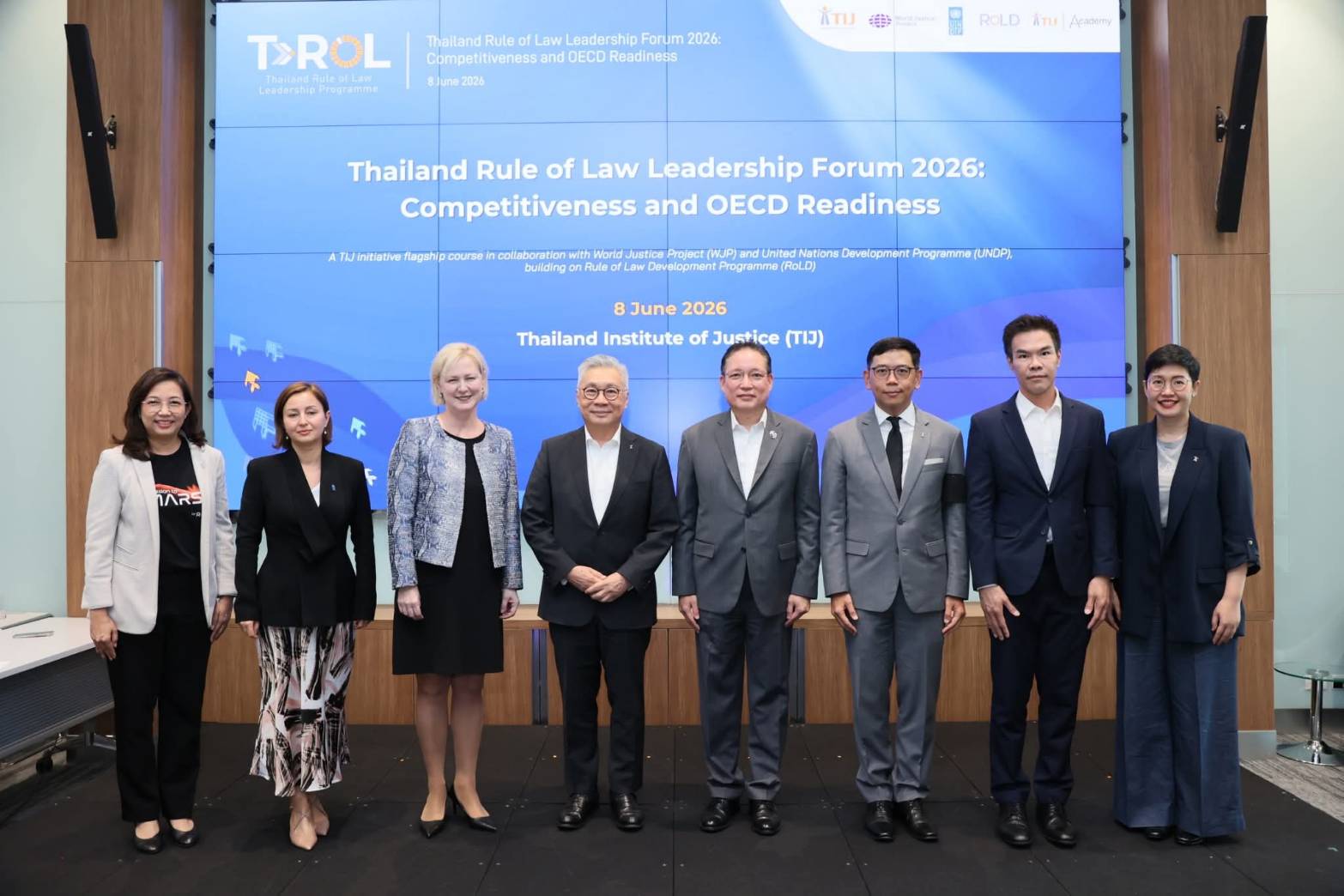
Professor (Special) Dr. Kittipong Kittayarak, Member of the Steering Committee for Thailand’s Accession to the Organisation for Economic Co-operation and Development (OECD) and Chairman of the Board of the Thailand Institute of Justice (TIJ), delivered a keynote speech titled “Rule of Law Economic Infrastructure: Thailand’s Path toward Competitiveness and OECD Readiness” at the Thailand Rule of Law Leadership Forum 2026: Competitiveness and OECD Readiness. The event was held on June 8, 2026, at the TIJ Office Building, Chaeng Watthana Road, Bangkok.
The TIJ Chairman stated that Thailand must pursue OECD membership because the Thai economy is currently experiencing slow growth due to a lack of confidence among both domestic and foreign investors. The country faces low trade competitiveness and a perception of high corruption resulting from excessive laws and regulations. Many of these regulations are outdated yet remain in force, granting state officials excessive discretionary power. Therefore, the key challenge while Thailand is undergoing the OECD assessment process is to seize this opportunity to utilize OECD recommendations to overhaul the country, enhancing systemic efficiency—a process known as “addressing structural issues.”
“Visible structures like roads, bridges, or technology are easy to fix if they are deficient… but Thailand’s more difficult challenge lies in our invisible structures, namely the lack of the rule of law. For example, we may have good roads and advanced technology, but we remain a country where law enforcement is inconsistent and unequal. When citizens or investors cannot predict legal outcomes, they become anxious and hesitate to make long-term investments, and new innovations fail to emerge… Therefore, although the rule of law is an invisible structure, it is the most critical condition for economic stability. It is vital that we overhaul this system as Thailand is being evaluated by the OECD,” said Professor (Special) Dr. Kittipong.
Professor (Special) Dr. Kittipong also referred to the Rule of Law Index developed by The World Justice Project (WJP), which demonstrates that the rule of law is measurable. It can be assessed by examining the exercise of state power, the efficiency of law enforcement, and factors contributing to corruption. This allows for a clear correlation between the rule of law and the economic efficiency of various countries. Consequently, the rule of law is no longer the exclusive domain of legal professionals; it requires the collective ideas and expertise of all sectors—public, private, civil society, and all professional fields—to address these invisible structural problems.
“The establishment of the Thailand Rule of Law Leadership Programme is an initiative that brings together leaders from all sectors to exchange knowledge and learn how to elevate the rule of law to meet OECD standards over a 14-week period. This will be a vital force in coordinating concrete results to build confidence and push Thailand toward OECD membership,” said Professor (Special) Dr. Kittipong.
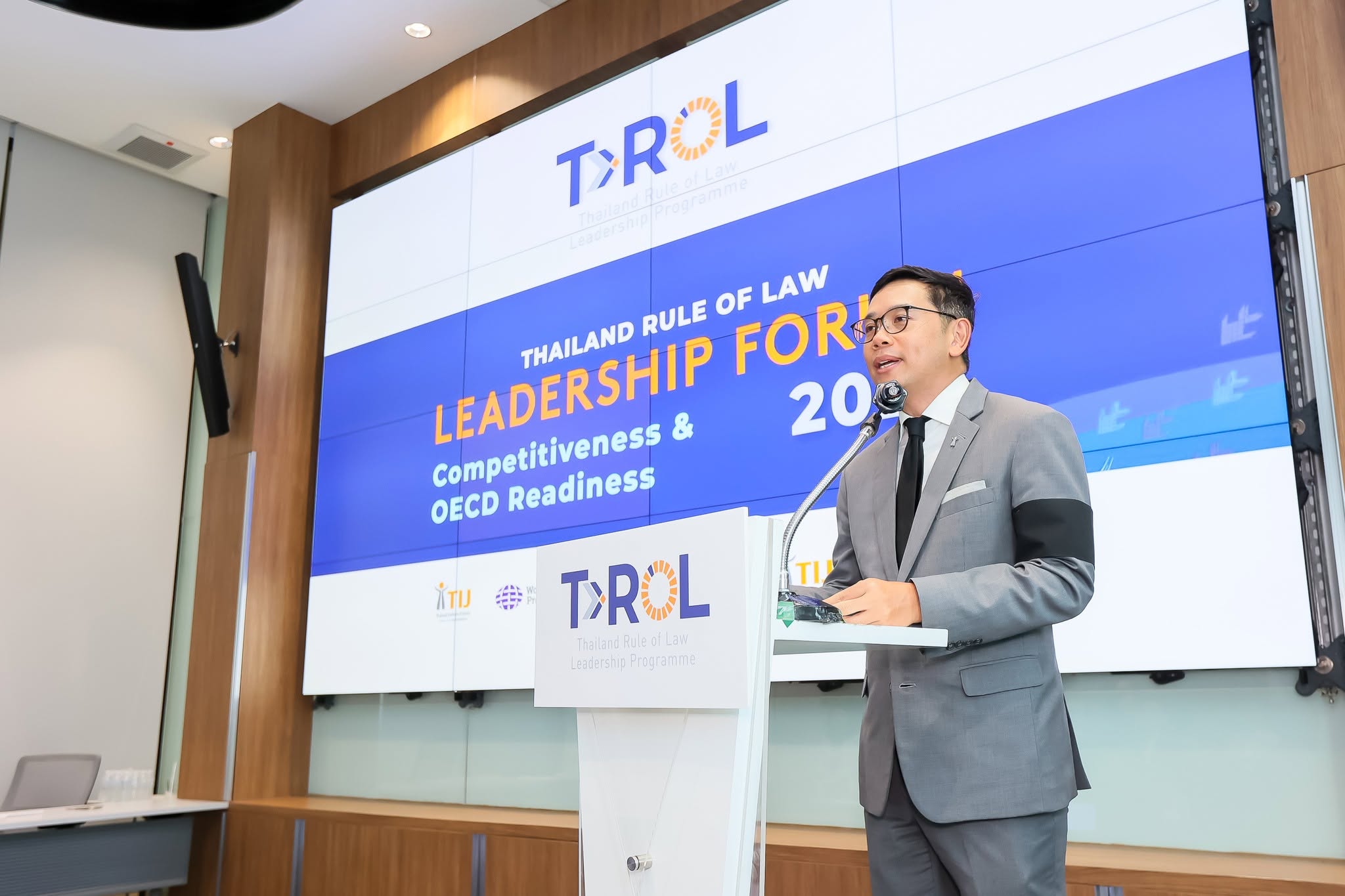
Dr. Phiset Sa-ardyen, Executive Director of TIJ, discussed the Thailand Rule of Law Leadership Programme, noting that the project invites leaders from all sectors of society to explore ways to enhance national competitiveness. The focus will be on “institutional mechanisms,” which are considered a key strategy as they serve as the country’s operating system, determining whether laws, regulations, and rules can be effectively implemented.
He also referenced a report co-authored by TIJ and the OECD titled ‘Access to Justice and the Economic Implications of Crime and Violence in Thailand.’ The report highlights that access to justice and trust in legal institutions directly impact investor risk assessments, economic costs, competitiveness, and the efficiency of national resource allocation. This means that the quality of institutional mechanisms—which provide inclusive, accessible, and predictable justice while protecting the vulnerable—is not just a matter of social fairness but also directly affects the burdens and costs borne by the economic system. With strong mechanisms, we establish a foundation for security, risk reduction, and conditions conducive to national wealth creation.
“We cannot view the rule of law in isolation; we must consider the link between the ‘Rule of Law, Democracy, and Governance.’ These are the three pillars that deeply support and sustain one another. The rule of law ensures the equitable exercise of power, democracy provides the mechanism for legitimacy and participation, and governance represents the practices that promote transparency and accountability. If any part is weak, the country cannot unite all parties to move forward with stability and confidence.”
The TIJ Executive Director emphasized that TIJ has been coordinating with all sectors, both domestically and internationally, to promote the rule of law, develop the justice process, improve rights, and strengthen core institutions. This is achieved by applying international knowledge and best practices to the Thai context, driving the ‘People-Centered Justice’ concept to meet public needs, and advocating for ‘Open Government Data’ to promote transparency and access to state information. Furthermore, TIJ works to elevate human rights standards by implementing the ‘Bangkok Rules’ and providing space for public participation in legal and policy reform. This follows a ‘Whole-of-Society Approach,’ which must be built on trust, mutual respect, and a shared belief in the fundamental values of society.
“Today’s Thailand Rule of Law Leadership Programme is an extension of that mission. As Thailand’s key challenge is to enhance competitiveness, we will work together to explore international standards and exchange knowledge on global trends essential for preparing Thailand for OECD membership,” said the TIJ Executive Director.
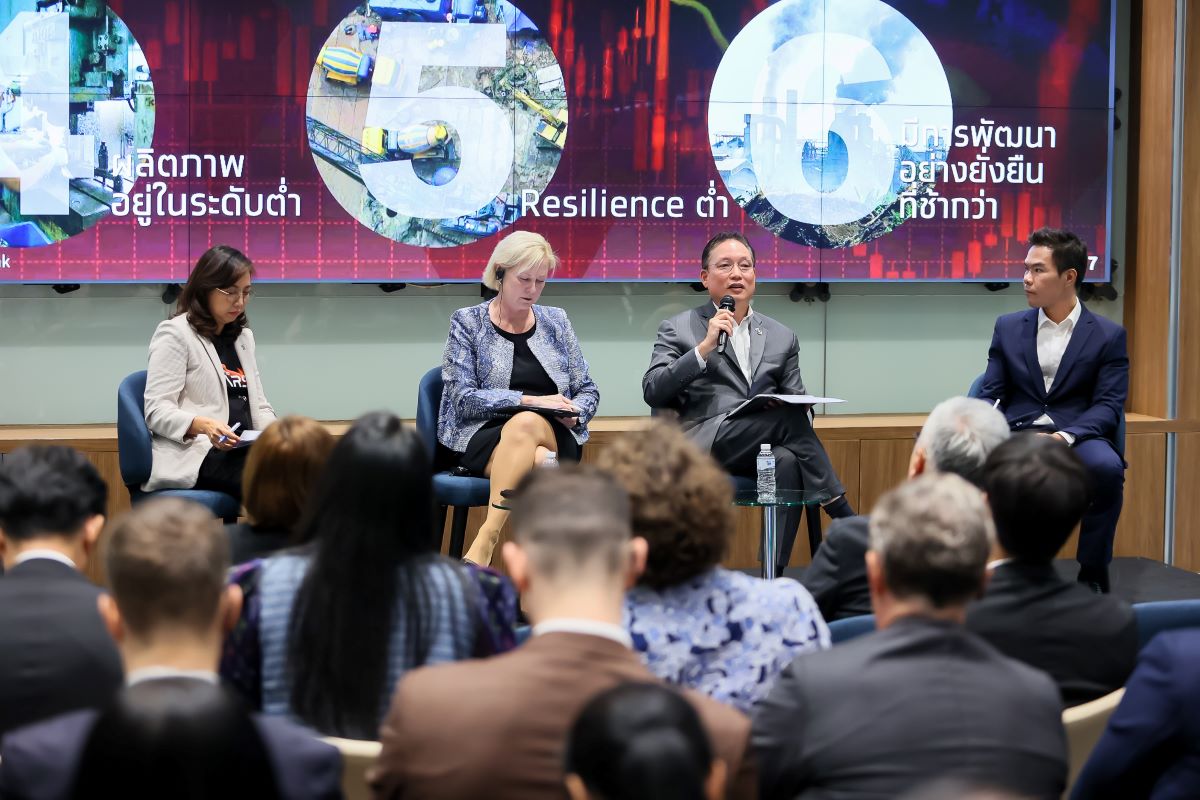
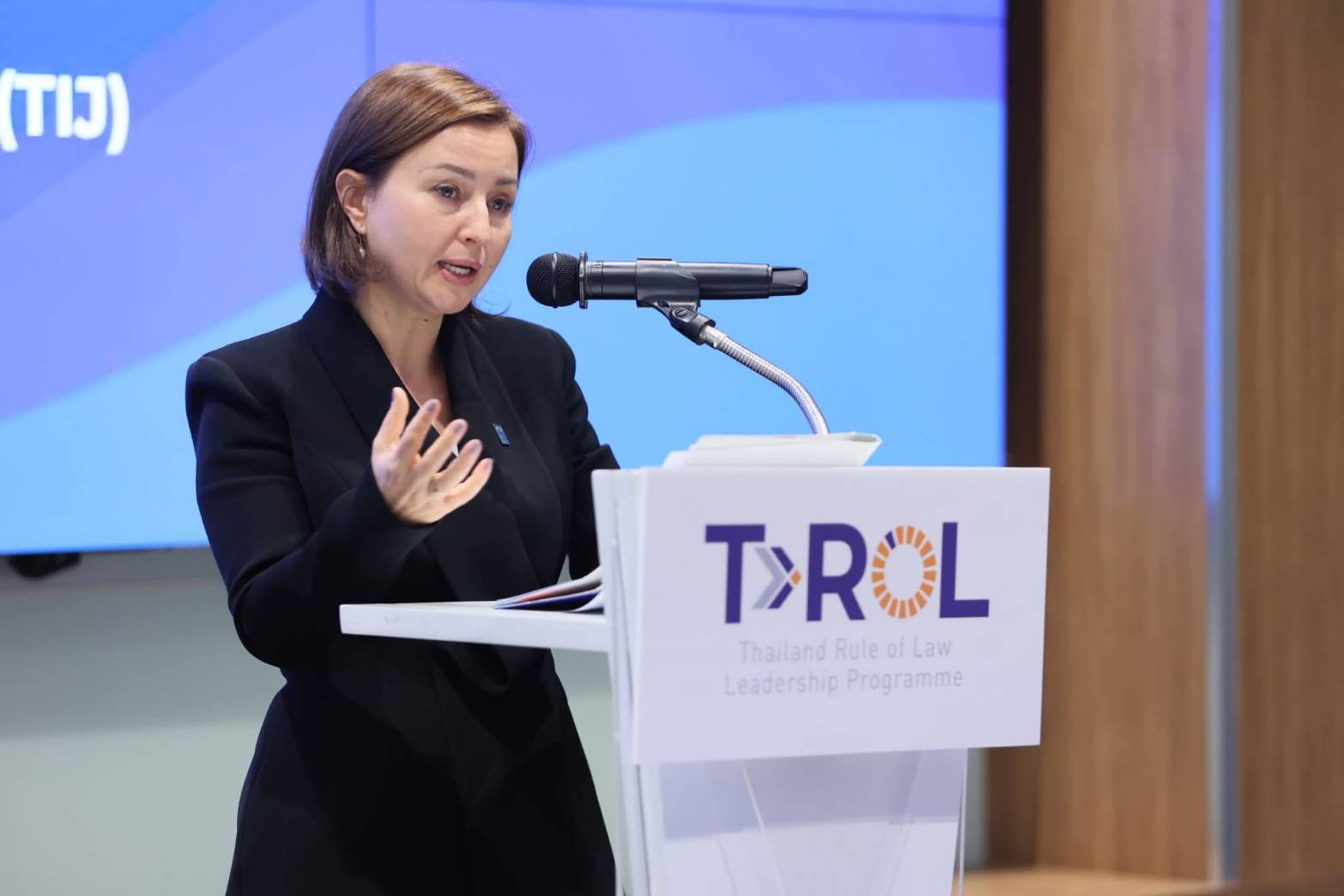
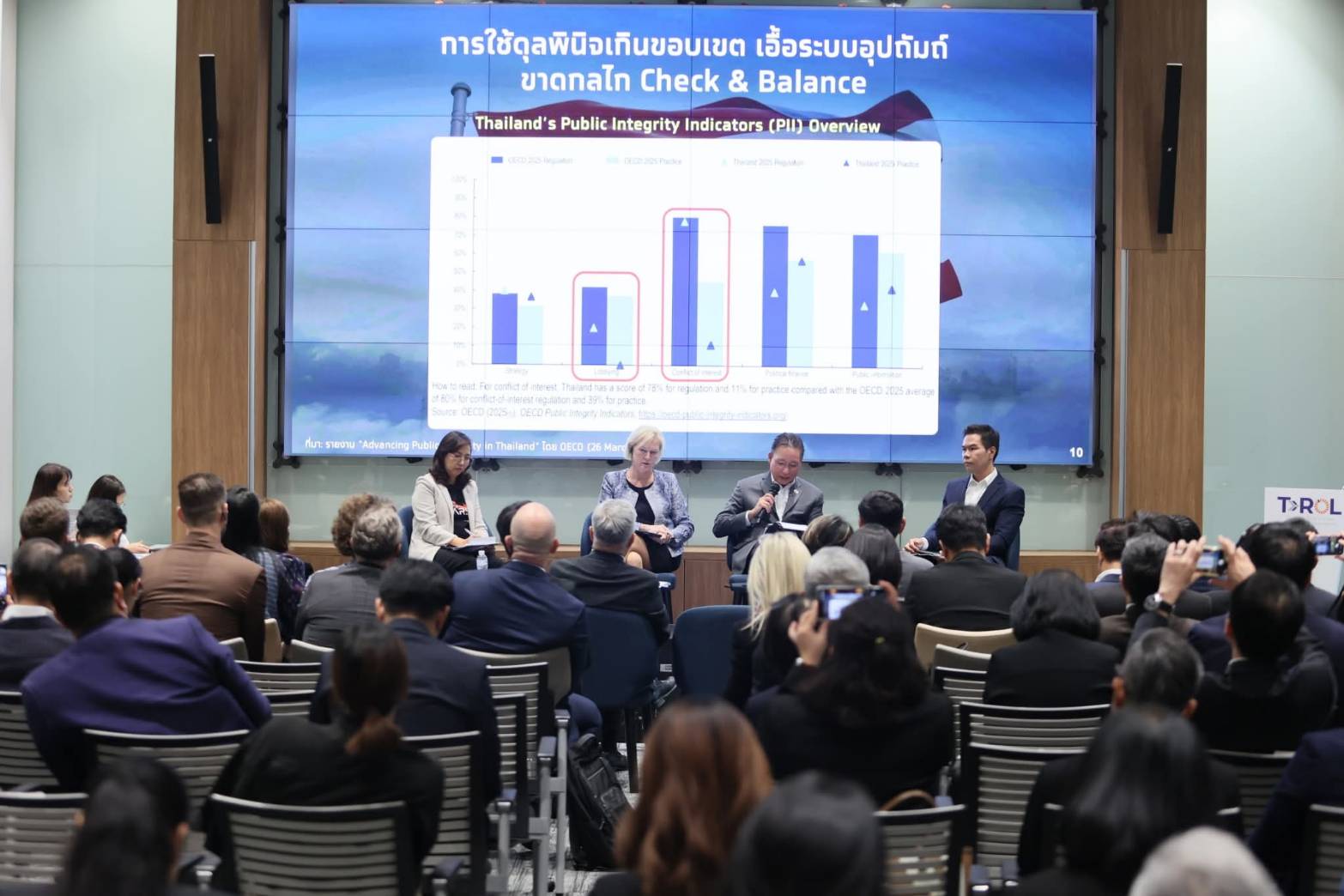
Additionally, the event featured a panel discussion titled “Governance, Trust and Thailand’s Competitiveness: What Will it Take?” Participants included Dr. Tatyana Teplova, Senior Justice Advisor at the OECD Public Governance Directorate; Payong Srivanich, President of Krungthai Bank and Chairman of the Thai Bankers’ Association, representing the Joint Standing Committee on Commerce, Industry and Banking; and Dr. Thatchai Keeratiphongpaiboon, Director of the International Strategy and Coordination Division at the Office of the National Economic and Social Development Council (NESDC). The session was moderated by Dr. Anuwan Vongpichet, Deputy Executive Director of TIJ. The panel discussed challenges regarding governance, the rule of law, and investor confidence to ensure the Thai economy remains competitive on the global stage. Closing remarks were delivered by Irina Goryunova, Deputy Resident Representative of the United Nations Development Programme (UNDP).
Story and Photos: Thailand Institute of Justice (TIJ)