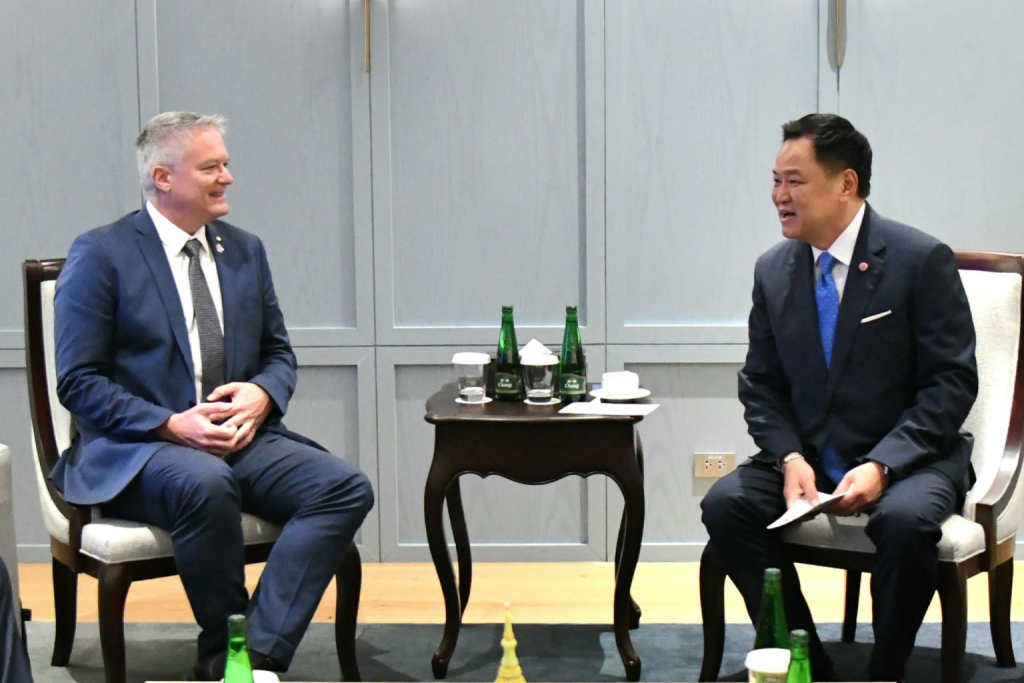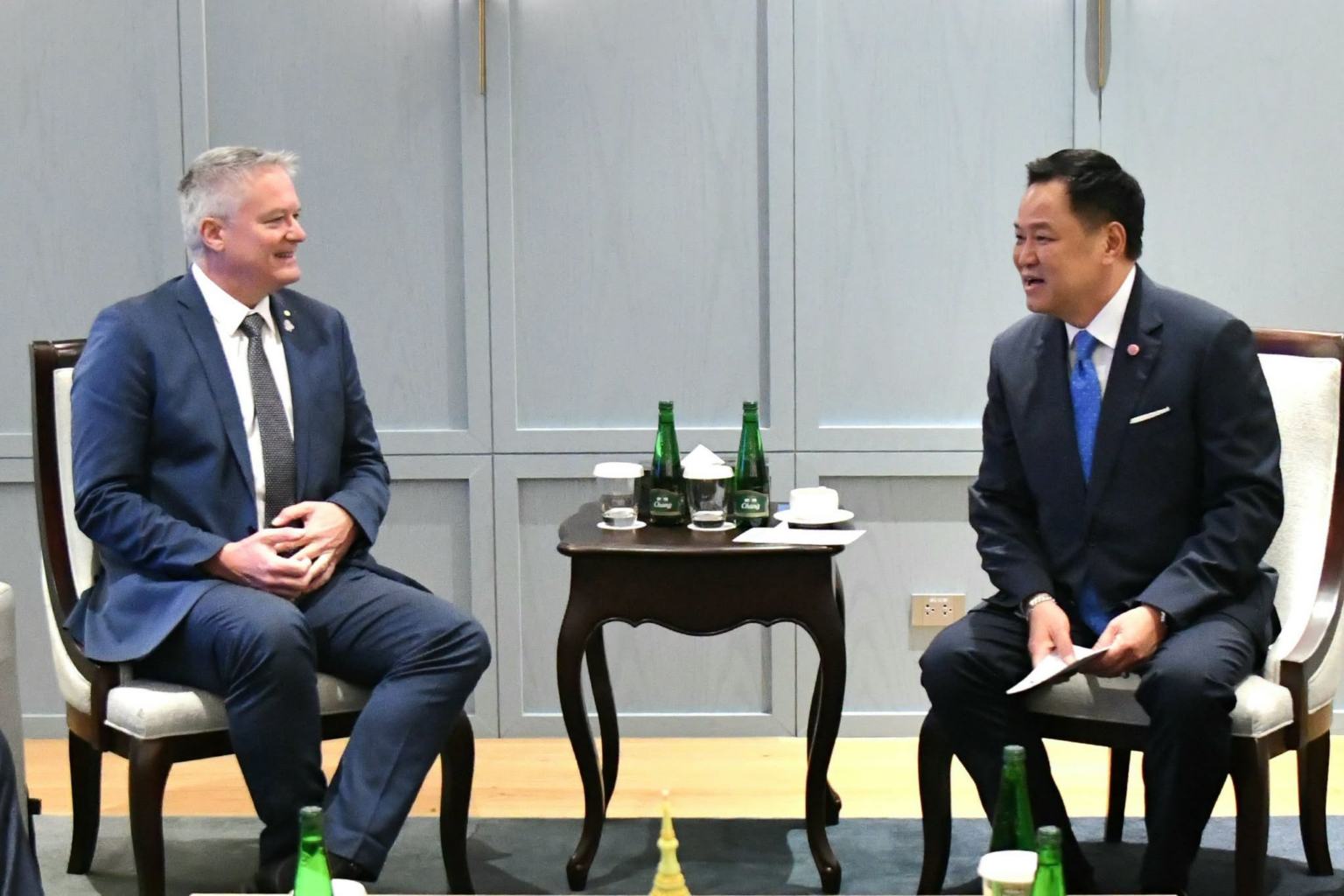
Thailand has received another positive signal on its path toward membership in the Organisation for Economic Co-operation and Development (OECD). Mr. Mathias Cormann, Secretary-General of the OECD, expressed confidence in Thailand’s serious commitment to the accession process. He reaffirmed that the OECD will provide close support throughout the journey, noting that Thailand’s success will be a shared achievement, and the OECD stands to benefit from Thailand’s perspectives and experience in shaping international standards.
This stance was highlighted on October 16, 2026, when Mr. Anutin Charnvirakul, Deputy Prime Minister and Minister of Interior, met for discussions with Mr. Mathias Cormann, Secretary-General of the Organisation for Economic Co-operation and Development (OECD). The meeting took place during the Secretary-General’s visit to Thailand for the 2026 Annual Meetings of the World Bank Group and the International Monetary Fund at the Queen Sirikit National Convention Center. Also in attendance were Mr. Sihasak Phuangketkeow, Vice Minister for Foreign Affairs, and Mr. Danucha Pichayanan, Secretary-General of the National Economic and Social Development Council (NESDC).
Following the meeting, Mr. Mathias Cormann posted on his personal LinkedIn: “Thailand is serious and very committed about joining the OECD.” He further commended the Prime Minister’s leadership in driving the OECD accession process at the national level. He noted that such leadership clearly reflects the importance of political will and the prioritization of OECD membership as a national agenda aimed at elevating standards and driving concrete national reforms.
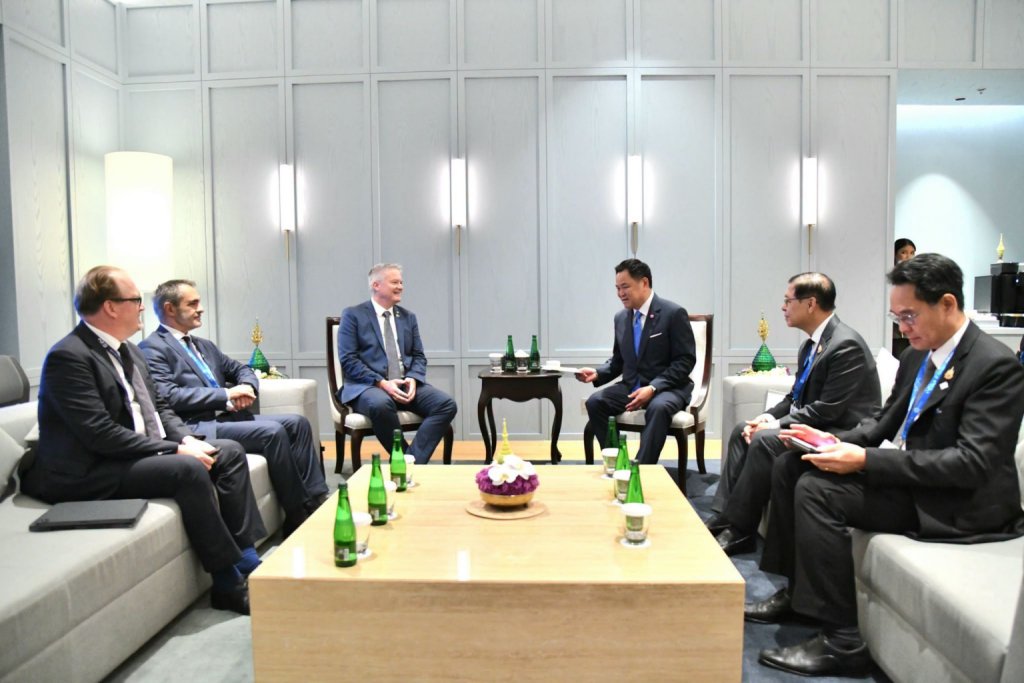
The Prime Minister reaffirmed Thailand’s full commitment to joining the OECD, emphasizing that this is not merely about following international procedures or requirements. Rather, it is a vital opportunity to upgrade Thailand’s laws, policies, and operational standards to align with international best practices. This will bolster global confidence in Thailand. Consequently, driving this mission requires serious cooperation from all agencies and sectors to lay a foundation for long-term national development and create better opportunities for future generations of Thais.
Currently, Thailand’s OECD accession is progressing steadily. Following the submission of the Initial Memorandum in late 2025, several OECD committees have begun reviewing Thai laws and policies against international standards to assess readiness in various areas. This is a crucial step in pushing for structural reforms and elevating national development standards before moving to the next stage of the membership process. Thailand has set a target to achieve full membership by 2028.
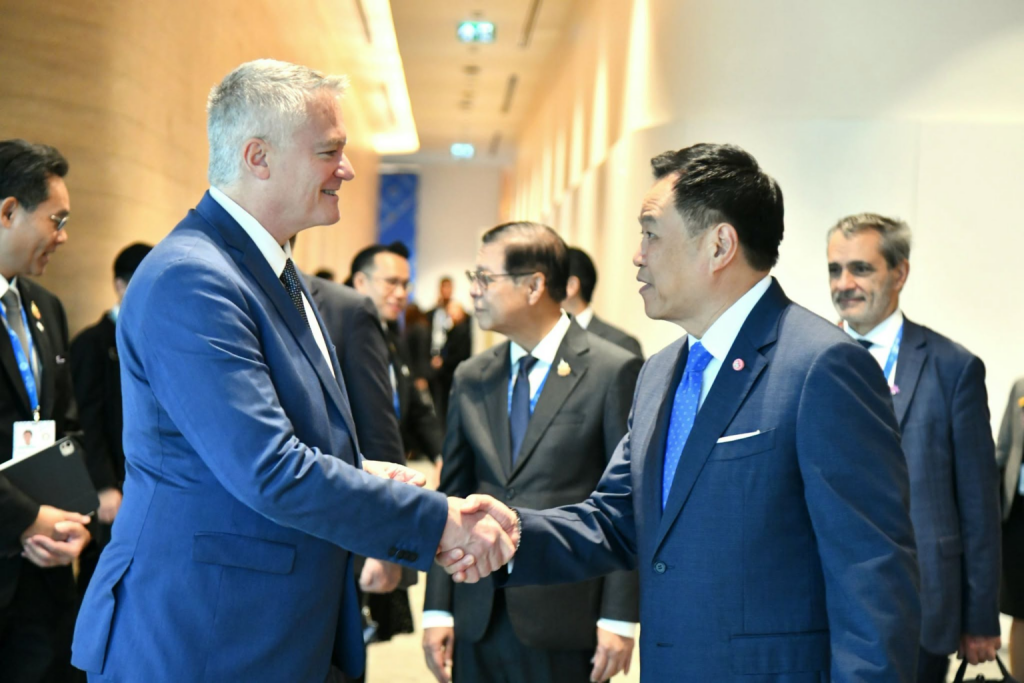
Furthermore, the OECD Secretary-General noted the close cooperation between Thailand and the OECD that has spanned over a decade. This includes the OECD Southeast Asia Regional Programme launched in 2014 and the OECD-Thailand Country Programme since 2018, which have supported Thai reforms in areas such as taxation, regulation, competition, and corporate governance. These collaborations have laid the essential groundwork for Thailand’s current accession process.
Beyond the goal of membership, the OECD accession process serves as a major opportunity to enhance the productivity and competitiveness of the Thai economy. The Secretary-General pointed out that Thailand’s productivity growth rate declined from 4.8% per year during 2010–2015 to just 2.1% per year during 2015–2023. This reflects the urgent need for economic reform. The accession process will support productivity growth by promoting competition, opening trade and investment, reducing regulatory barriers, and encouraging formal employment. These measures will create economic opportunities, increase income, and improve the quality of life for citizens in the long term.
Regarding future cooperation, Thailand and the OECD will continue to coordinate closely. The Secretary-General is scheduled to visit Thailand again on November 23–24, 2026. This visit will provide an opportunity to monitor progress, discuss the roadmap for the accession process, and disseminate the outcomes of the second phase of the OECD-Thailand Country Programme.
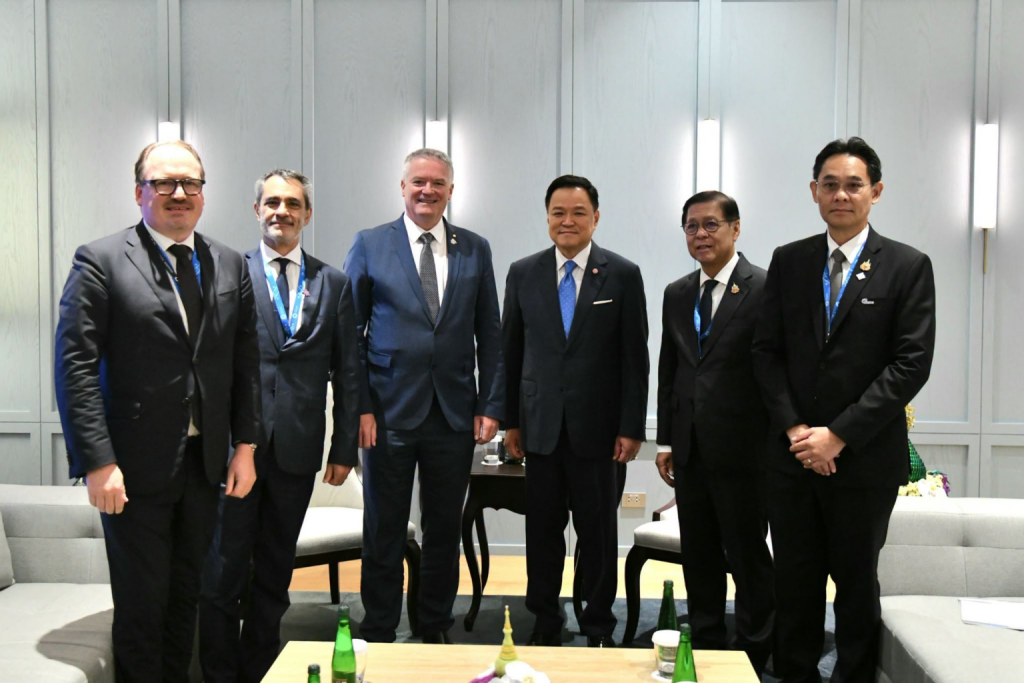
Consequently, this discussion marks another significant milestone reflecting the OECD’s confidence in Thailand’s commitment and the importance of leadership-driven national reform. Joining the OECD is not just an end goal, but an opportunity to elevate development standards, strengthen competitiveness, and lay a foundation for the Thai economy to grow strongly and sustainably in the long term.
Follow the progress of Thailand’s OECD accession at inter.nesdc.go.th/th2oecd/

* * * * *
International Strategy and Coordination Division
Office of the National Economic and Social Development Council