
News/Updates
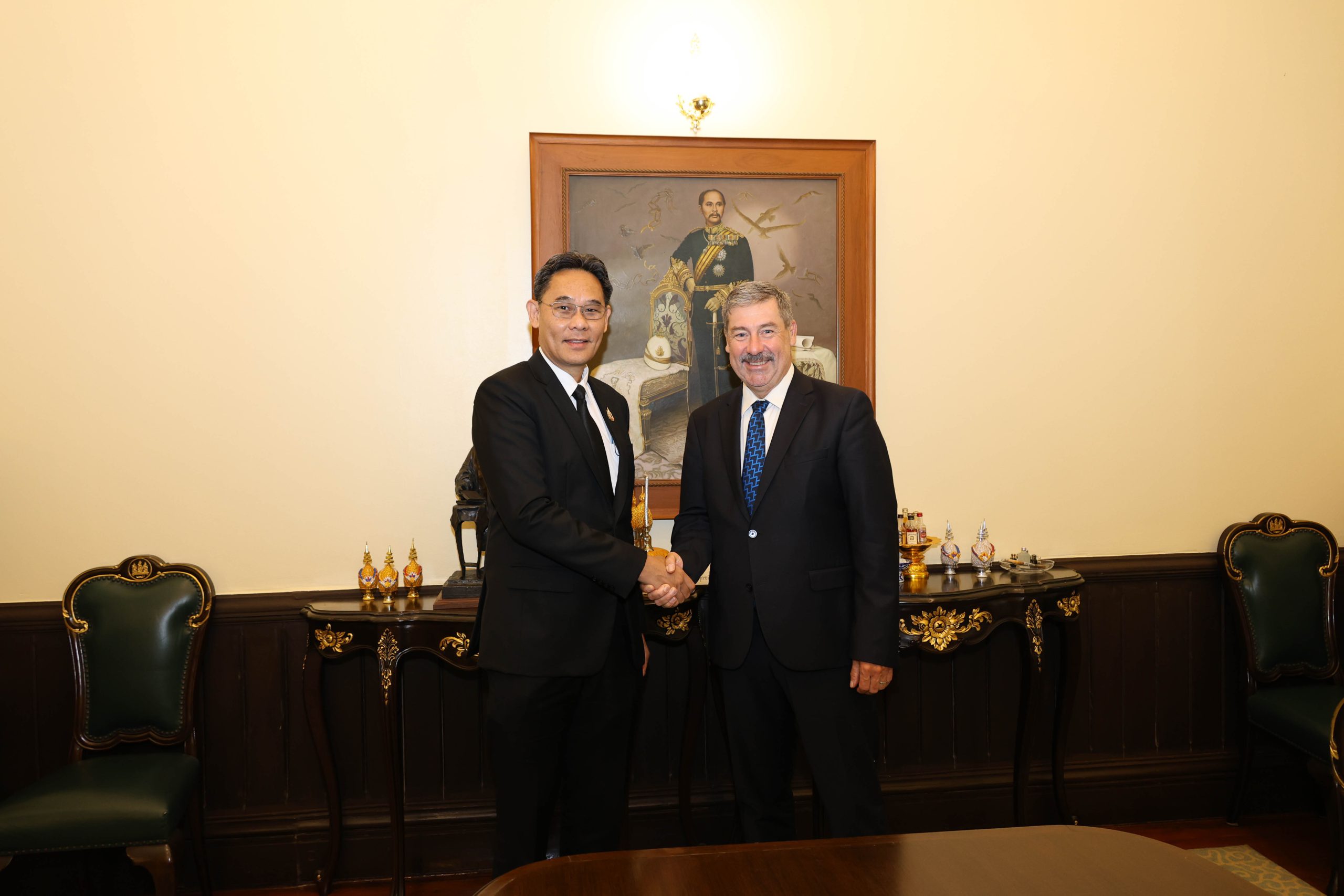
NESDC Secretary-General meets with OECD Deputy Secretary-General, reaffirming Thailand’s commitment to OECD accession.
On Thursday, August 27, 2026, Mr. Danucha Pichayanan, Secretary-General of the NESDC, along with NESDC officials, welcomed Mr. Frantisek Ruzicka (Mr. Frantisek Ruzicka), Deputy Secretary-General of the Organisation for Economic Co-operation and Development (OECD), and his delegation. They discussed progress on Thailand’s OECD accession during his visit to Thailand for the 29th ASEAN Labour Ministers […]
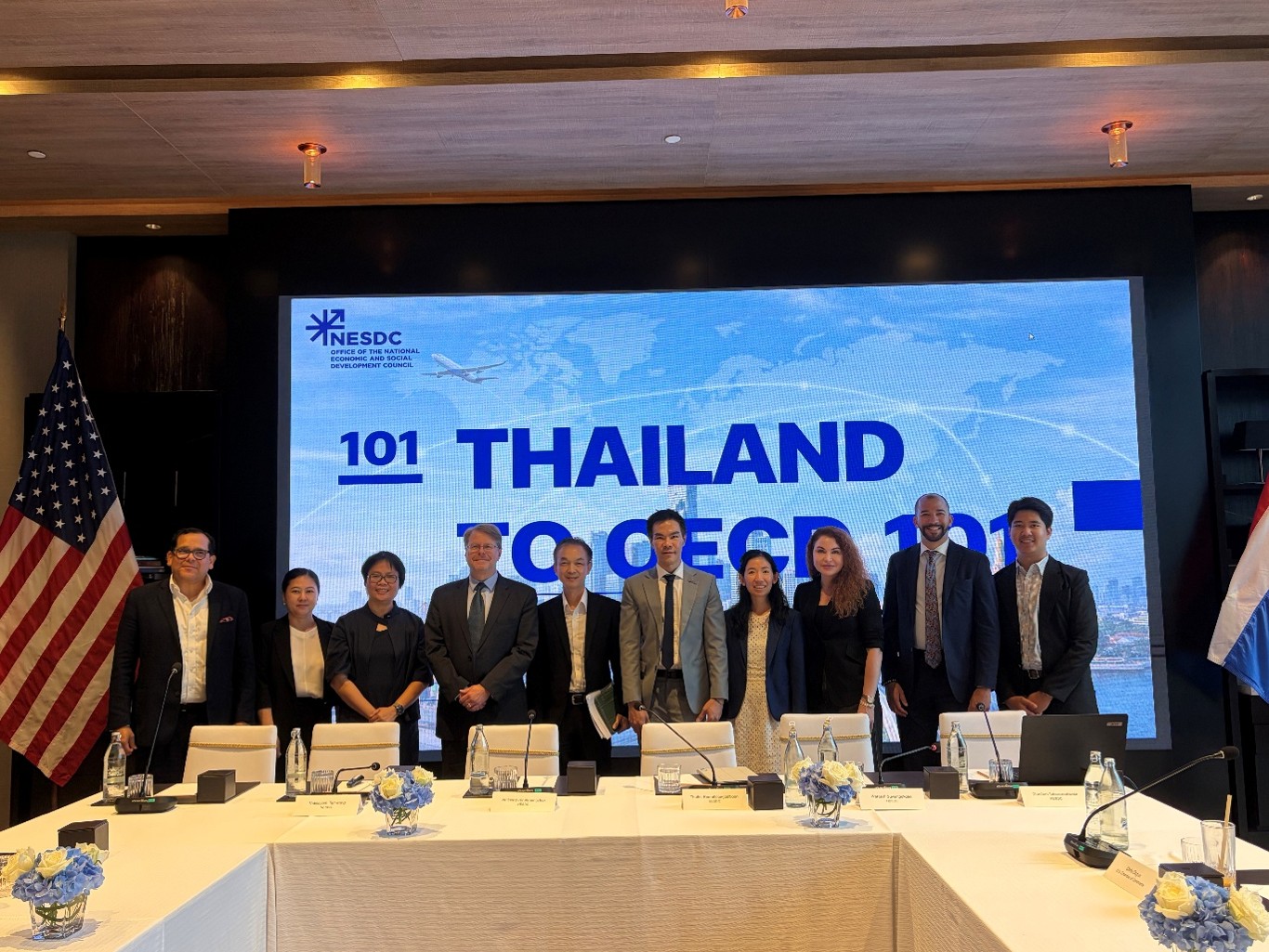
NESDC Discusses AI Cooperation with U.S. Chamber of Commerce, Supporting Thailand’s OECD Accession
On August 19, 2026, Mr. Thatchai Keeratiphongphaiboon, Director of the International Strategy and Coordination Division, and Mr. Athipong Hirunraengchok, Director of the Competitiveness Development Strategy and Coordination Division, met with a delegation from the U.S. Chamber of Commerce (USCC) to discuss Thailand’s OECD accession and AI development direction. The USCC delegation was led by Mr. […]
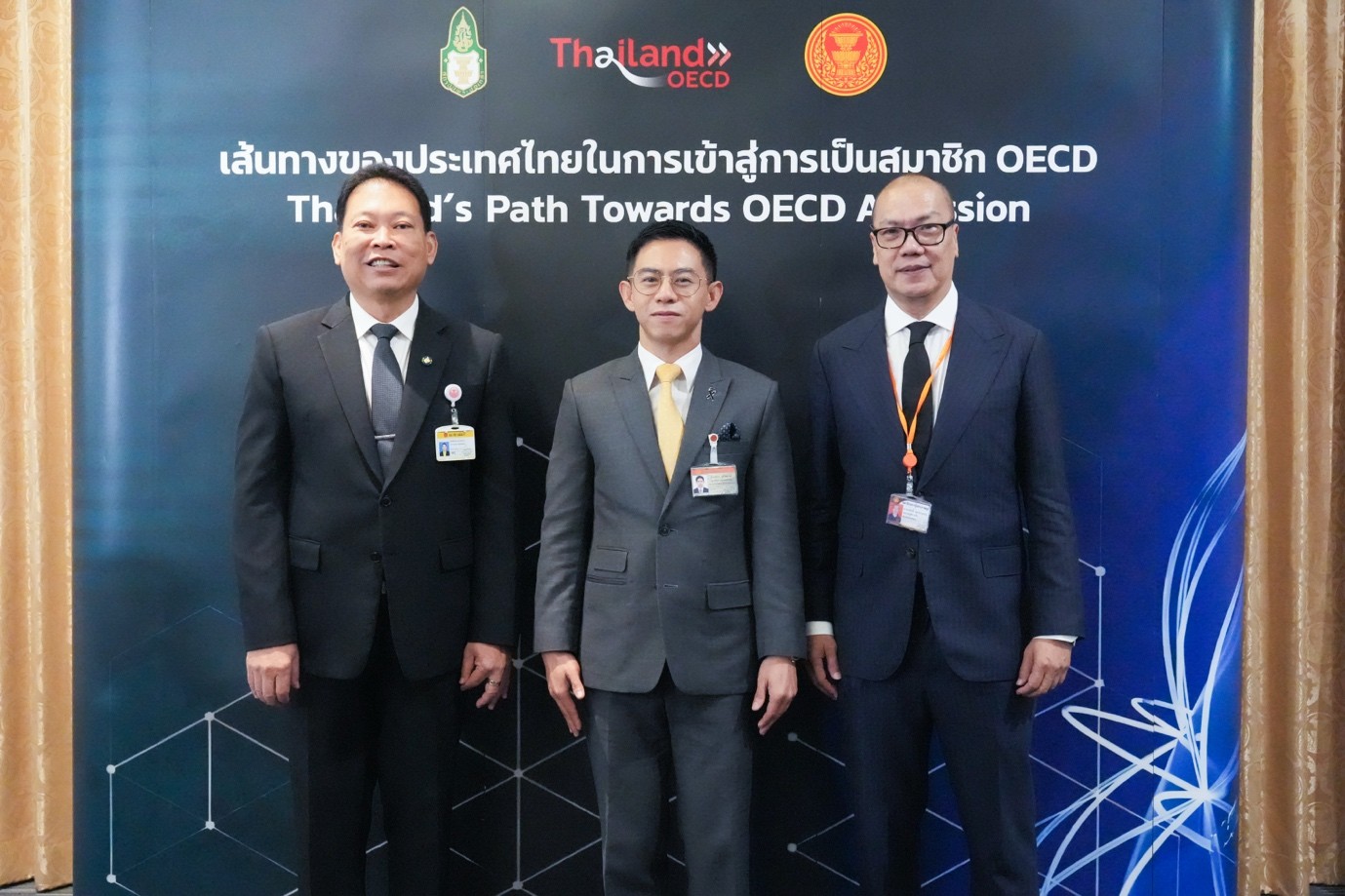
OECD 101: Thailand’s Path to OECD Membership
On August 19, 2026, King Prajadhipok’s Institute, in collaboration with the Secretariat of the House of Representatives, organized a seminar titled “OECD 101: Thailand’s Path to OECD Membership.” The event was attended by Ms. Steejit Taipiboonsuk, Deputy Secretary-General of the House of Representatives; Assoc. Prof. Dr. Woothisarn Tanchai, Secretary-General of King Prajadhipok’s Institute; Mr. Andrew […]
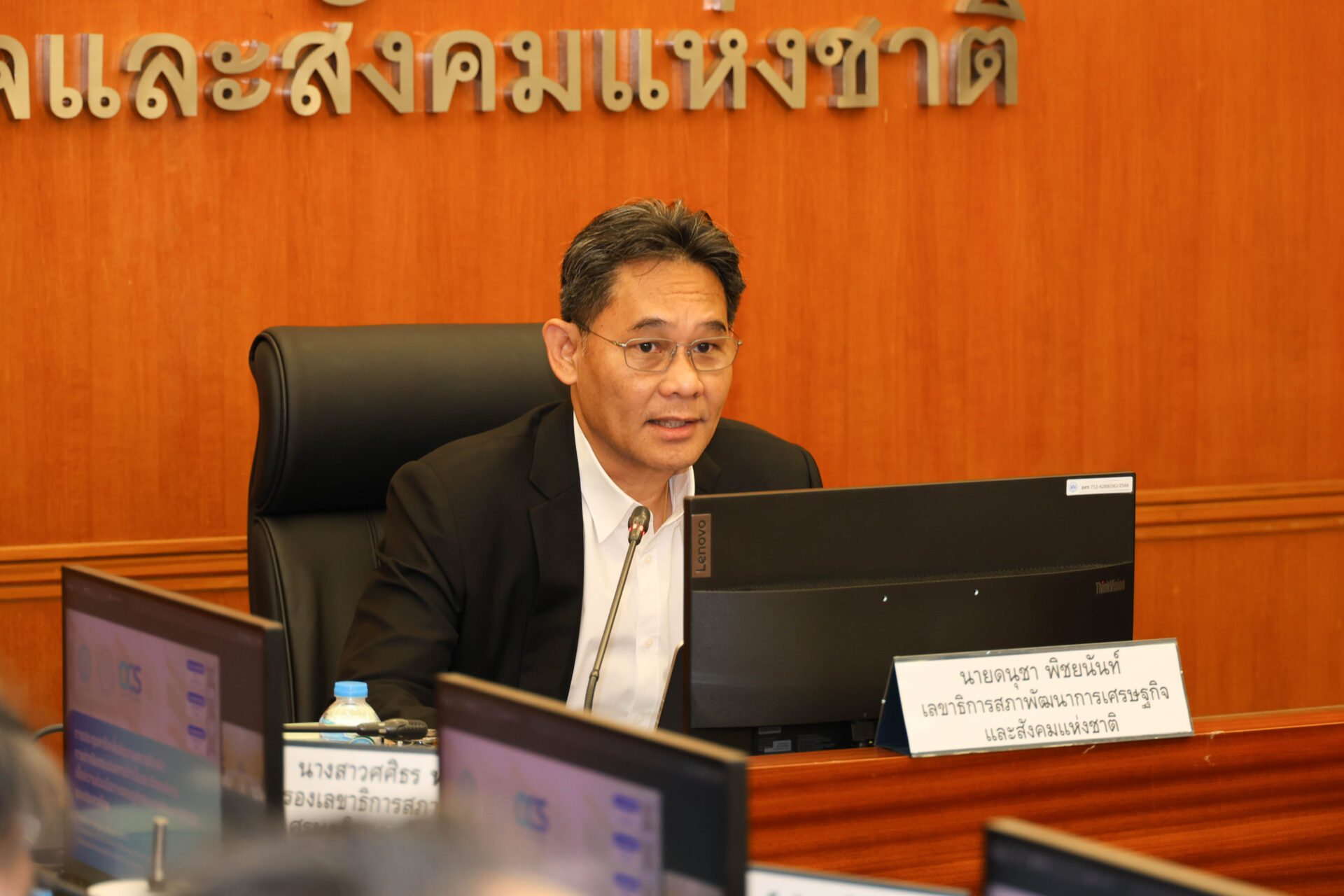
NESDC moves forward with consultations with Thai government agencies to accelerate the roadmap for OECD accession during the technical review stage.
On Friday, July 31, 2026, the Office of the National Economic and Social Development Council (NESDC) organized a consultative meeting to monitor the progress of Thailand’s accession process to the Organisation for Economic Co-operation and Development (OECD), chaired by Mr. Danucha Pichayanan, Secretary-General of the NESDC, along withMs. Sasithorn Pualattadej, Deputy Secretary-General of the NESDC; […]
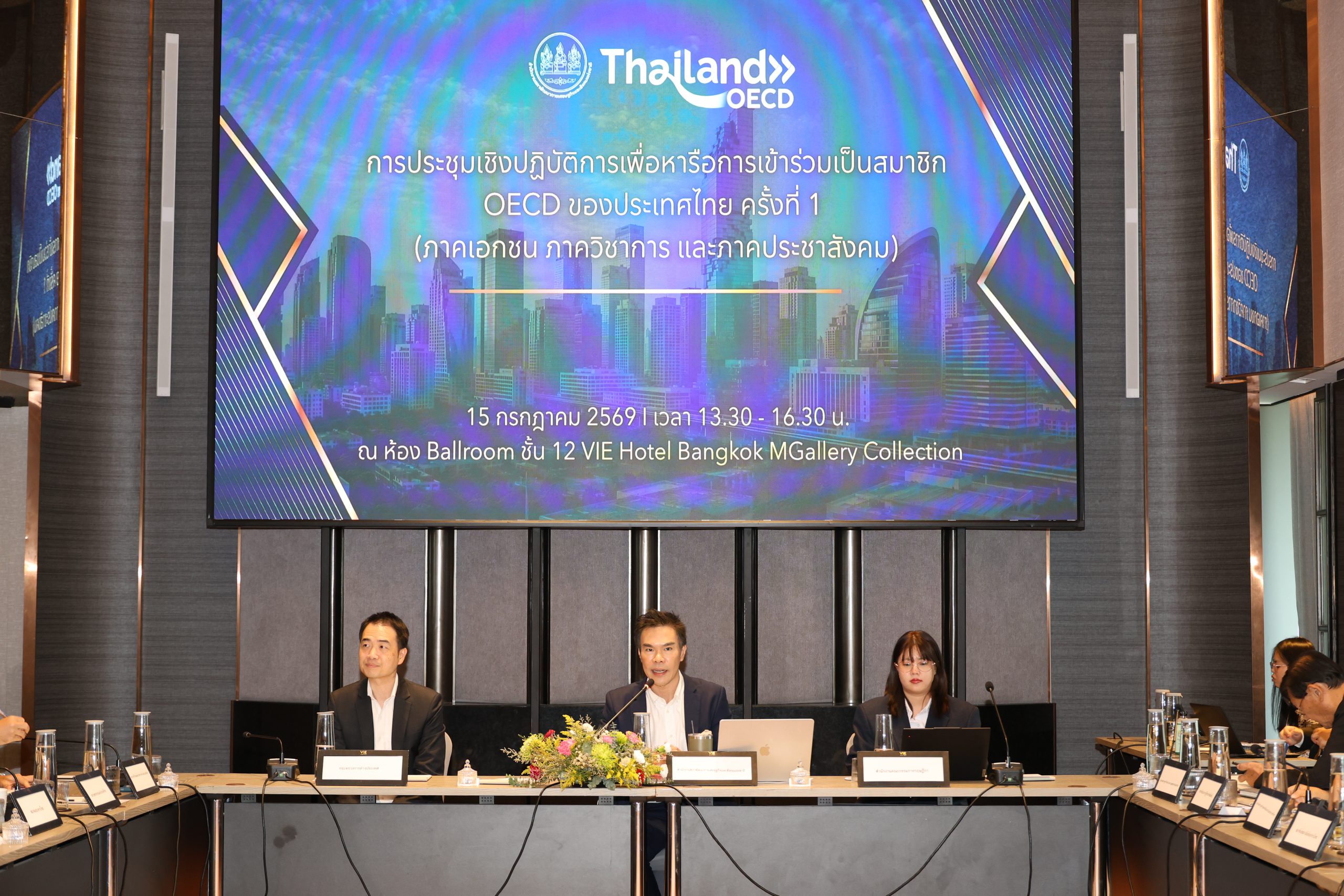
NESDC, OCS, and MFA Host Discussion with Private Sector and Civil Society to Prepare Thailand for OECD Accession
On July 15, 2026, the Office of the National Economic and Social Development Council (NESDC) organized the 1st Workshop to Discuss Thailand’s OECD Accession (Private Sector, Academic Sector, and Civil Society) at the Vie Hotel Bangkok, MGallery Hotel Collection. The event featuredrepresentatives from the NESDC, the Ministry of Foreign Affairs (MFA), and the Office of […]
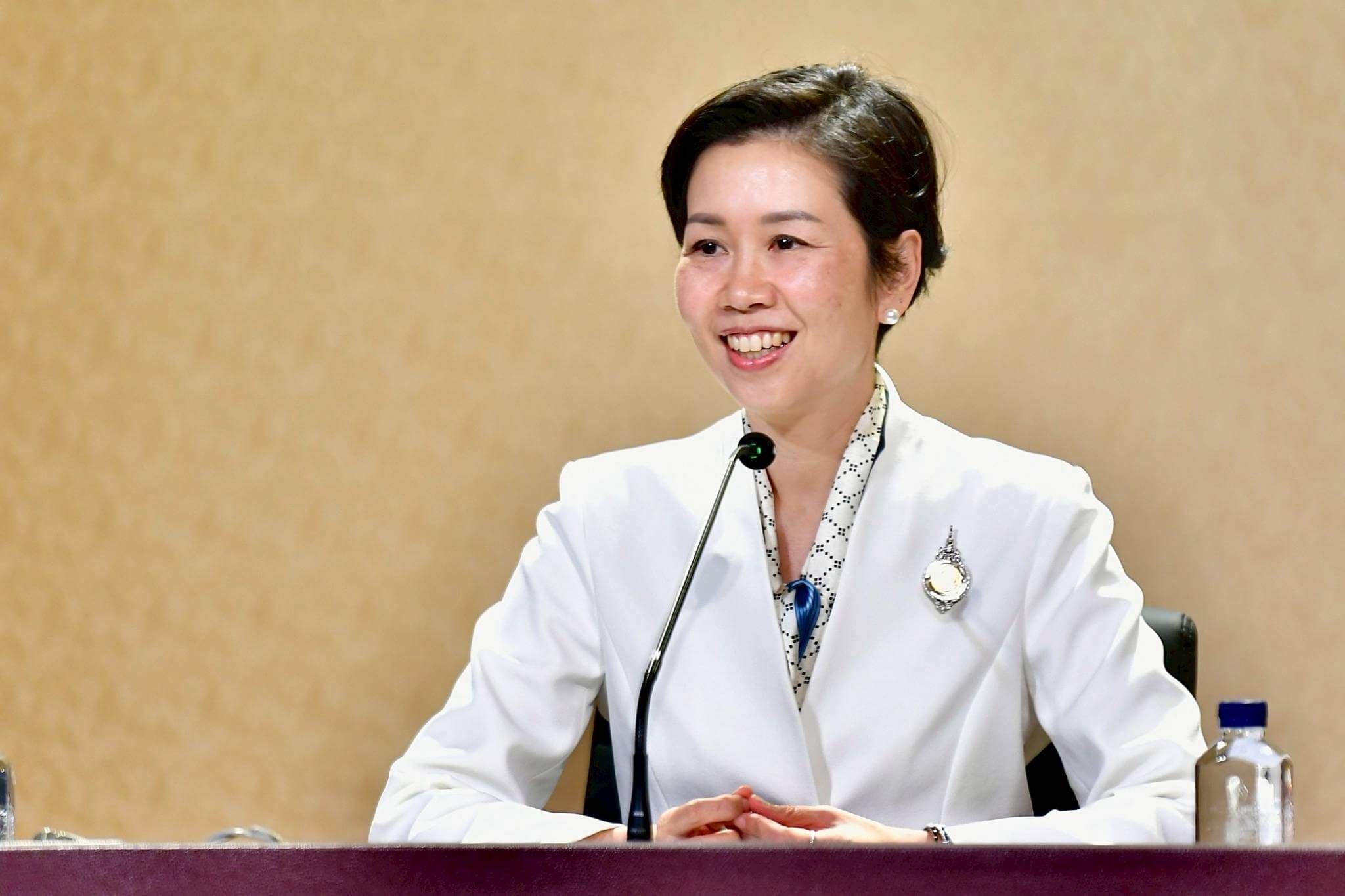
Cabinet approves draft MOU between NESDC and OECD, establishing a steering committee to lead Thailand toward OECD membership by 2028
On July 7, 2026, Ms. Ratchada Thanadirek, Deputy Spokesperson for the Prime Minister’s Office, revealed that Prime Minister Anutin Charnvirakul prioritizes the reform of government regulations to ensure swift public administration, as stated in the policy address to Parliament in April 2026. The objective is for various agencies to accelerate Thailand’s accession to OECD membership […]
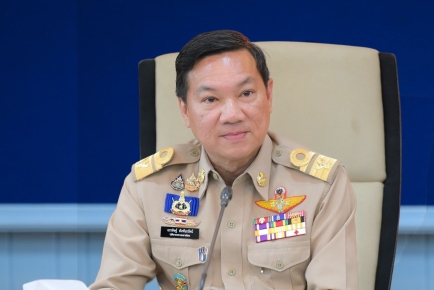
“PM Anutin” establishes Interior Ministry team to drive Thailand toward OECD membership, enhancing economic mechanisms, sustainable development, improving public quality of life, and elevating bureaucratic standards to international levels.
On July 5, 2026, Mr. Arsit Sampantharat, Permanent Secretary for Interior, revealed that Mr. Anutin Charnvirakul, Prime Minister and Minister of Interior, signed an order appointing the “Steering Committee and Subcommittee for Driving Thailand’s Accession to the Organisation for Economic Co-operation and Development (OECD) of the Ministry of Interior,” chaired by the Permanent Secretary for […]
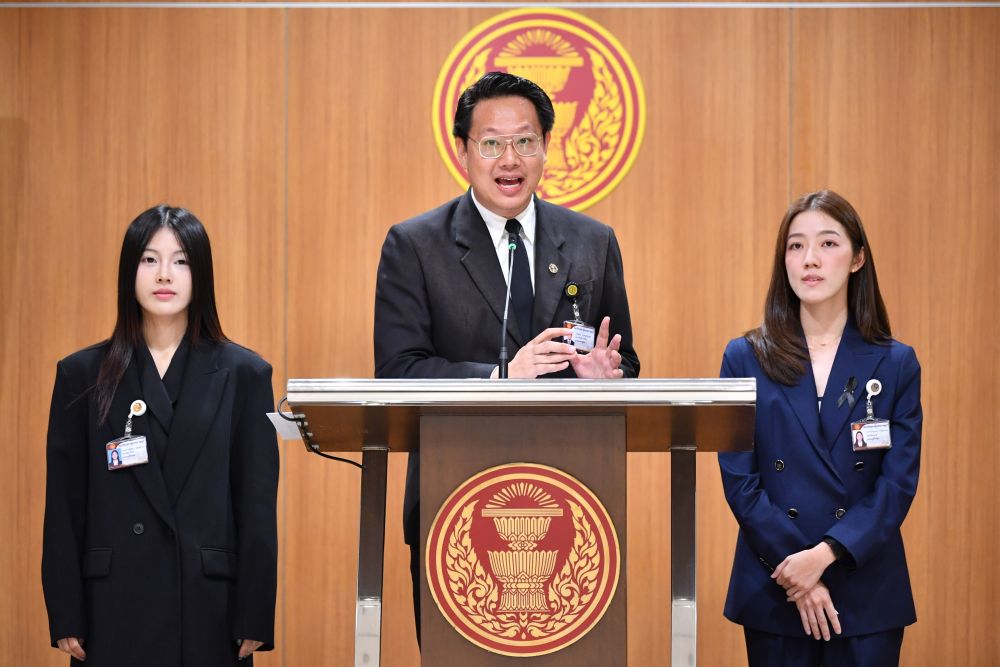
Spokesperson for the House Standing Committee on Finance suggests utilizing parliamentary mechanisms to propose a roadmap for OECD membership by 2028, citing it as a golden opportunity for Thailand to become a high-income nation.
On June 18, 2026, at 4:30 PM, at the Press Conference Room, 1st Floor, Parliament Building, Mr. Chris Potranandana, Spokesperson for the Standing Committee on Finance, Banking and Financial Institutions and Financial Markets, along with the committee, held a press conference recommending the use of parliamentary mechanisms to propose a roadmap motion to achieve OECD […]

Cabinet approves Global Minimum Tax information exchange with OECD
On June 16, 2026, Mr. Ekniti Nitithanprapas, Deputy Prime Minister and Minister of Finance, revealed after the Cabinet meeting that the meeting resolved to approve the implementation of the Global Minimum Tax. This sets a minimum corporate income tax rate of 15% for large multinational enterprises (MNEs), in accordance with international regulations that Thailand, as […]
Thailand-OECD Relations
Background and Significance
2565
15 February: Cabinet Resolution of February 15, 2022, acknowledged the results of Country Programme (CP) Phase 1 and assigned NESDC and MFA to consult with relevant agencies to develop CP Phase 2. Additionally, MFA was tasked to study the readiness, feasibility, and benefits Thailand would gain from OECD membership.
September: MFA commissioned TDRI to study and research the suitability of OECD membership. The study found that Thailand would benefit more from full membership than non-member status.
2566
March: The signing of the MoU for CP Phase 2 will help Thailand access OECD’s knowledge and best practices continuously, strengthen relationships, and bring Thailand closer to OECD membership.
26 December: Cabinet Resolution of December 26, 2023, approved Thailand’s draft letter of intent for OECD membership and assigned NESDC and MFA as the main coordinating agencies for driving OECD membership.
2567
February: MFA submitted a copy of Thailand’s letter of intent for OECD membership to OECD, marking the official membership application.
16 April: Thailand submitted the original letter of intent for OECD membership.
17 June: OECD Council approved opening accession discussions with Thailand.
10 July: OECD Council approved Thailand’s OECD membership roadmap (Roadmap for the OECD Accession Process of Thailand).
30 October: OECD Secretary-General paid a courtesy call to the Prime Minister and attended Thailand’s OECD accession process launch, presenting Thailand’s OECD membership roadmap to the Minister of Foreign Affairs.
2568
18 February: Cabinet Resolution of February 18, 2025, acknowledged progress in Thailand’s OECD membership and approved the fiscal year 2025 central budget, emergency reserve funds for implementing the OECD membership process project.
10 March: Prime Minister chaired the Committee for Supervising Thailand’s OECD Membership Process meeting, which set the goal for Thailand to achieve OECD membership by 2030.
8 July: Cabinet Resolution of July 8, 2025, acknowledged and approved the results of the first meeting of the Committee for Supervising Thailand’s OECD Membership Process (1/2025) and instructed relevant agencies to continue concrete implementation of Thailand’s OECD membership process.
July 29: The Secretary-General of NESDC chaired the 1st meeting of the Subcommittee for Driving Domestic Operations for Thailand’s OECD Membership in 2025 and directed relevant agencies to continue concrete implementation of Thailand’s OECD membership drive.
December 8: The Prime Minister officially submitted Thailand’s Initial Memorandum (IM) to the Deputy Secretary-General of the Organisation for Economic Co-operation and Development (OECD)
2569
May 19: Cabinet Resolution of May 19, 2026, acknowledged the progress of Thailand’s OECD accession process, approved the target for Thailand to become an OECD member by 2028, and approved the appointment of the Steering Committee for Thailand’s OECD Accession.
July 7: The Cabinet resolution on July 7, 2026, endorsed the Draft Regulation of the Office of the Prime Minister on the Steering Committee for Thailand’s Accession to the Organisation for Economic Co-operation and Development (OECD), B.E. ….
August 24: Regulation of the Office of the Prime Minister on the Committee for the Supervision of Thailand’s Accession to the Organisation for Economic Co-operation and Development (OECD)
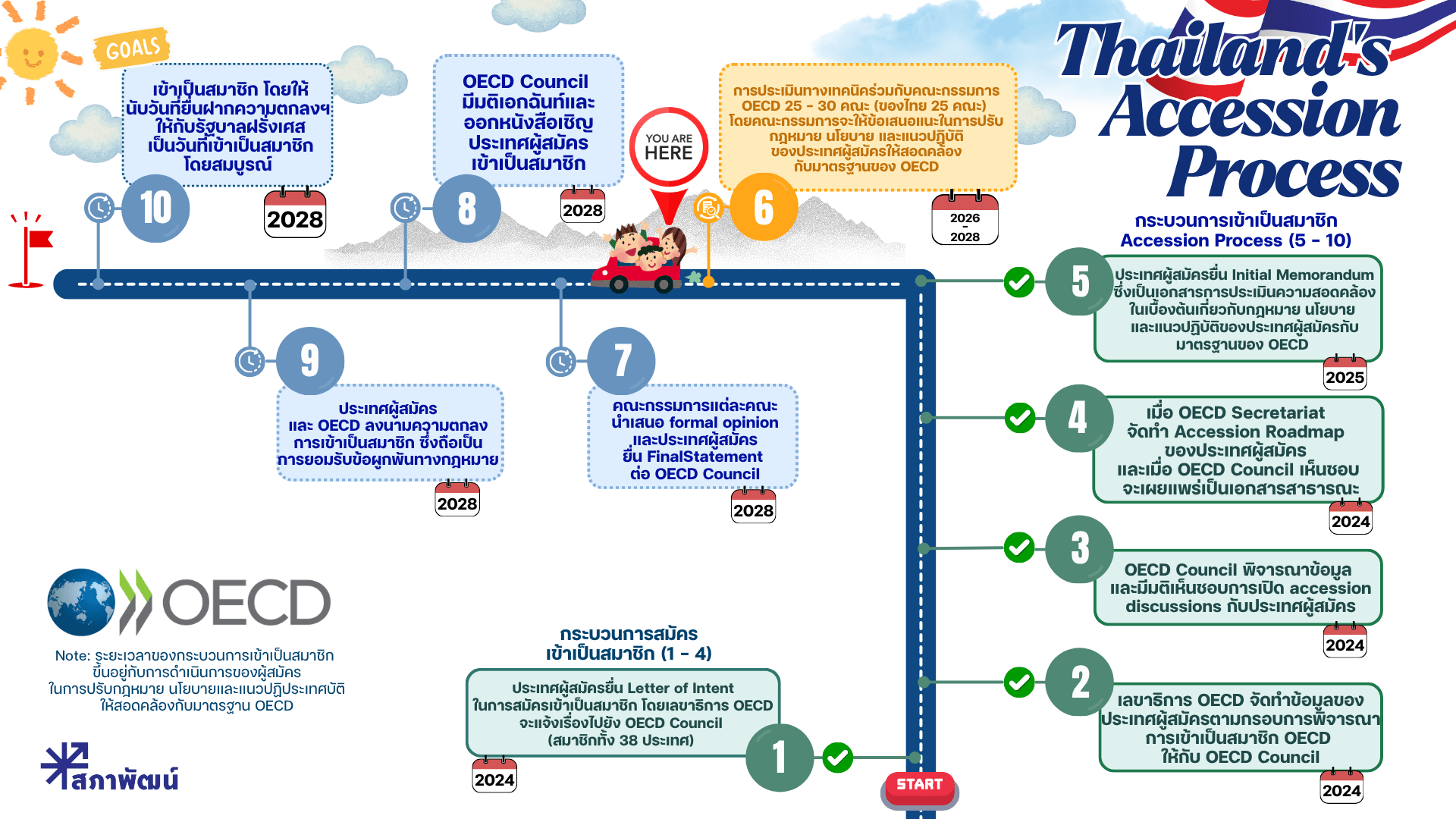
OECD Membership Process
The OECD membership process consists of two main phases: Pre-accession Process and Accession Process.
Related Documents
Factsheet on Thailand’s OECD Membership
Factsheet: Thailand’s OECD Accession, as of August 4, 2026
- Background
- Thailand’s OECD Membership Process
- Benefits and Impacts of OECD Membership
- OECD Business Network (Business at OECD: BIAC)
- OECD Parliamentary Network (Global Partnership Network: GPN)
- Thailand’s Current OECD Membership Process
- Next Steps in Thailand’s Domestic Implementation

Roadmap for the OECD Accession Process of Thailand
Framework for OECD Membership Consideration
(Framework for the Consideration of Prospective Members)
Consists of 5 conditions to guide Thailand’s implementation of OECD membership process, including:


4. key economic indicators
Key Economic Indicators

5. relations with the oecd
OECD Engagement
Framework for the Consideration of Prospective Members and 6 OECD Legal Instruments related to Framework


Thailand’s adherence to OECD Legal Instruments

OECD Legal Instruments
that Thailand has adhered to
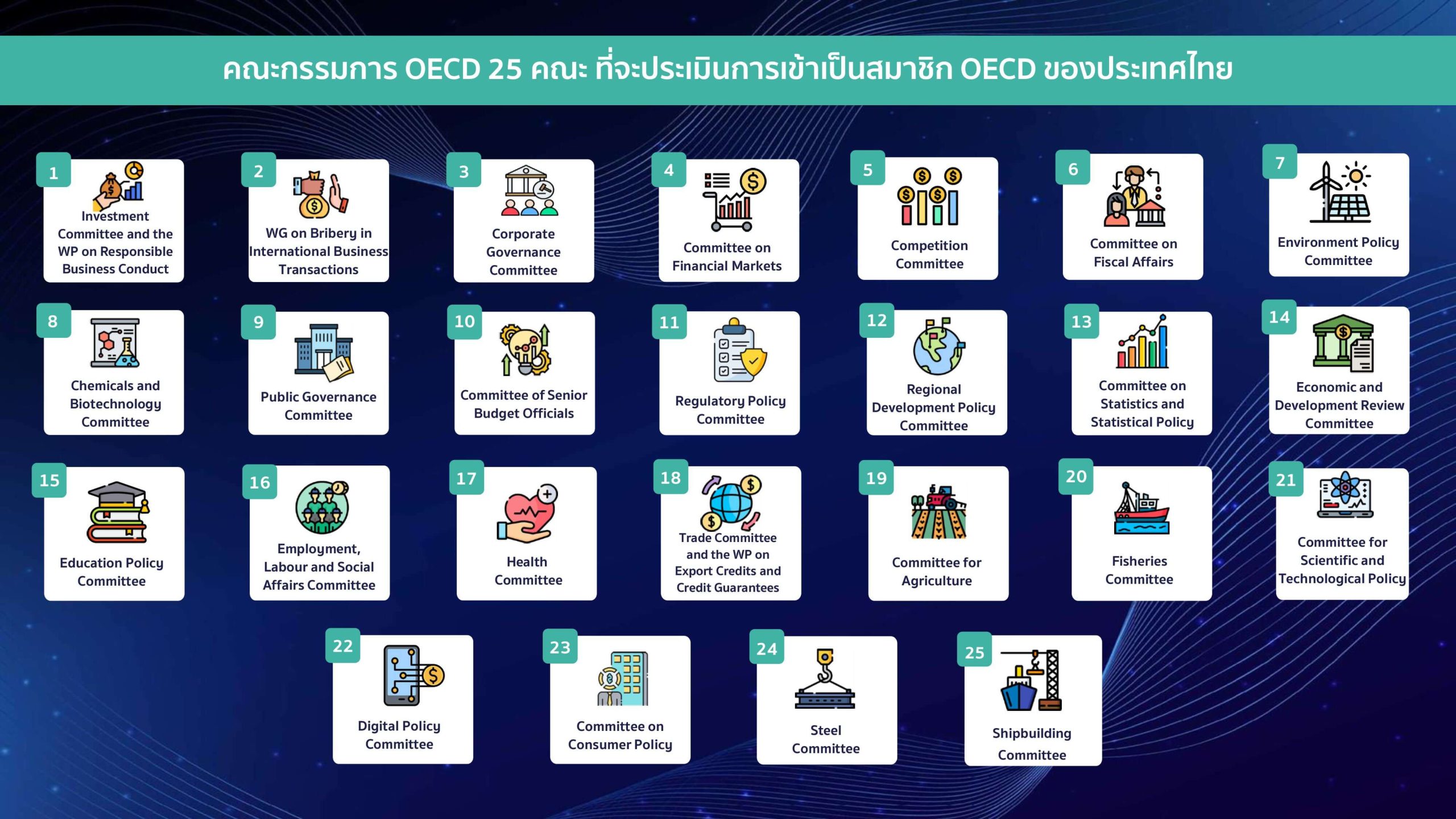
Thailand currently holds the status of an Accession Candidate Country, which entitles it to participate in all OECD Committee and Subsidiary Body meetings.