
Thailand and OECD
Important News and Updates
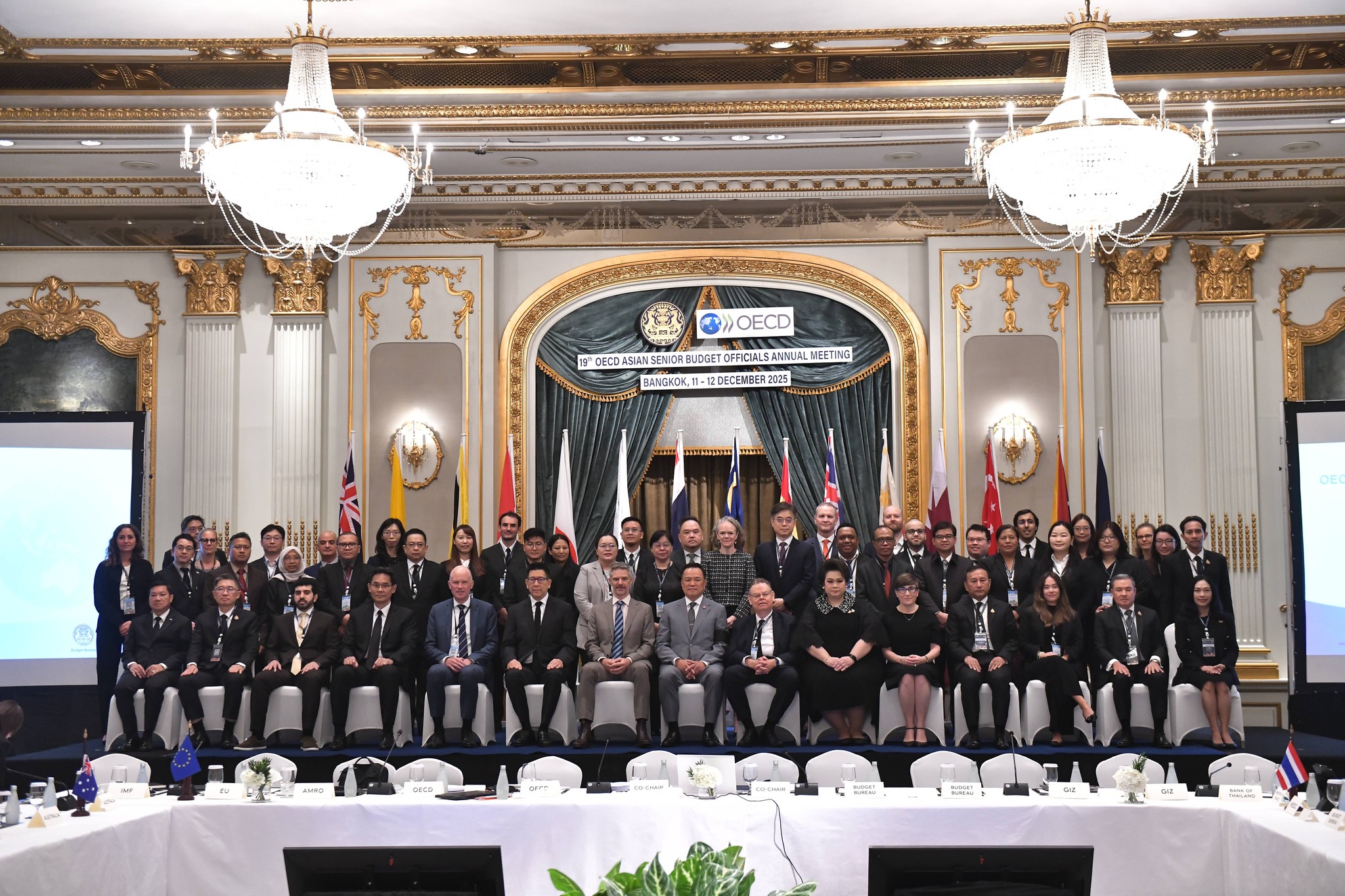
Prime Minister Opens the 19th OECD Asian Senior Budget Officials Meeting
December 11, 2025 Mr. Anutin Charnvirakul, Prime Minister and Minister of Interior, presided over the opening ceremony of the academic workshop on budgeting OECD Asian Senior Budget Officials Meeting, 19th edition, organized by the Bureau of the Budget in collaboration with the Organisation for Economic Co-operation and Development (OECD). The meeting had approximately 100 participants, […]

OECD advances discussions with Thai agencies following Initial Memorandum submission, preparing for “Technical Review” phase
On December 9, 2025, the Ministry of Foreign Affairs hosted a workshop on the OECD membership process during the technical review phase. Gita Kothari, OECD Accession Coordinator and Deputy Director, Directorate for Legal Affairs served as the main speaker to prepare Thai agencies responsible for technical reviews with OECD Directorates. The event was attended by […]
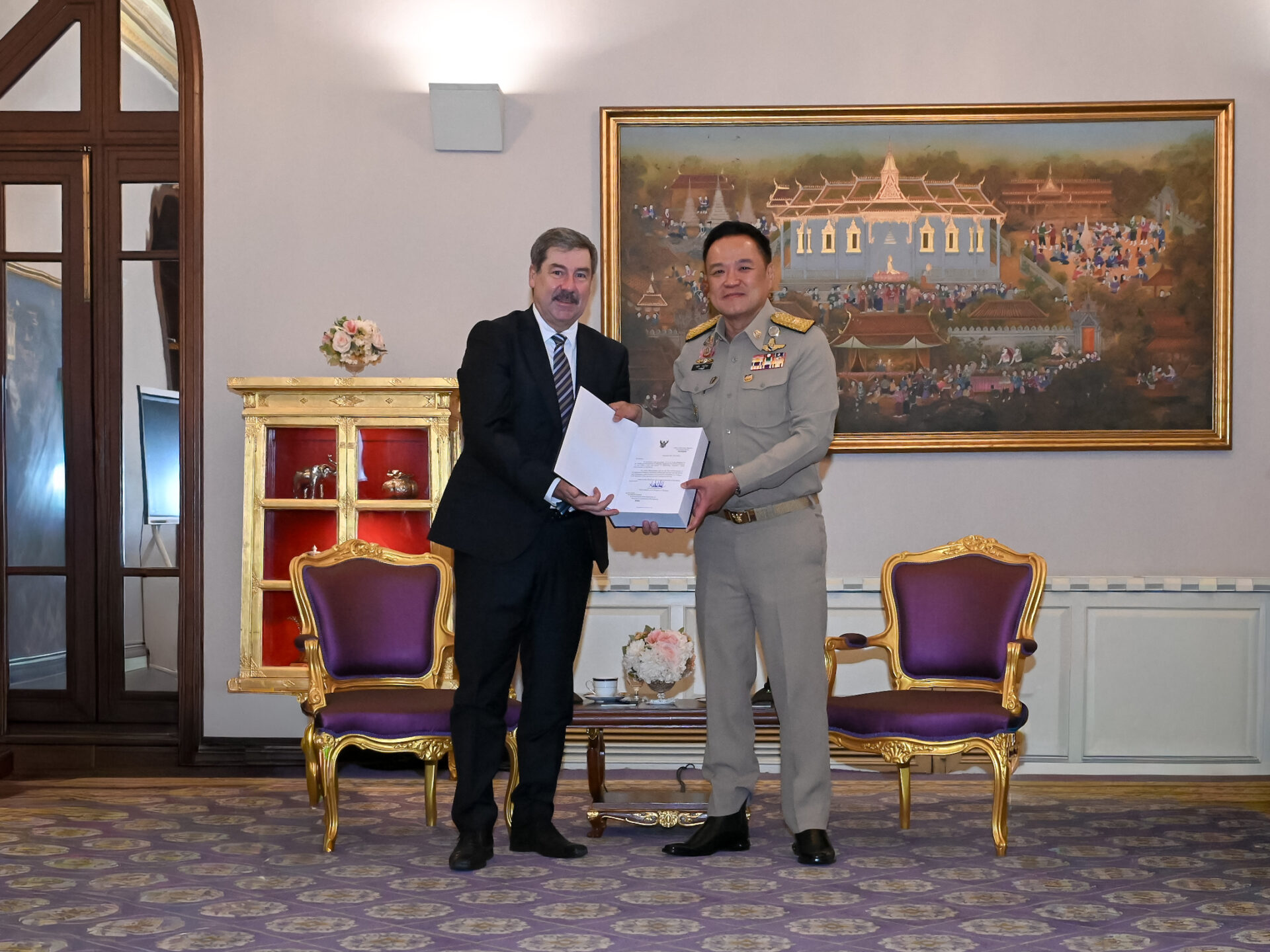
Prime Minister Submits Thailand’s Initial Memorandum (IM) to OECD: A Significant Step Towards Membership
On December 8, 2025, Prime Minister Anutin Charnvirakul submitted Thailand’s Initial Memorandum (IM) to Mr. Frantisek Ruzicka, Deputy Secretary-General of the Organisation for Economic Co-operation and Development (OECD) during his visit to Thailand to pay a courtesy call on the Prime Minister and meet with Thai high-level representatives, as well as to receive the Initial […]
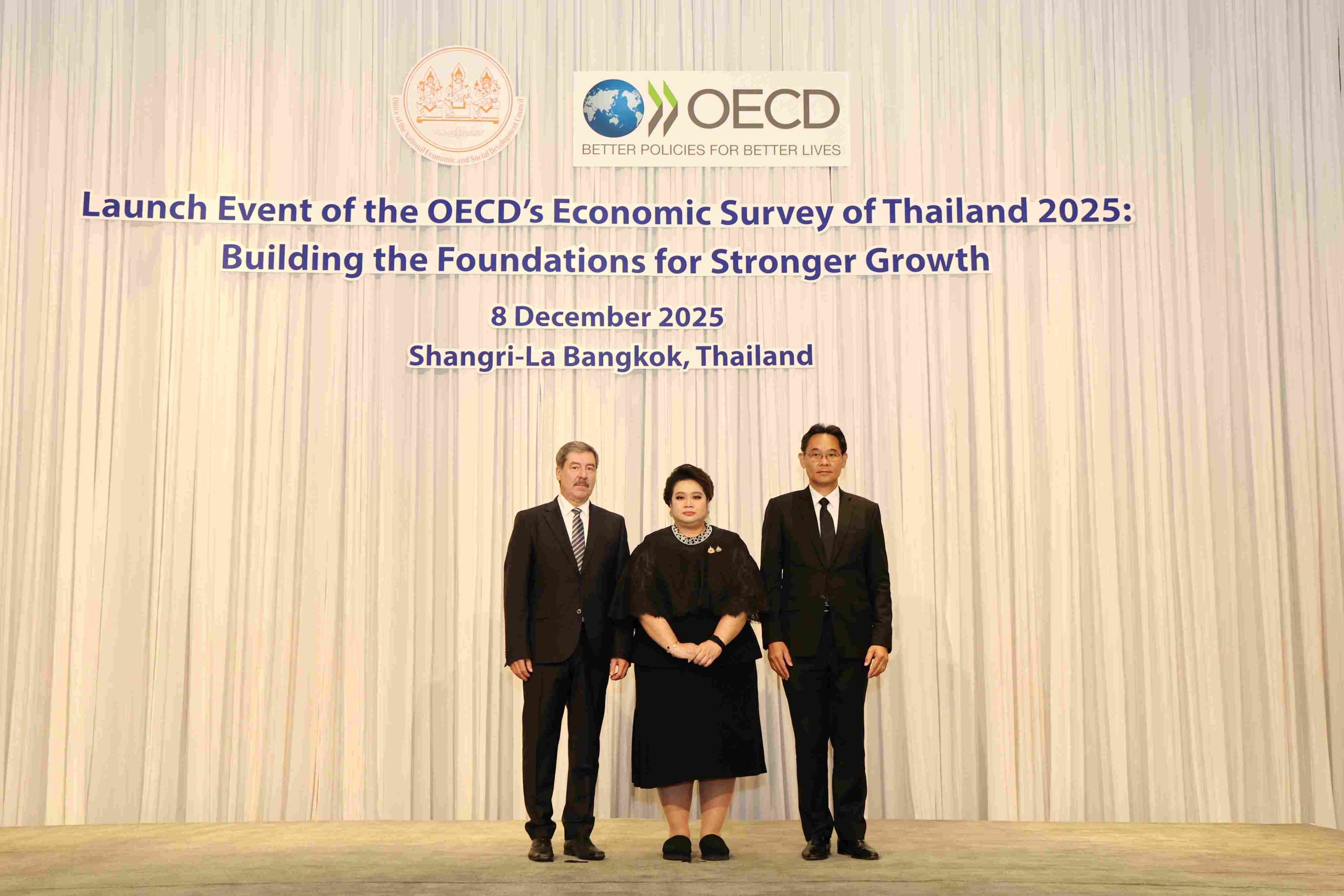
Seminar for the Launch of the Organisation for Economic Co-operation and Development (OECD) Report on Economic Survey of Thailand 2025: Building the Foundations for Stronger Growth
The National Economic and Social Development Council (NESDC), in collaboration with the Organisation for Economic Co-operation and Development (OECD), organized a seminar for the launch of the Economic Survey of Thailand 2025 report on Monday, December 8, 2025, at the Ballroom of Shangri-La Hotel, Bangkok. The event was honored by Ms. Supamas Isarabhakdi, Minister attached […]
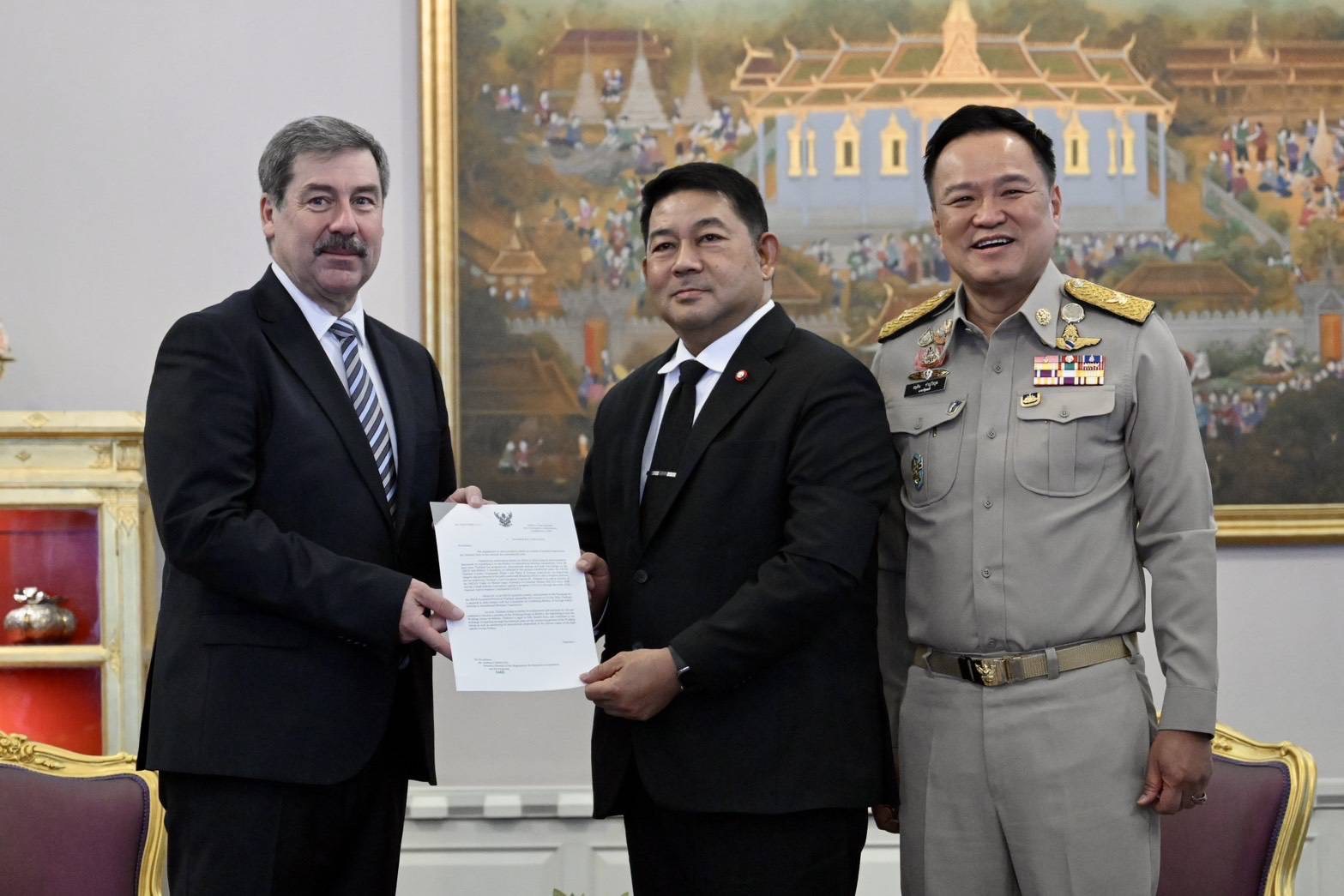
The Office of the National Anti-Corruption Commission submits a letter of intent to initiate the process of becoming a party to the OECD Anti-Bribery Convention
On December 8, 2025, Mr. Phatthrasak Wannasaeng, Commissioner of the National Anti-Corruption Commission, served as the representative in submitting a letter of intent to initiate the process of becoming a party to the Convention on Combating Bribery of Foreign Public Officials in International Business Transactions (OECD Anti-Bribery Convention) to Mr. František Ružička, Deputy Secretary-General of […]
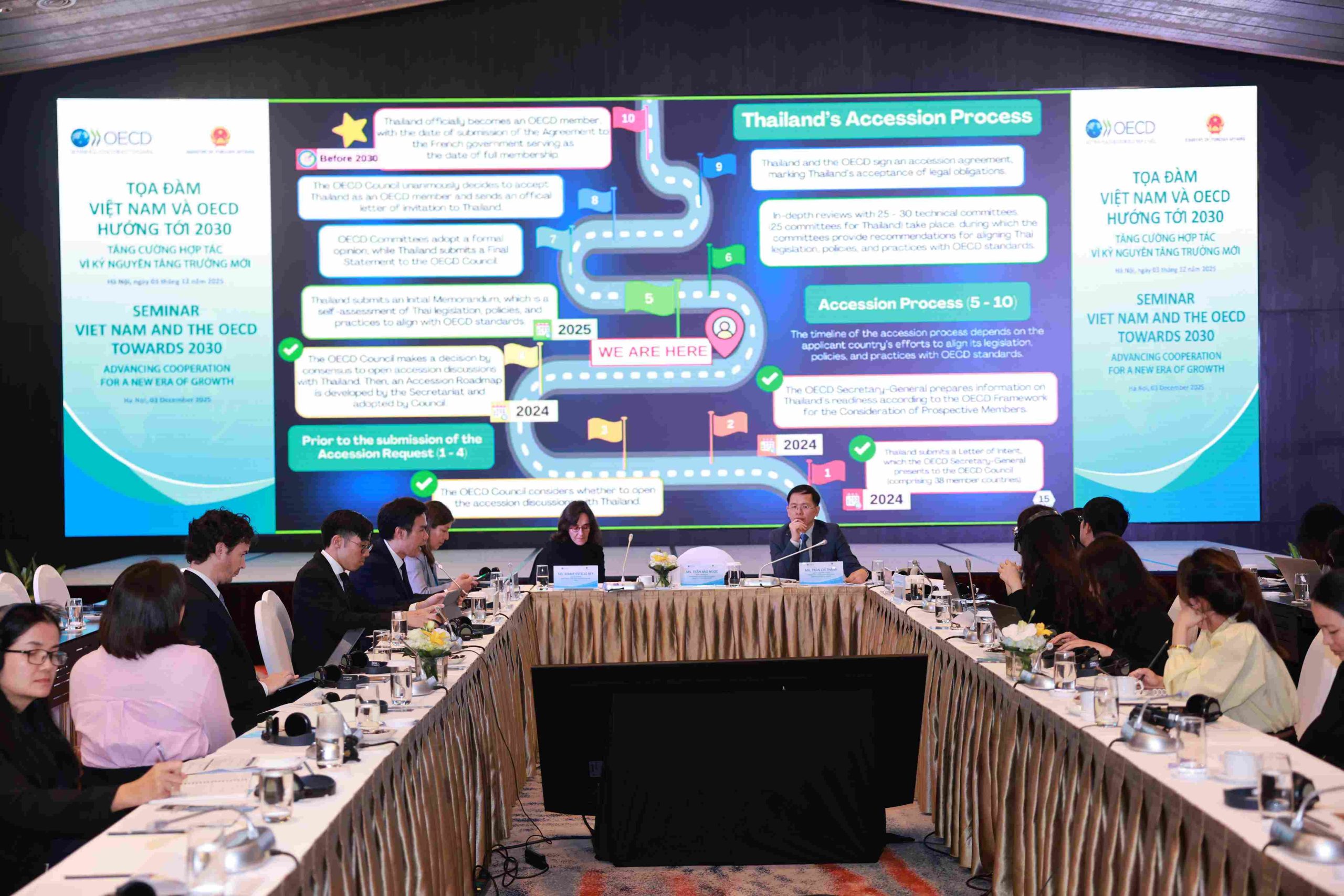
Thailand shares experiences working with OECD, supporting cooperation between OECD and Vietnam
On December 3, 2025, Thailand, represented by the Office of the National Economic and Social Development Council (NESDC), participated and shared experiences of working with the Organisation for Economic Co-operation and Development (OECD) in supporting the enhancement of cooperation between OECD and the Socialist Republic of Vietnam to drive growth in the new era. The […]
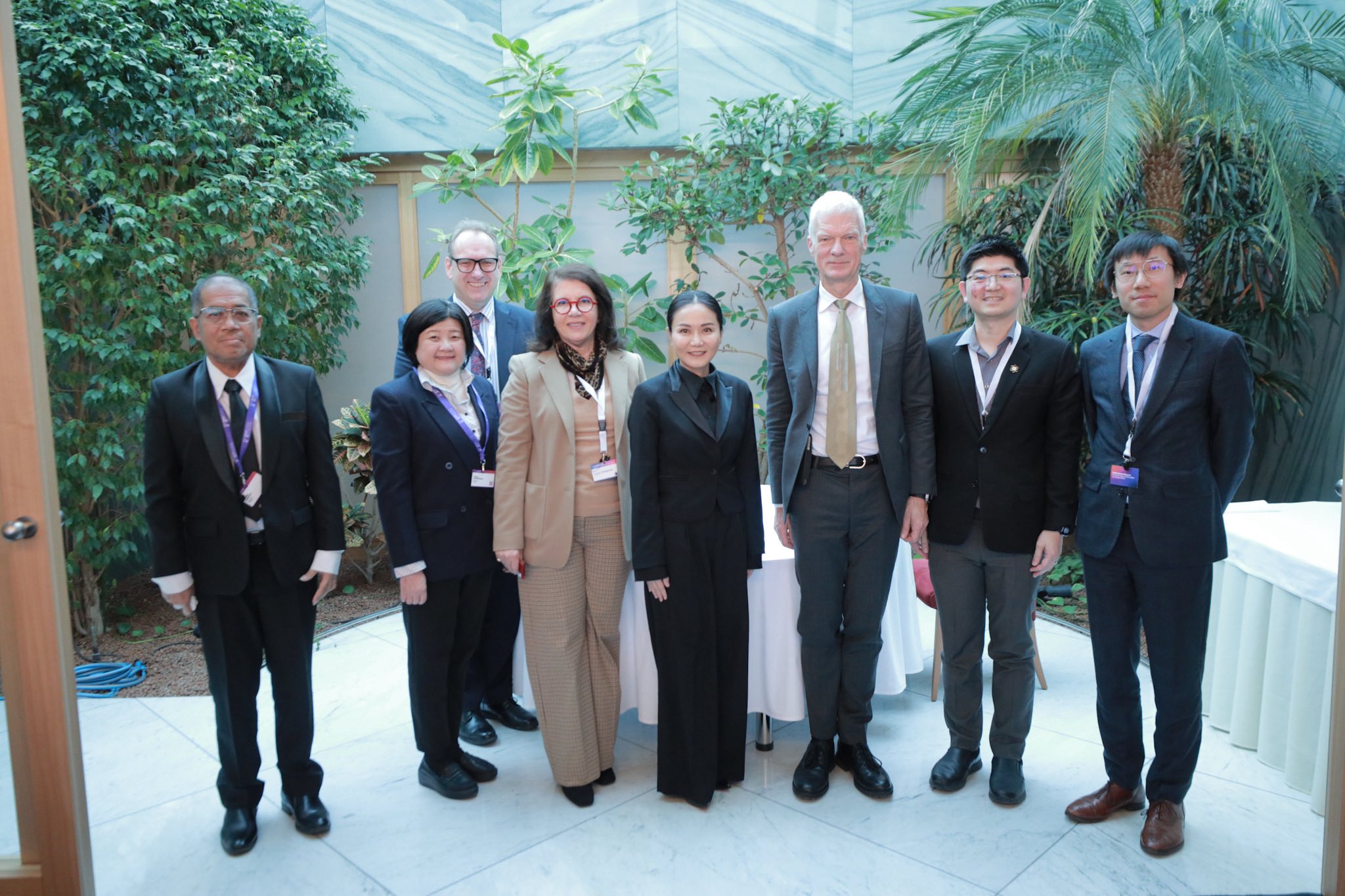
Minister of Education holds bilateral discussions with Director for Education and Skills of the Organisation for Economic Co-operation and Development (OECD)
On November 25, 2025, Professor Dr. Narumon Pinyosinwat, Minister of Education, held bilateral discussions with Mr. Andreas Schneider, Director for Education and Skills of the Organisation for Economic Co-operation and Development (OECD), to exchange progress on educational cooperation and approaches to support Thailand during its OECD membership application process. The OECD commended Thailand’s preparedness in […]

Thai delegation participates in the OECD Global Roundtable on Equal Access to Justice 2025 to support Thailand’s membership in the Organisation for Economic Co-operation and Development (OECD)
The Organisation for Economic Co-operation and Development (OECD) invited the head of the Thai delegation, Professor Emeritus Bowornsak Uwanno, Deputy Prime Minister, along with the Thai delegation comprising Ms. Pongsawat Neelayadhin, Permanent Secretary of the Ministry of Justice, and Mr. Yodchat Tasarika, Director of the Legal Division, Acting Legal Advisor and Executive of the Thailand […]
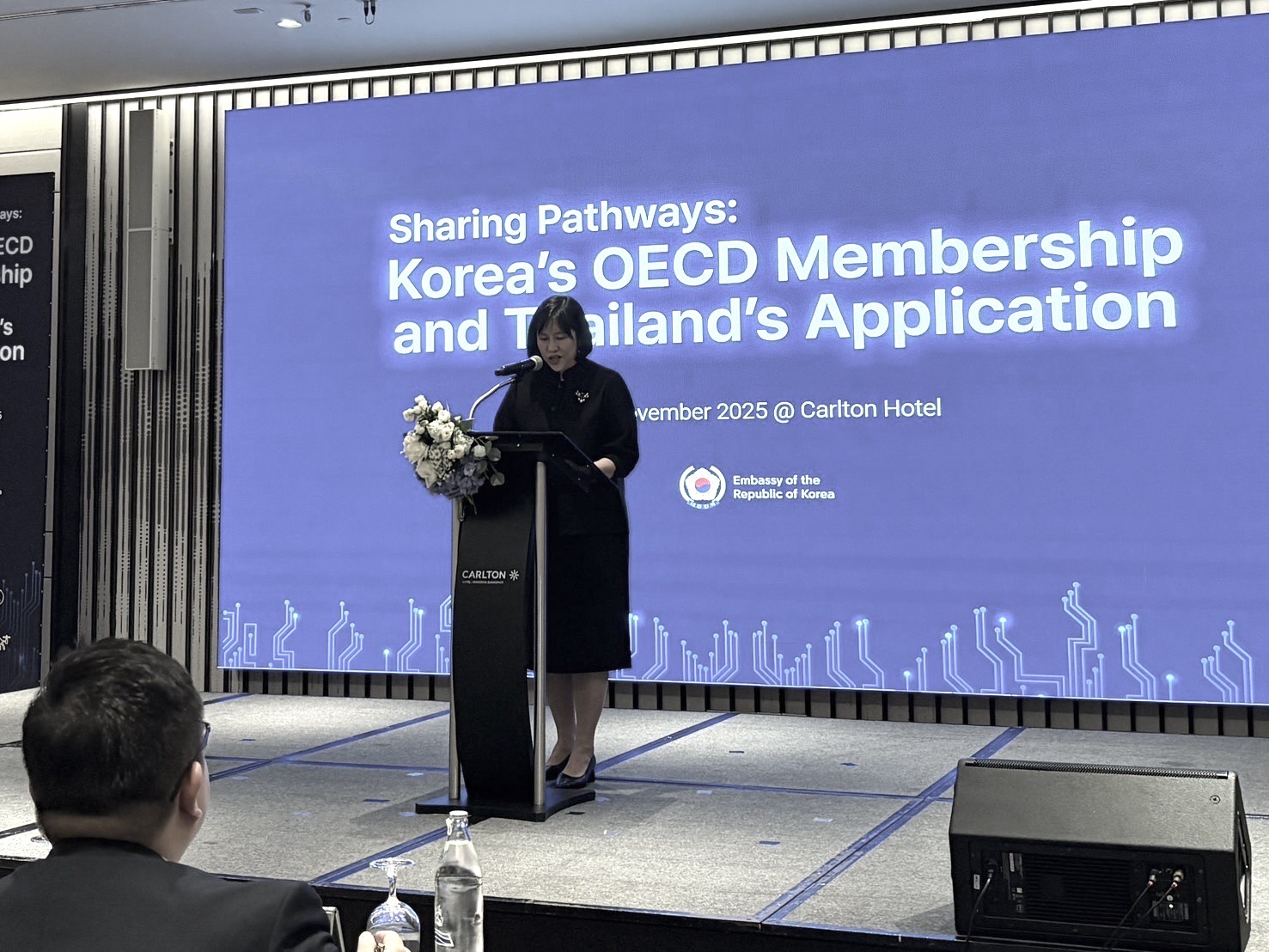
The Embassy of the Republic of Korea in Thailand organized a seminar titled “Sharing Pathways: Korea’s OECD Membership and Thailand’s Application” to share experiences regarding the Republic of Korea’s OECD membership process
On November 12, 2025 The Embassy of the Republic of Korea in Thailand organized a seminar titled “Sharing Pathways: Korea’s OECD Membership and Thailand’s Application” with Ms. Ruchikorn Sangchan, Director-General of the Department of International Economic Affairs, Ministry of Foreign Affairs, and Dr. Narongchai Akrasanee, former Minister of Commerce and Minister of Energy, and Mr. […]
What is OECD?
Background
OECD STRUCTURE
The Council consists of representatives from member countries and the European Union, with the OECD Secretary-General as the chairperson. The Council oversees and sets the direction of the organization, using a consensus-based decision-making mechanism.
Committees comprise over 300 sub-committees covering all sectors. They discuss, create, and review policies, as well as assess the impact of policy implementation. They also disseminate knowledge and policy experiences through collaboration with experts, working groups, and directorates.
The Secretariat consists of directorates with over 3,300 staff members. It collects data and presents analytical results along with policy recommendations to support committee discussions as directed by the Council.

Member Countries: Currently, OECD has 38 member countries from Europe, North America, Latin America, and Asia-Pacific regions, including:
Europe


North America


Latin America


Asia Pacific


8 countries in the Accession Process or Accession Candidate Countries include:
Accession Candidate Countries


Learn more about OECD
Podcast: Let’s Get Global – Stories and Knowledge
Related Cabinet Resolutions

