Digital Cooperation
Digital Cooperation (Digitalization)
Main Agency: Ministry of Digital Economy and Society
Background and Principles
The Greater Mekong Subregion (GMS) Digital Economy Cooperation Initiative was proposed by the People’s Republic of China and endorsed at the 25th GMS Ministerial Conference in 2022 in Luang Prabang, Lao People’s Democratic Republic. The initiative aims to promote digital transformation and the adoption of advanced technologies within GMS activities and projects. Key objectives include facilitating trade and investment through cross-border e-commerce, accelerating infrastructure development and digital connectivity, promoting innovation and digital technology transfer, developing digital financial systems to support infrastructure investment, increasing digital inclusion and enhancing the digital capabilities of Small and Medium Enterprises (SMEs) and women, and developing digital governance through the coordination of regional laws, regulations, standards, and policies.
Recent Progress
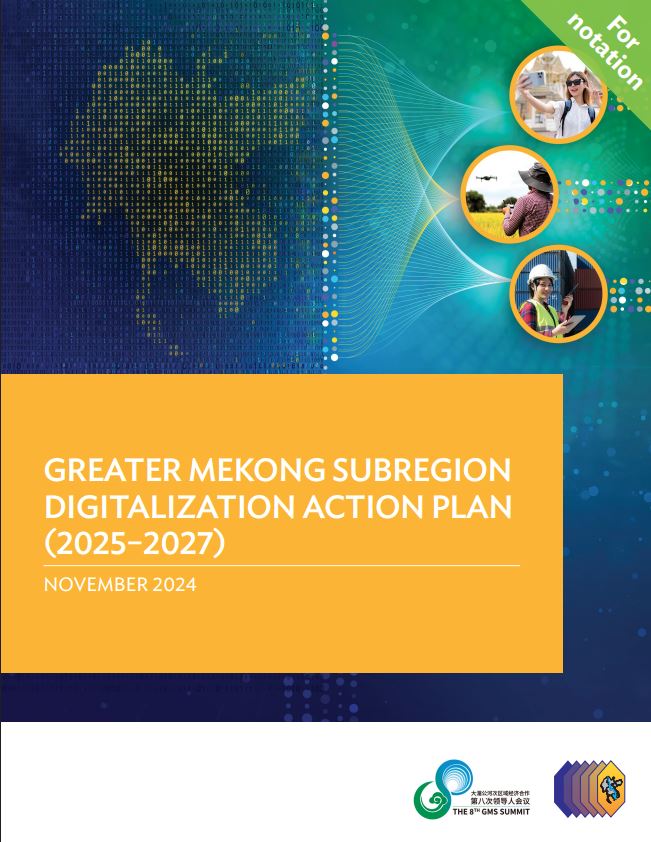
Implementation is driven by the GMS Digitalization Action Plan 2025-2027, which focuses on strengthening regional digital cooperation through the development of infrastructure, regulatory mechanisms, and digital skills. This aims to bridge the digital divide and leverage digital transformation for inclusive and sustainable development. Implementation prioritizes activities in three key sectors: agriculture, tourism, and trade and investment. This is coupled with promoting capacity building, policy dialogue, and pilot project implementation to support the shared goal of advancing the subregion’s digital progress and ensuring that digital operations effectively respond to the subregion’s evolving context and needs.