Transport
Working Group on Transport
(Working Group on Transport: WGT)
Lead Agency: Ministry of Transport
Background and Principles
The development of transport infrastructure, coupled with policies and processes for border crossing and trade facilitation, is the heart of cooperation in the Greater Mekong Subregion (GMS). Since the program’s inception in 1992, member countries have collaborated to develop road networks, bridges, and border checkpoints to strengthen physical connectivity and support trade, tourism, and investment, with the Subregional Transport Forum serving to coordinate and monitor the transport operations of member countries.
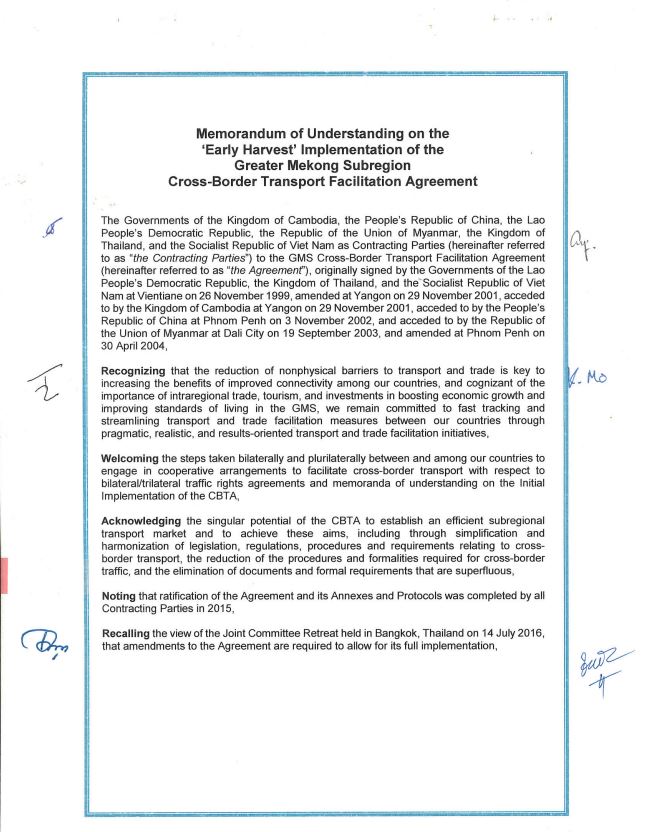
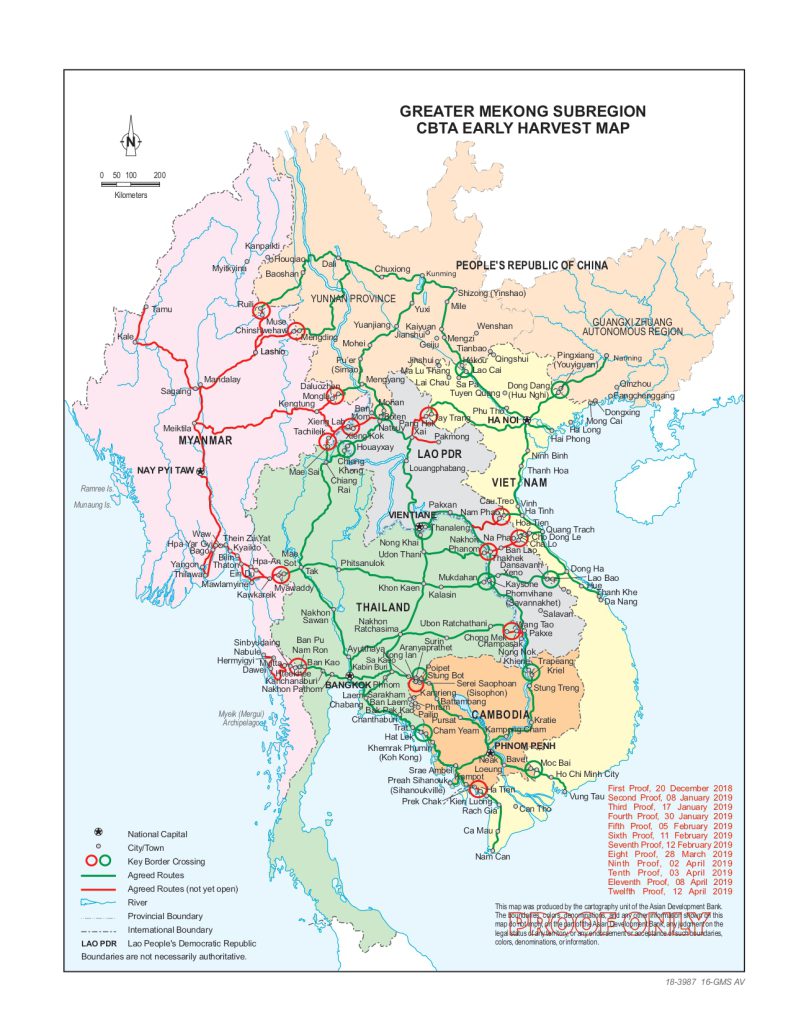
Such development is implemented through the Economic Corridors concept, which consists of (1) the East–West Economic Corridor, (2) the North–South Economic Corridor, and (3) the Southern Economic Corridor. These corridors integrate infrastructure development, regulations, markets, and cities to enhance the economic potential of the areas. Under the GMS 2030 framework, the focus is also on developing integrated transport systems, connecting railways, ports, airports, and urban transport systems, alongside improving border regulations and procedures. This relies on cooperation under the Cross-Border Transport Facilitation Agreement (CBTA) and the Early Harvest implementation to increase the efficiency of the sustainable movement of goods and services across borders.

Economic Corridors of the GMS Program
Consists of 3 major economic corridors:

Western Subcorridor
Kunming (China) – Boten (Laos)/Tachilek (Myanmar) – Chiang Rai (Thailand) – Bangkok (Thailand)

Central Subcorridor
Kunming (China) – Hanoi (Vietnam) – Haiphong (Vietnam)

Eastern Subcorridor
Nanning (China) – Hanoi (Vietnam)

Mawlamyine – Myawaddy

Mae Sot – Phitsanulok – Khon Kaen – Kalasin – Mukdahan

Savannakhet – Dansavanh

Lao Bao – Dong Ha – Da Nang

Central Subcorridor
Bangkok (Thailand) – Phnom Penh (Cambodia) – Ho Chi Minh City (Vietnam) – Vung Tau (Vietnam)

Northern Subcorridor
Bangkok (Thailand) – Siem Reap (Cambodia) – Stung Treng (Cambodia) – Ratanakiri (Cambodia) – O Ya Dav (Cambodia) – Pleiku (Vietnam) – Quy Nhon (Vietnam)

Southern Coastal Subcorridor
Bangkok (Thailand) – Trat (Thailand) – Koh Kong (Cambodia) – Ratanakiri (Cambodia) – Kampot (Cambodia) – Ha Tien (Vietnam) – Ca Mau (Vietnam) – Nam Can (Vietnam)

Intercorridor Link
Sihanoukville (Cambodia) – Phnom Penh (Cambodia) – Kratie (Cambodia) – Stung Treng (Cambodia) – Dong Kralor (Laos) – Pakse (Laos) – Savannakhet (Laos), which intersects with EWEC
Source: https://greatermekong.org/g/economic-corridors-greater-mekong-subregion
Recent Progress
Progress has been made in the Early Harvest Memorandum of Understanding under the CBTA, which has contributed to increasing transport efficiency in the subregion. This has reduced travel time on the Kunming–Bangkok route by 30% and transport costs by 15%, alongside promoting integrated intermodal transport, facilitating cross-border transport, developing logistics, managing infrastructure, and improving road safety. Furthermore, operations continue to focus on strengthening the potential of primary and secondary economic corridors through the development of secondary road networks and connectivity to remote communities, strategic ports, and urban centers. This aims to distribute economic benefits inclusively and support the integration of transport development with environmental considerations, sustainable urban development, and the linkage of urban transport systems with town planning and land use, in accordance with the GMS Transport Sector Strategy 2030 framework.
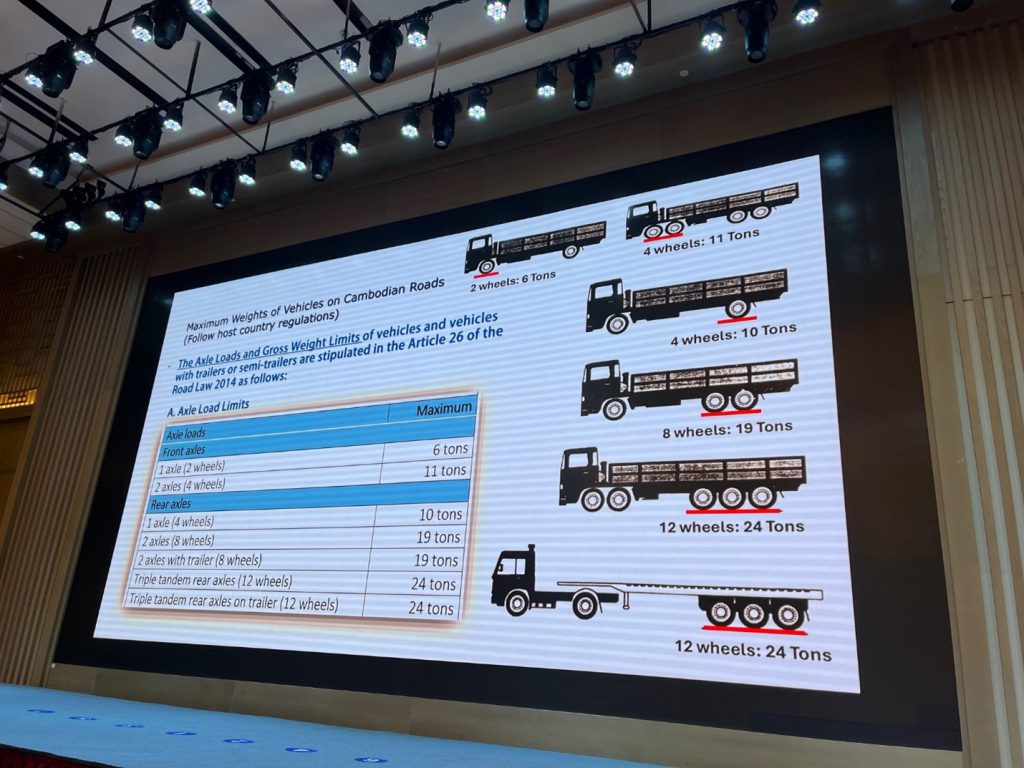
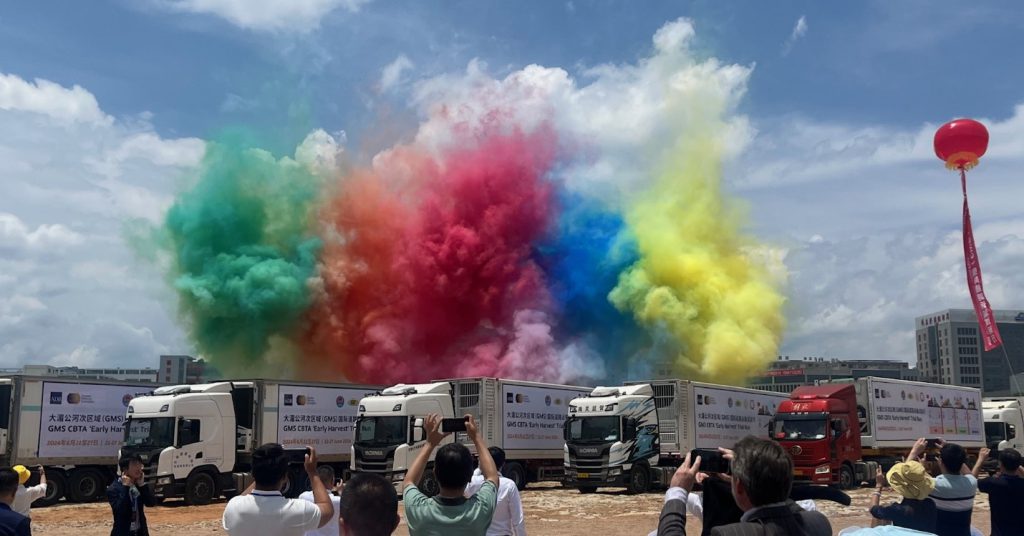
Scope and Operational Conditions (Early Harvest MOU)
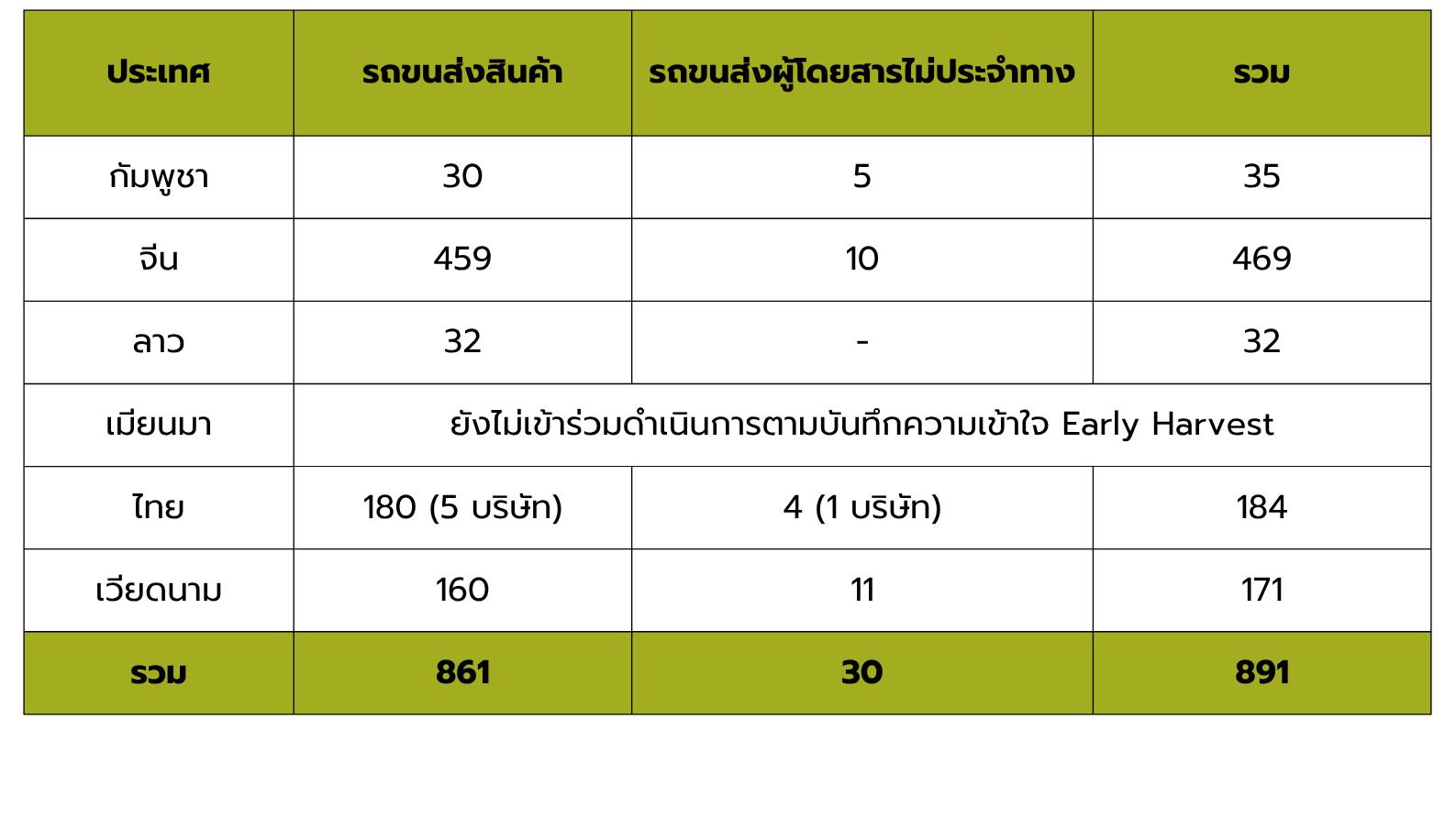
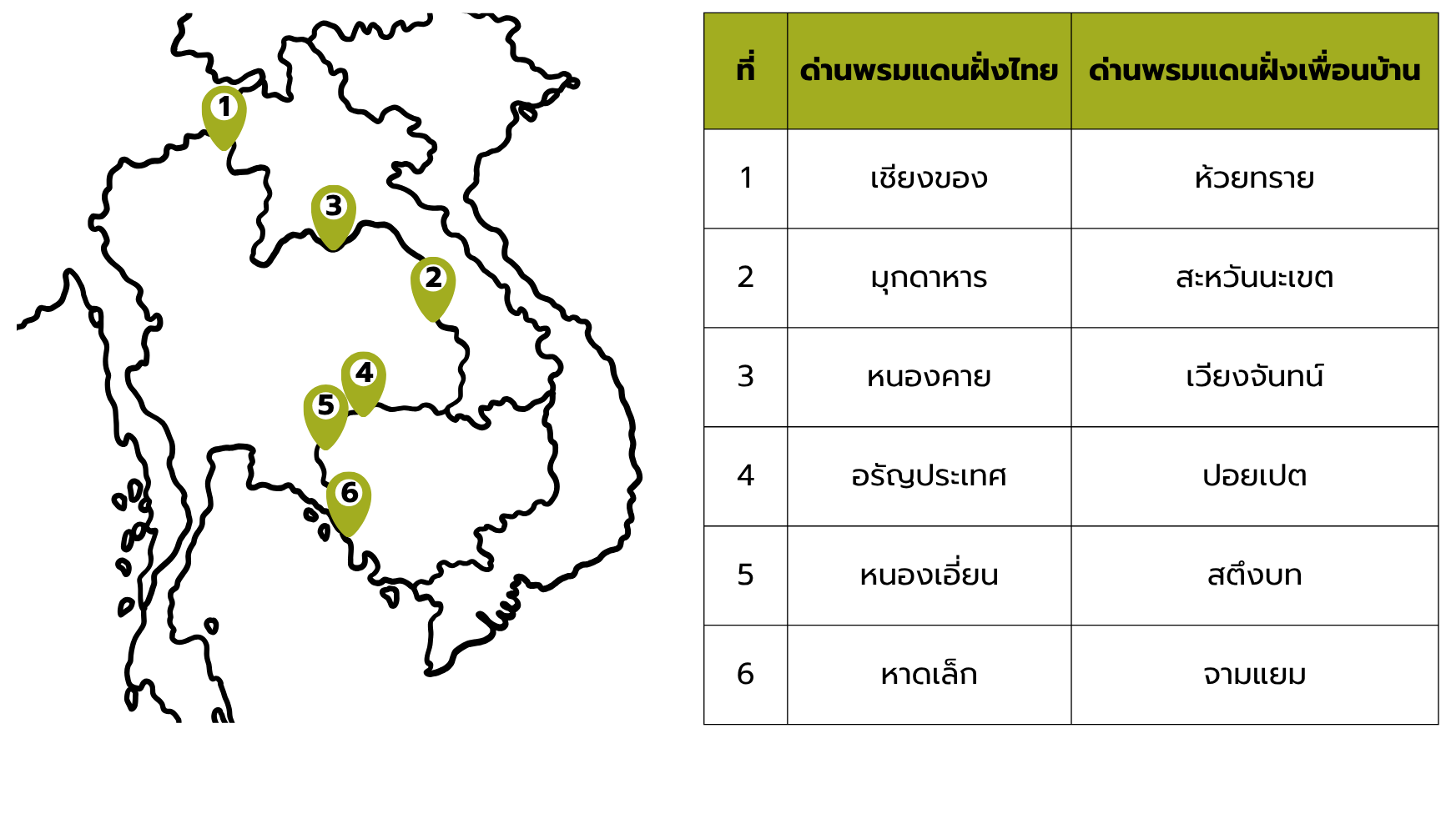
The GMS CBTA ‘Early Harvest’ Memorandum of Understanding sets a quota of no more than 500 vehicles per country (cargo and passenger vehicles), allowing them to operate across five member countries, excluding Myanmar (China limits operations to Yunnan Province and Guangxi Zhuang Autonomous Region). There are six designated border crossing points in Thailand as follows:
Licensing Status and Number of Operators in Thailand
The Department of Land Transport has issued 184 permits to six Thai transport operators, consisting of 180 permits for five freight transport companies and four permits for one non-scheduled passenger transport company.