Local Government
Local Government
Primary Agency: Ministry of Interior
Background and Principles
Under the GMS 2030 Strategic Framework, the GMS Program aims to transition toward a more open and inclusive cooperation framework. This aligns with the vision of developing a more integrated, prosperous, sustainable, and inclusive subregion, with an emphasis on increasing the participation of stakeholders from various sectors, including local governments.
Promoting the role of provincial and local governments is consistent with the principle of subsidiarity, which aims to empower local governments—those closest to the people—to play a key role in assessing issues and responding to public needs. Meanwhile, the central government continues to define macro-level policies and core priorities. The involvement of local governments will enhance efficiency in identifying problems and establishing concrete solutions at the operational level.
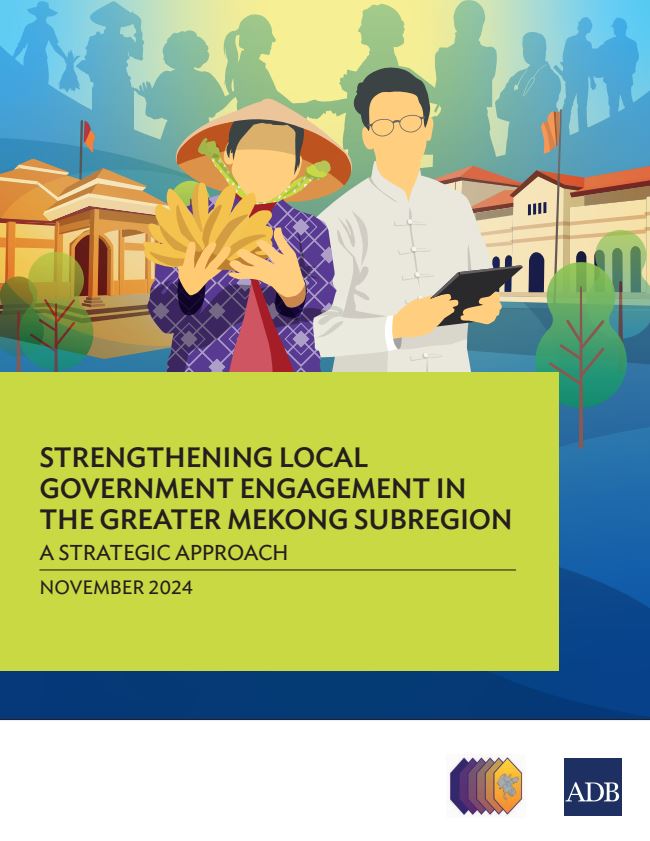
However, some local governments still face limitations regarding technical capacity, financial resources, and expertise. Therefore, the GMS Program plays a vital role in capacity building by providing knowledge, technical expertise, and resources to enhance the role of local governments in addressing development challenges and strengthening regional cooperation. Additionally, the ADB has conducted the Study on Strengthening Local Government Engagement in the GMS 2024 to support these efforts.
Latest Progress
NESDC In collaboration with the ADB, the Local Government Forum was organized during the 27th GMS Ministerial Meeting on November 27, 2025. The forum emphasized spatial development as a key mechanism for supporting economic integration, transport, and border trade, as well as cooperation in public health and the environment. Promoting the role and participation of local governments is essential for driving the GMS Program toward practical implementation and concrete results at the local level. Furthermore, it supports local government operations based on the findings of the Study on Strengthening Local Government Engagement in the GMS 2024, which recommends guidelines for enhancing the capacity of provinces and cities to initiate and develop more cross-border projects. The forum also defined operational strategies at the provincial and border area levels and acknowledged concrete examples of spatial cooperation, such as border public health projects, the Cambodia-Lao PDR animal health project, and tourism cooperation in the Cambodia-Lao PDR-Vietnam area. Additionally, it considered the proposal for establishing a Sub-Corridor Forum to strengthen local connectivity along economic corridors. The meeting also agreed on the necessity of human resource capacity building, access to spatial data, and support from regional agencies, including strengthening cooperation with development partners on issues such as climate change, food security, public health, and trade facilitation.